
/-/https/careerdiscovery.sciencebuddies.org/cdn/Files/21464/5/sb-logo.png)
Audio and Video Equipment Technician
Overview and Key Facts
/-/https/careerdiscovery.sciencebuddies.org/cdn/Files/916/17/unsplash-KGyzk-EvTwQ.jpg)

Education

Median Pay

Job Growth

Jobs in 2034
What Do They Do?
An audio and video equipment technician could.../-/https/careerdiscovery.sciencebuddies.org/cdn/Files/917/17/pexels-photo-1181355.jpg)
/-/https/careerdiscovery.sciencebuddies.org/cdn/Files/918/17/pexels-photo-5269237.jpg)
/-/https/careerdiscovery.sciencebuddies.org/cdn/Files/919/17/unsplash-aMuXhFkbxEw.jpg)
/-/https/careerdiscovery.sciencebuddies.org/cdn/Files/920/17/iStock-164103606.jpg)
/-/https/careerdiscovery.sciencebuddies.org/cdn/Files/917/17/pexels-photo-1181355.jpg)
/-/https/careerdiscovery.sciencebuddies.org/cdn/Files/918/17/pexels-photo-5269237.jpg)
/-/https/careerdiscovery.sciencebuddies.org/cdn/Files/919/17/unsplash-aMuXhFkbxEw.jpg)
/-/https/careerdiscovery.sciencebuddies.org/cdn/Files/920/17/iStock-164103606.jpg)
Overview Listen to this section
Ever wondered who makes sure the Jumbotron works at the super bowl? Or that the microphones work at a presidential inauguration? These are the tasks of an audio and video equipment technician. Audio and video equipment technicians work to set up and operate audio and video equipment, including microphones, sound speakers, video screens, projectors, video monitors, and recording equipment./-/https/i.ytimg.com/vi/CPA7GSvRlnc/hqdefault.jpg)
Do You Have the Skills and Characteristics of an Audio and Video Equipment Technician?

- Monitoring ?
- Reading Comprehension ?
- Critical Thinking ?
- Operations Monitoring ?
- Complex Problem Solving ?
Core Tasks
Think about if you'd like the typical tasks an Audio and Video Equipment Technician might do:Salary & Job Openings
Median Salary (Yearly Pay)
Future Jobs
Blast-Off:
(10% or higher)
(7% - 10%)
(5% - 7%)
(3% - 5%)
(0% - 3%)

Steps to Get There: Becoming an Audio and Video Equipment Technician
High School Subjects to Study
Engineering
Career Pathway Listen to this section
Audio and video equipment technicians generally need a high school diploma. Many recent entrants have a community college degree or other form of postsecondary degrees, although they are not always required. These technicians may substitute on-the-job training for formal education requirements. Many audio and video technicians learn through long-term, on-the-job training, which can last from 1 to several years, depending on the specifics of their job. Working in a studio as an assistant is a good way to gain experience and knowledge.
Education- Typical Degree Needed After High School Listen to this section
high school credential
Typical degree for an entry-level position: Post high school credential ?
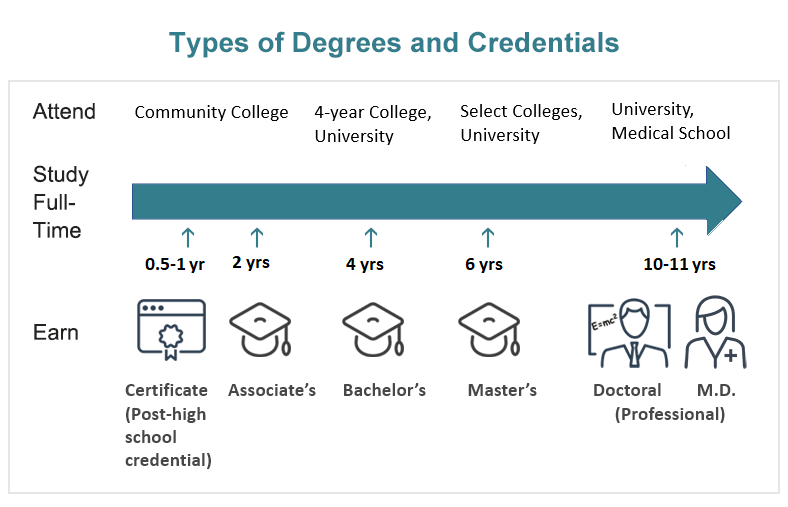
A high school diploma is generally needed for a job as an audio and video equipment technician. In addition, on-the-job training or an associate's degree through a technical school or community college is recommended.
Companies That Hire Audio and Video Equipment Technicians
Try it Out with an Activity or Project
STEM Activities
STEM activities are fun hands-on explorations that usually take from 10 minutes to one hour and use readily available household or classroom materials while introducing you to STEM concepts common in this career.
/-/https/www.sciencebuddies.org/cdn/Files/7450/11/paper-speaker.jpg)
/-/https/www.sciencebuddies.org/cdn/Files/12830/6/playing-the-harmonica-thumbnail.jpg)
/-/https/www.sciencebuddies.org/cdn/Files/12161/5/rubber-band-guitar-thumbnail.jpg)
/-/https/www.sciencebuddies.org/cdn/Files/12912/5/using-kazoo-science-activity-thumbnail.jpg)
/-/https/www.sciencebuddies.org/cdn/Files/12922/6/disk-siren-science-activity.jpg)
Science Project Ideas
Project Ideas are in-depth STEM explorations that have a strong focus on controlling variables, taking accurate measurements, and analyzing data suitable for investigating the scientific method or the engineering design process.
/-/https/www.sciencebuddies.org/Files/21344/4/blobid1753380591679.png)
/-/https/www.sciencebuddies.org/Files/21358/4/blobid1753725569293.jpg)
/-/https/www.sciencebuddies.org/cdn/Files/6576/6/string-instruments-orchestra.jpg)
/-/https/www.sciencebuddies.org/cdn/Files/18240/5/paper-speaker-experiment-setup-thumbnail.jpg)
/-/https/www.sciencebuddies.org/Files/19982/12/iphone-lenses.jpg)
/-/https/www.sciencebuddies.org/cdn/Files/19152/6/ceiling-fan.png)
/-/https/www.sciencebuddies.org/cdn/Files/7532/9/speaker-frequency-response.png)
/-/https/careerdiscovery.sciencebuddies.org/Dirs/37/0/img/thumbnail.png)
On the Job
Role Models

Nature of the Work
Audio and video equipment technicians set up and operate audio and video equipment, including microphones, sound speakers, video screens, projectors, video monitors, and recording equipment. They also connect wires and cables and set up and operate sound and mixing boards and related electronic equipment for concerts, sports events, meetings and conventions, presentations, and news conferences. They might also set up and operate associated spotlights and other custom lighting systems.
Audio and video equipment technicians are important for the successful implementation of many types of entertainment, including television, radio, movies, concerts, and theater. They might also work in corporate environments, setting up equipment for product demonstrations, press conferences, and in-person or virtual meetings.
Work Environment
Audio and video equipment technicians work in a wide variety of settings, which can be either indoors or outside, depending on the specifics of the job. Indoor jobs are often in studios, on television or movie sets, in concert halls or theaters, at corporations, in conference halls, or in auditoriums. Audio and video equipment technicians working to film live news or outdoor events, like concerts or sports games, might have to contend with difficult weather conditions.
Some audio and video equipment jobs are normal 40-hour work weeks, but many are odd hours, depending on movie production schedules, news events, and entertainment schedules.
More Information
Ask Questions
Do you have a specific question about a career as an Audio and Video Equipment Technician that isn't answered on this page? Post your question on the Science Buddies Ask an Expert Forum.
Sources
- U.S. Bureau of Labor Statistics BLS (2024). Occupational Outlook Handbook (OOH), 2024 Edition, Bureau of Labor Statistics. Retrieved August 25, 2025.
- National Center for O*NET Development O*Net Online (2024). National Center for O*Net Development. Retrieved August 25, 2025
- Audiovisual and Integrated Experience Association. (n.d.). The Life of a Tech Manager: What it Means to Manage AV/IT Systems Today. Retrieved May 9, 2019.
- Audiovisual and Integrated Experience Association. (n.d.). How this AV Pro Found Her AV Family. Retrieved May 9, 2019.
- Audiovisual and Integrated Experience Association. (n.d.). Jesse Scarborough on Young AV Professionals. Retrieved May 9, 2019.
- Department of Labor and Workforce Development. (2009, December 21). Audio and Video Equipment Technicians. Retrieved February 16, 2010.