
/-/https/careerdiscovery.sciencebuddies.org/cdn/Files/21464/5/sb-logo.png)
Chemical Technician
Overview and Key Facts
/-/https/careerdiscovery.sciencebuddies.org/cdn/Files/1100/18/unsplash-NP6JLl_2C-c.jpg)

Education

Median Pay

Job Growth

Jobs in 2034
What Do They Do?
A chemical technician could.../-/https/careerdiscovery.sciencebuddies.org/cdn/Files/1101/18/pexels-photo-4390019.jpg)
/-/https/careerdiscovery.sciencebuddies.org/cdn/Files/20208/5/car-chemical-lubes.jpg)
/-/https/careerdiscovery.sciencebuddies.org/cdn/Files/1103/18/iStock-1141213432.jpg)
/-/https/careerdiscovery.sciencebuddies.org/cdn/Files/1104/18/pexels-photo-3735747.jpg)
/-/https/careerdiscovery.sciencebuddies.org/cdn/Files/1101/18/pexels-photo-4390019.jpg)
/-/https/careerdiscovery.sciencebuddies.org/cdn/Files/20208/5/car-chemical-lubes.jpg)
/-/https/careerdiscovery.sciencebuddies.org/cdn/Files/1103/18/iStock-1141213432.jpg)
/-/https/careerdiscovery.sciencebuddies.org/cdn/Files/1104/18/pexels-photo-3735747.jpg)
Overview Listen to this section
The role that the chemical technician plays is the backbone of every chemical, semiconductor, and pharmaceutical manufacturing operation. Chemical technicians conduct experiments, record data, and help to implement new processes and procedures in the laboratory. If you enjoy hands-on work, then you might be interested in the career of a chemical technician./-/https/i.ytimg.com/vi/tLwKn5W7Bjo/maxresdefault.jpg)
Do You Have the Skills and Characteristics of a Chemical Technician?

Core Tasks
Think about if you'd like the typical tasks a Chemical Technician might do:Salary & Job Openings
Median Salary (Yearly Pay)
Future Jobs
Blast-Off:
(10% or higher)
(7% - 10%)
(5% - 7%)
(3% - 5%)
(0% - 3%)

Steps to Get There: Becoming a Chemical Technician
High School Subjects to Study
Engineering
Career Pathway Listen to this section
Most chemical technicians need an associate's degree or a certificate in chemistry or chemistry-related technology. Chemical technicians with a high school diploma and no college degree typically begin work as trainees under the direct supervision of a more-experienced technician, and eventually earn a 2-year degree in science technology.
Chemical technician positions in research and development also often have a bachelor's degree, but most chemical process technicians have a 2-year degree instead, usually an associate's degree in process technology. In some cases, a high school diploma is sufficient. These workers usually receive additional on-the-job training. Many with a high school diploma eventually earn a 2-year degree in science technology, often paid for by their employer. Entry-level workers whose college training encompasses extensive hands-on experience with a variety of diagnostic laboratory equipment generally require less on-the-job training.
Whatever their degree, chemical technicians usually need hands-on training, either in school or on the job. Most can get good career preparation through 2-year formal training programs that combine the teaching of scientific principles and theory with practical hands-on application in a laboratory setting, with up-to-date equipment. Graduates of bachelor's degree programs in chemistry who have considerable experience in laboratory-based courses, have completed internships, or have held summer jobs in laboratories are also well-qualified for chemical technician positions and are preferred by some employers.
Education- Typical Degree Needed After High School Listen to this section
high school credential
Typical degree for an entry-level position: Associate's degree ?
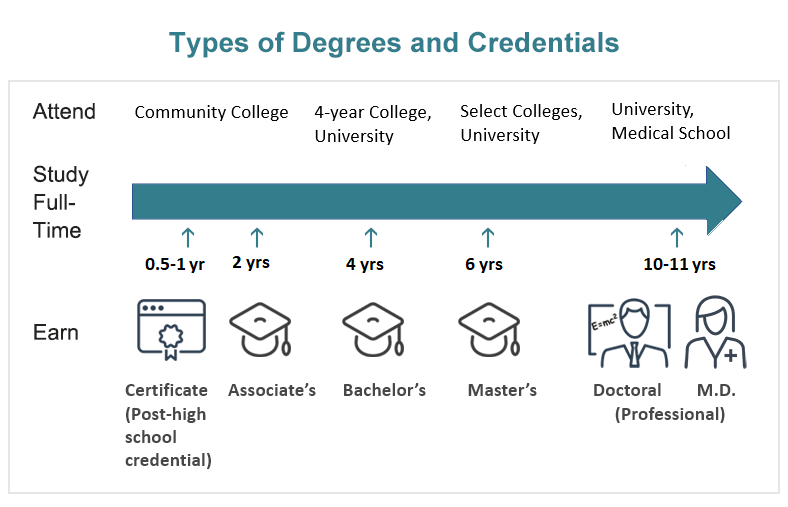
There are several ways to qualify for a job as a chemical technician. Many employers prefer applicants who have at least 2 years of specialized training or an associate's degree in chemistry or chemistry-related technology. Because employers' preferences vary, however, some chemical technicians have a bachelor's degree in chemistry or have completed several science and math courses at a 4-year college.
People interested in careers as chemical technicians should take as many high school science and math courses as possible. Chemistry courses taken beyond high school, in an associate's or bachelor's degree program, should be laboratory-oriented, with an emphasis on bench skills. A solid background in chemistry, physics, and math is vital.
Companies That Hire Chemical Technicians
Try it Out with an Activity or Project
STEM Activities
STEM activities are fun hands-on explorations that usually take from 10 minutes to one hour and use readily available household or classroom materials while introducing you to STEM concepts common in this career.
/-/https/www.sciencebuddies.org/cdn/Files/13333/5/elephant-toothpaste.jpg)
/-/https/www.sciencebuddies.org/cdn/Files/5895/5/homemade-ice-cream-easy-bag.jpg)
/-/https/www.sciencebuddies.org/cdn/Files/14445/9/invisible-ink-paint-activity-thumbnail.jpg)
/-/https/www.sciencebuddies.org/cdn/Files/13327/5/fire-snake-A-thumbnail.jpg)
/-/https/www.sciencebuddies.org/cdn/Files/13371/5/lemon-volcano-thumbnail.jpg)
/-/https/www.sciencebuddies.org/cdn/Files/6907/7/tonic-water-glowing.jpg)
/-/https/www.sciencebuddies.org/cdn/Files/6043/6/mentos-diet-coke-eruption.jpg)
/-/https/www.sciencebuddies.org/cdn/Files/6040/6/baking-soda-vinegar-rocket-decorated.jpg)
/-/https/www.sciencebuddies.org/cdn/Files/12530/19/bath-bomb-activity-thumbnail.jpg)
/-/https/www.sciencebuddies.org/cdn/Files/6092/6/oobleck-making-colloid.jpg)
/-/https/www.sciencebuddies.org/cdn/Files/12972/11/snowmen-detail.jpg)
/-/https/www.sciencebuddies.org/cdn/Files/13016/9/science-activity-slushies-new-thumbnail.jpg)
/-/https/www.sciencebuddies.org/cdn/Files/6050/6/cabbage-pH-indicator-solutions.jpg)
/-/https/www.sciencebuddies.org/cdn/Files/14447/4/paper-marbling-samples-thumbnail.jpg)
/-/https/www.sciencebuddies.org/cdn/Files/15828/5/liquid-density-column-thumbnail.jpg)
/-/https/www.sciencebuddies.org/cdn/Files/12302/8/pouring-water-on-drawing.jpg)
/-/https/www.sciencebuddies.org/cdn/Files/12735/4/crystal-growing-thumbnail.jpg)
/-/https/www.sciencebuddies.org/cdn/Files/13086/7/spoon-trickle-sweetener-thumbnail.jpg)
/-/https/www.sciencebuddies.org/cdn/Files/14248/6/candy-diffusion-thumbnail.jpg)
/-/https/www.sciencebuddies.org/cdn/Files/13194/5/ice-melt-science-activity.jpg)
Science Project Ideas
Project Ideas are in-depth STEM explorations that have a strong focus on controlling variables, taking accurate measurements, and analyzing data suitable for investigating the scientific method or the engineering design process.
/-/https/www.sciencebuddies.org/cdn/Files/6183/6/ice-cubes-salt-bowl.jpg)
/-/https/www.sciencebuddies.org/cdn/Files/21280/4/blobid1750792617510.jpg)
/-/https/www.sciencebuddies.org/cdn/Files/7597/8/scooping-chocolate-ice-cream.jpg)
/-/https/www.sciencebuddies.org/cdn/Files/19376/4/blue-light-luminol.jpg)
/-/https/www.sciencebuddies.org/cdn/Files/18442/8/iodine-clock-three-cups-blue-waters.jpg)
/-/https/www.sciencebuddies.org/cdn/Files/8216/7/clamping-electrodes.jpg)
/-/https/www.sciencebuddies.org/cdn/Files/13042/11/thumbnail-candy-chromatography-FoodSci_p006.jpg)
/-/https/www.sciencebuddies.org/cdn/Files/3865/5/Chem_img068.jpg)
/-/https/www.sciencebuddies.org/cdn/Files/7090/7/surface-tension-penny.jpg)
/-/https/www.sciencebuddies.org/cdn/Files/4651/14/egg_float_salt_water_img.jpg)
/-/https/www.sciencebuddies.org/cdn/Files/3902/5/Chem_img071.jpg)
/-/https/www.sciencebuddies.org/cdn/Files/13038/9/thumbnail-sharpie-markers-chem_p008.jpg)
/-/https/www.sciencebuddies.org/cdn/Files/4635/5/make_grow_crystals_step4_img.jpg)
/-/https/www.sciencebuddies.org/cdn/Files/12116/4/cabbage-chemistry-thumbnail.jpg)
/-/https/www.sciencebuddies.org/cdn/Files/19670/5/pexels-dominika-roseclay-thumbnail.jpg)
/-/https/careerdiscovery.sciencebuddies.org/Dirs/37/0/img/thumbnail.png)
/-/https/www.sciencebuddies.org/cdn/Files/8484/15/chemical-reaction-thumbnail.jpg)
/-/https/www.sciencebuddies.org/cdn/Files/3490/5/FoodSci_img002.jpg)
/-/https/www.sciencebuddies.org/cdn/Files/4080/5/Chem_img084.jpg)
/-/https/www.sciencebuddies.org/cdn/Files/4498/12/coke-mentos-crushed-candies.jpg)
On the Job
Role Models

Nature of the Work
Chemical technicians use the principles and theories of chemistry and mathematics to solve problems in research and development, and to help invent and improve products and processes. Chemical technicians work with chemists and chemical engineers, developing and using chemicals and related products and equipment. However, their jobs are more practical than those of chemists and chemical engineers.
Generally, there are two types of chemical technicians: research technicians who work in experimental laboratories and process control technicians who work in manufacturing or other industrial plants. Many chemical technicians working in research and development conduct a variety of laboratory procedures, from routine process control to complex research projects. For example, they might collect and analyze samples of air and water to monitor pollution levels, or they might produce compounds through complex organic synthesis. Often, chemical technicians who work in plants focus on quality assurance, monitoring product quality or production processes, and developing new production techniques. A few work in shipping to provide technical support and expertise.
As laboratory instrumentation and procedures have become more complex, the role of chemical technicians in research and development has expanded. In addition to performing routine tasks, many technicians, under the direction of scientists, now develop and adapt laboratory procedures to achieve the best results, interpret data, and devise solutions to problems. Chemical technicians must develop expert knowledge of laboratory equipment so that they can adjust settings when necessary and recognize when equipment is malfunctioning.
Work Environment
Chemical technicians work under a wide variety of conditions. Most work indoors, usually in laboratories, and have regular hours. Some occasionally work irregular hours to monitor experiments that cannot be completed during regular working hours. Chemical technicians who work in manufacturing facilities often work in 8-hour shifts, around the clock.
Advances in automation and information technology require chemical technicians to operate more-sophisticated laboratory equipment. Chemical technicians make extensive use of computers, electronic measuring equipment, and traditional experimental apparatus.
Some chemical technicians may be exposed to hazards from equipment, chemicals, or toxic materials. Chemical technicians sometimes work with toxic chemicals or radioactive isotopes.
More Information
Ask Questions
Do you have a specific question about a career as a Chemical Technician that isn't answered on this page? Post your question on the Science Buddies Ask an Expert Forum.
Sources
- U.S. Bureau of Labor Statistics BLS (2024). Occupational Outlook Handbook (OOH), 2024 Edition, Bureau of Labor Statistics. Retrieved August 25, 2025.
- National Center for O*NET Development O*Net Online (2024). National Center for O*Net Development. Retrieved August 25, 2025
- Sloan Career Cornerstone Center. (n.d.). Profiles of Chemists: Cliff Bridges, Chemical Technician. Retrieved September 30, 2009.
- Moving Traffic, Inc. (2009). Chemical Technicians: Schools and Careers. Retrieved September 30, 2009.