

Diver
Overview and Key Facts


Education

Median Pay

Job Growth

Jobs in 2034
What Do They Do?
A commercial diver could...


Overview Listen to this section
Thousands of structures, like bridge supports, ocean oil rigs, and marine research equipment lie underwater and it is the job of commercial divers to maintain those structures. Using scuba gear, commercial divers do a wide variety of underwater tasks, including installing equipment and structures, conducting tests or experiments, rigging explosives, and photographing structures or marine life.
Do You Have the Skills and Characteristics of a Diver?

- Critical Thinking ?
- Active Listening ?
- Operations Monitoring ?
- Speaking ?
- Quality Control Analysis ?
Core Tasks
Think about if you'd like the typical tasks a Diver might do:Salary & Job Openings
Median Salary (Yearly Pay)
Future Jobs
Blast-Off:
(10% or higher)
(7% - 10%)
(5% - 7%)
(3% - 5%)
(0% - 3%)

Steps to Get There: Becoming a Diver
High School Subjects to Study
Engineering
Career Pathway Listen to this section
Commercial divers typically need a high school diploma or GED. Training and certification through a commercial diving school is mandatory for most jobs. Basic scuba diving certification should be obtained prior to attending a commercial diving program.
Because there are a large variety of jobs to be done underwater, commercial divers may also need to acquire other skills, like underwater welding, photography, or construction, depending on the type of work they'll be doing. In some companies, on-the-job training by more experienced divers also occurs.
Education- Typical Degree Needed After High School Listen to this section
high school credential
Typical degree for an entry-level position: Post high school credential ?
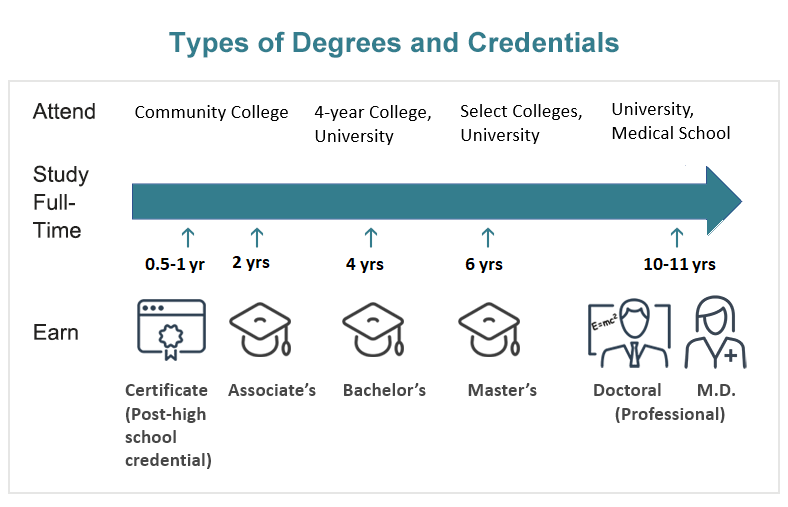
A high school diploma or GED and certification through a commercial diving school are necessary for most commercial diving jobs.
Companies That Hire Divers
Try it Out with an Activity or Project
STEM Activities
STEM activities are fun hands-on explorations that usually take from 10 minutes to one hour and use readily available household or classroom materials while introducing you to STEM concepts common in this career.

Science Project Ideas
Project Ideas are in-depth STEM explorations that have a strong focus on controlling variables, taking accurate measurements, and analyzing data suitable for investigating the scientific method or the engineering design process.


On the Job
Role Models

Nature of the Work
Commercial divers perform underwater activities related to construction, salvage, repair, research, rescue and photography. They use specialized scuba equipment. The exact type of equipment depends on the diving conditions, but
Commercial divers find employment with many types of companies and organizations. Oil companies, demolition companies, police and fire departments, underwater salvage companies, and the Navy are just a few of the places where commercial divers work. Depending on the task, commercial divers may need other skills, such as welding, rigging explosives, photography, or emergency management.
Work Environment
Commercial divers spend their working hours in wet suits and scuba gear, swimming around in a variety of bodies of water, from freezing oceans to murky lakes. They are found in swamps, streams, rivers, lakes, oceans, ports, harbors, locks, weirs, reservoirs, spillways, quarries, pools, and sewers.
More Information
Ask Questions
Do you have a specific question about a career as a Diver that isn't answered on this page? Post your question on the Science Buddies Ask an Expert Forum.
Sources
- U.S. Bureau of Labor Statistics BLS (2024). Occupational Outlook Handbook (OOH), 2024 Edition, Bureau of Labor Statistics. Retrieved August 25, 2025.
- National Center for O*NET Development O*Net Online (2024). National Center for O*Net Development. Retrieved August 25, 2025
- The El Group. (2009). Commercial Diver. Retrieved July 15, 2009.
- United States Navy (2009). Naval Experimental Diving Unit. Retrieved July 16, 2009.
- Sea Grant Marine Careers. (2007). Researcher Profile: Michael Lombardi. Retrieved April 25, 2019.