
/-/https/careerdiscovery.sciencebuddies.org/cdn/Files/21464/5/sb-logo.png)
Environmental Science and Protection Technician
Overview and Key Facts
/-/https/careerdiscovery.sciencebuddies.org/cdn/Files/20196/5/Environ_KeyPhoto.jpg)

Education

Median Pay

Job Growth

Jobs in 2034
What Do They Do?
An environmental science and protection technician could.../-/https/careerdiscovery.sciencebuddies.org/cdn/Files/20197/5/WaterSamplesPhoto.jpeg)
/-/https/careerdiscovery.sciencebuddies.org/cdn/Files/20198/5/RemoteSensorsPhoto.jpeg)
/-/https/careerdiscovery.sciencebuddies.org/cdn/Files/20199/5/FoodPoisoning.jpg)
/-/https/careerdiscovery.sciencebuddies.org/cdn/Files/20200/5/Asbestos.jpg)
/-/https/careerdiscovery.sciencebuddies.org/cdn/Files/20197/5/WaterSamplesPhoto.jpeg)
/-/https/careerdiscovery.sciencebuddies.org/cdn/Files/20198/5/RemoteSensorsPhoto.jpeg)
/-/https/careerdiscovery.sciencebuddies.org/cdn/Files/20199/5/FoodPoisoning.jpg)
/-/https/careerdiscovery.sciencebuddies.org/cdn/Files/20200/5/Asbestos.jpg)
Overview Listen to this section
Pollution affects everything the eye can see (and even places your eyes cannot see, like deep underground and air particles). This is when environmental science and protection technicians, or an environmental advisor, come to the rescue! They help identify issues caused from pollution or contamination. They may collect samples and test them. They can even plan emergency responses and recommend improvements to make the world a better place for all!
/-/https/i.ytimg.com/vi/dJoIp5P_yo8/maxresdefault.jpg)
Do You Have the Skills and Characteristics of an Environmental Science and Protection Technician?

Core Tasks
Think about if you'd like the typical tasks an Environmental Science and Protection Technician might do:Salary & Job Openings
Median Salary (Yearly Pay)
Future Jobs
Blast-Off:
(10% or higher)
(7% - 10%)
(5% - 7%)
(3% - 5%)
(0% - 3%)

Steps to Get There: Becoming an Environmental Science and Protection Technician
High School Subjects to Study
Engineering
Career Pathway Listen to this section
Technicians whose jobs involve handing hazardous waste typically need to complete training that meets Occupational Safety and Health Administration (OSHA) standards. The length of training may depend on the type of hazardous material that workers handle. The training covers health hazards, personal protective equipment and clothing, site safety, recognizing and identifying hazards, and decontamination.
Education- Typical Degree Needed After High School Listen to this section
high school credential
Typical degree for an entry-level position: Associate's degree ?
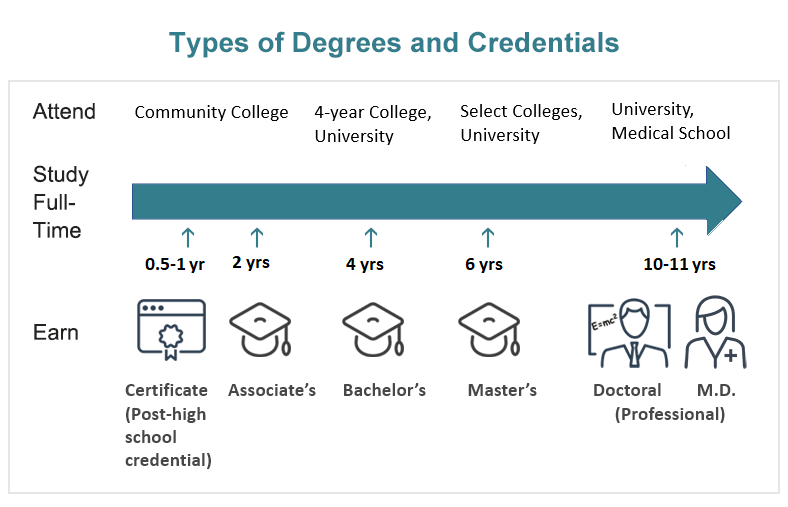
Environmental science and protection technicians typically need at least an associate's degree in environmental science, environmental health, or public health, or a related field. Depending on the position, however, educational requirements may vary from a high school diploma to a bachelor's degree.
A background in natural sciences — including classes in chemistry, biology, and physics — is important for environmental science and protection technicians. College students should take science courses that provide laboratory experience. Coursework in math, statistics, and computer science also is useful for data analysis and modeling.
Companies That Hire Environmental Science and Protection Technicians
- CITGO
- Thermo Fisher Scientific
- Stantec
- Northrop Grumman
- The Boeing Company
- Chevron
- Forest Service
Try it Out with an Activity or Project
STEM Activities
STEM activities are fun hands-on explorations that usually take from 10 minutes to one hour and use readily available household or classroom materials while introducing you to STEM concepts common in this career.
/-/https/www.sciencebuddies.org/cdn/Files/17734/4/flocculation-drinking-water.jpg)
/-/https/www.sciencebuddies.org/cdn/Files/15881/5/Aquafier.jpg)
/-/https/careerdiscovery.sciencebuddies.org/Dirs/37/0/img/thumbnail.png)
Science Project Ideas
Project Ideas are in-depth STEM explorations that have a strong focus on controlling variables, taking accurate measurements, and analyzing data suitable for investigating the scientific method or the engineering design process.
/-/https/www.sciencebuddies.org/cdn/Files/21244/4/blobid1749044493094.jpg)
/-/https/www.sciencebuddies.org/cdn/Files/12246/4/water-sample-wetlands.jpg)
/-/https/www.sciencebuddies.org/cdn/Files/12224/7/acid-rain-ducks.jpg)
/-/https/www.sciencebuddies.org/cdn/Files/12217/9/industry-sunrise-clouds-fog.jpg)
/-/https/www.sciencebuddies.org/cdn/Files/12229/4/rain-drip-circle.jpg)
/-/https/www.sciencebuddies.org/cdn/Files/4907/10/Ferrofluid_Project-work-area_img.jpg)
/-/https/www.sciencebuddies.org/cdn/Files/3382/10/Pharm_img004.gif)
/-/https/www.sciencebuddies.org/cdn/Files/12235/9/logoa-lake-heavy-metals.jpg)
/-/https/www.sciencebuddies.org/cdn/Files/21209/6/blobid1745511081404.jpg)
/-/https/www.sciencebuddies.org/cdn/Files/21300/4/blobid1751484690101.jpg)
/-/https/www.sciencebuddies.org/cdn/Files/12230/4/noaa-oil-spill-response.jpg)
/-/https/www.sciencebuddies.org/cdn/Files/12122/4/soil-compaction-thumbnail.jpg)
/-/https/www.sciencebuddies.org/cdn/Files/12222/4/smoke-pollution-environment-steam.jpg)
/-/https/www.sciencebuddies.org/cdn/Files/12225/6/dirt-potting-soil-mud.jpg)
/-/https/www.sciencebuddies.org/cdn/Files/12245/4/agriculture-tractor-fertilize.jpg)
/-/https/www.sciencebuddies.org/cdn/Files/7624/5/worm-compost-pile-compost.jpg)
On the Job
Role Models

Nature of the Work
Environmental science and protection technicians, also known as Environmental Advisors, monitor the environment and investigate sources of pollution and contamination, including those affecting public health.
Environmental science and protection technicians help monitor environmental quality and manage regulation compliance. Their tasks vary, depending on where they work. In government positions, they may enforce regulations by conducting inspections and investigating complaints of air quality, water quality, or food safety. In businesses, they may develop cleanup plans for contaminated sites and recommend ways to reduce, control, or eliminate pollution.
These technicians also may conduct feasibility or environmental impact studies related to proposed construction. Or they may evaluate areas of potential health risks from environmental contamination, such as abandoned industrial sites.
Environmental science and protection technicians may collect, track, and test samples in laboratory work similar to that of chemical technicians, biological technicians, and microbiologists. However, in contrast to those workers, environmental science and protection technicians focus on the relationship between the environment and human health.
Environmental science and protection technicians often work under the supervision of environmental scientists, who direct the technicians' work and evaluate their results. In addition, technicians may collaborate with scientists, engineers, and technicians in other fields on projects related to environmental contamination and public health.
Most environmental science and protection technicians work full time, and some work more than 40 hours per week. Technicians may travel to meet with clients or to perform fieldwork, both of which may require them to work nonstandard hours.
Work Environment
Environmental science and protection technicians typically work in offices, laboratories, and the field. Fieldwork may include visiting industrial sites or working outdoors. While working outdoors, technicians may be exposed to adverse weather conditions.
During fieldwork, environmental science and protection technicians may spend much of the time on their feet and may need to carry heavy equipment, both of which can be physically demanding. They may need to wear protective gear, such as hardhats or masks, to guard against hazards.
More Information
Ask Questions
Do you have a specific question about a career as an Environmental Science and Protection Technician that isn't answered on this page? Post your question on the Science Buddies Ask an Expert Forum.
Additional Resources
- National Radon Safety Board
- National Environmental Health Association
- Occupational Safety and Health Administration
Sources
- U.S. Bureau of Labor Statistics BLS (2024). Occupational Outlook Handbook (OOH), 2024 Edition, Bureau of Labor Statistics. Retrieved August 25, 2025.
- National Center for O*NET Development O*Net Online (2024). National Center for O*Net Development. Retrieved August 25, 2025
- U.S. Bureau of Labor Statistics BLS. (2022). Environmental Science and Protection Technician. Occupational Outlook Handbook. Retrieved February 19, 2024.