
/-/https/careerdiscovery.sciencebuddies.org/cdn/Files/21464/5/sb-logo.png)
Food Scientist or Technologist
Overview and Key Facts
/-/https/careerdiscovery.sciencebuddies.org/cdn/Files/1316/17/unsplash-ePJQise0OkQ.jpg)

Education

Median Pay

Job Growth

Jobs in 2034
What Do They Do?
A food scientist or technologist could.../-/https/careerdiscovery.sciencebuddies.org/cdn/Files/1317/17/unsplash-XU1-sAMZFqc.jpg)
/-/https/careerdiscovery.sciencebuddies.org/cdn/Files/1318/17/unsplash-uHimRdz45iU.jpg)
/-/https/careerdiscovery.sciencebuddies.org/cdn/Files/1319/17/unsplash-GEpzcRu5QGA.jpg)
/-/https/careerdiscovery.sciencebuddies.org/cdn/Files/1320/17/iStock-506755656.jpg)
/-/https/careerdiscovery.sciencebuddies.org/cdn/Files/1317/17/unsplash-XU1-sAMZFqc.jpg)
/-/https/careerdiscovery.sciencebuddies.org/cdn/Files/1318/17/unsplash-uHimRdz45iU.jpg)
/-/https/careerdiscovery.sciencebuddies.org/cdn/Files/1319/17/unsplash-GEpzcRu5QGA.jpg)
/-/https/careerdiscovery.sciencebuddies.org/cdn/Files/1320/17/iStock-506755656.jpg)
Overview Listen to this section
There is a fraction of the world's population that doesn't have enough to eat or doesn't have access to food that is nutritionally rich. Food scientists or technologists work to find new sources of food that have the right nutrition levels and that are safe for human consumption. In fact, our nation's food supply depends on food scientists and technologists that test and develop foods that meet and exceed government food safety standards. If you are interested in combining biology, chemistry, and the knowledge that you are helping people, then a career as a food scientist or technologist could be a great choice for you!/-/https/i.ytimg.com/vi/Rv22EtyFkSA/hqdefault.jpg)
Do You Have the Skills and Characteristics of a Food Scientist or Technologist?

Core Tasks
Think about if you'd like the typical tasks a Food Scientist or Technologist might do:Salary & Job Openings
Median Salary (Yearly Pay)
Future Jobs
Blast-Off:
(10% or higher)
(7% - 10%)
(5% - 7%)
(3% - 5%)
(0% - 3%)

Steps to Get There: Becoming a Food Scientist or Technologist
High School Subjects to Study
Engineering
Career Pathway Listen to this section
Training requirements for agricultural scientists depend on the type of work they perform. Most food scientists or technologists need at least a master's degree to work in basic or applied research, whereas a bachelor's degree is sufficient for some jobs in applied research or product development, or jobs in other occupations related to agricultural science.
Education- Typical Degree Needed After High School Listen to this section
high school credential
Typical degree for an entry-level position: Bachelor's degree ?
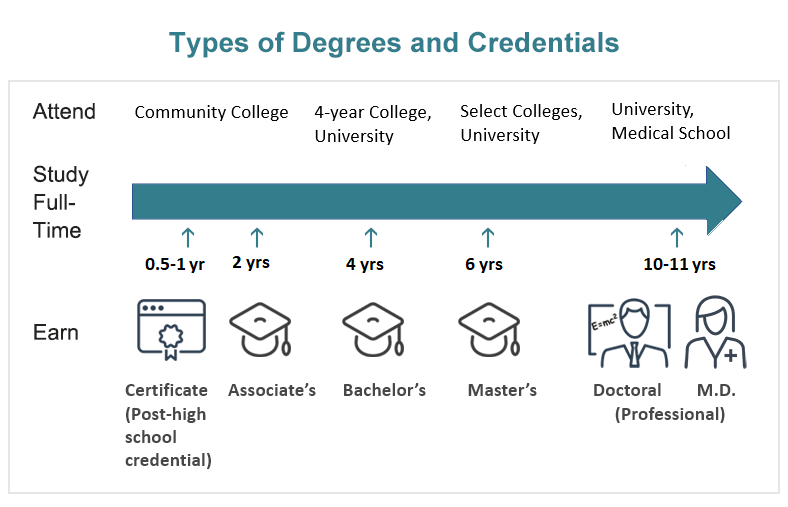
The minimum requirement for food scientists or technologists is a bachelor of science degree. A bachelor's degree in agricultural science is sufficient for some jobs in product development or assisting in applied research, but a master's or doctoral degree is generally required for basic research or for jobs directing applied research. A PhD in agricultural science usually is needed for college teaching and for advancement to senior research positions.
Students preparing to be food scientists or technologists take courses such as food chemistry, food analysis, food microbiology, food engineering, and food processing operations. Those preparing as soil and plant scientists take courses in plant pathology, soil chemistry, entomology, plant physiology, and biochemistry, among others. Advanced degree programs include classroom and fieldwork, laboratory research, and a thesis or dissertation based on independent research.
Food scientists who have advanced degrees usually begin in research or teaching. With experience, they may advance to jobs as supervisors of research programs or managers of other food technology-related activities.
Companies That Hire Food Scientist or Technologists
Try it Out with an Activity or Project
STEM Activities
STEM activities are fun hands-on explorations that usually take from 10 minutes to one hour and use readily available household or classroom materials while introducing you to STEM concepts common in this career.
/-/https/www.sciencebuddies.org/cdn/Files/5895/5/homemade-ice-cream-easy-bag.jpg)
/-/https/www.sciencebuddies.org/cdn/Files/14659/7/remove-rock-candy-thumbnail.jpg)
/-/https/www.sciencebuddies.org/cdn/Files/13016/9/science-activity-slushies-new-thumbnail.jpg)
/-/https/www.sciencebuddies.org/cdn/Files/13299/5/enzymatic-browning-thumbnail.jpg)
/-/https/www.sciencebuddies.org/cdn/Files/12736/4/milk-soap-rainbow-thumbnail.jpg)
/-/https/www.sciencebuddies.org/cdn/Files/14248/6/candy-diffusion-thumbnail.jpg)
/-/https/www.sciencebuddies.org/cdn/Files/3970/17/making-marshmallows.jpg)
/-/https/www.sciencebuddies.org/cdn/Files/13098/5/color-taste-test-thumbnail.jpg)
/-/https/www.sciencebuddies.org/cdn/Files/15922/5/science-activity-fake-blood.png)
/-/https/www.sciencebuddies.org/cdn/Files/12522/8/inside-baked-ice-cream-cake-thumbnail.jpg)
/-/https/www.sciencebuddies.org/cdn/Files/15393/8/lp-milk-curdling-thumbnail.jpg)
/-/https/www.sciencebuddies.org/cdn/Files/12737/4/shaping-hard-boiled-eggs-thumbnail.jpg)
/-/https/www.sciencebuddies.org/cdn/Files/14162/5/edible-paper-applications-thumbnail.jpg)
/-/https/www.sciencebuddies.org/cdn/Files/13334/6/raw-cooked-egg-stem-activity-thumbnail.jpg)
/-/https/www.sciencebuddies.org/cdn/Files/12871/6/candy-crush-science-activity-picture.jpg)
/-/https/www.sciencebuddies.org/cdn/Files/14245/9/dancing-candy-hearts-thumbnail-w.jpg)
/-/https/www.sciencebuddies.org/cdn/Files/12520/6/one-gelatin-pearl-thumbnail.jpg)
/-/https/www.sciencebuddies.org/cdn/Files/12892/5/stack-homemade-maple.candy.jpg)
/-/https/careerdiscovery.sciencebuddies.org/Dirs/37/0/img/thumbnail.png)
/-/https/www.sciencebuddies.org/cdn/Files/12950/6/cranberry-sauce.jpg)
Science Project Ideas
Project Ideas are in-depth STEM explorations that have a strong focus on controlling variables, taking accurate measurements, and analyzing data suitable for investigating the scientific method or the engineering design process.
/-/https/www.sciencebuddies.org/cdn/Files/6423/12/food-spherification-green-tea.jpg)
/-/https/www.sciencebuddies.org/cdn/Files/7597/8/scooping-chocolate-ice-cream.jpg)
/-/https/www.sciencebuddies.org/cdn/Files/7774/11/thumbnail-fat-extraction.jpg)
/-/https/www.sciencebuddies.org/cdn/Files/12738/11/growing-rock-candy-crystals-thumbnail.jpg)
/-/https/www.sciencebuddies.org/cdn/Files/13348/4/thumbnail-enzymatic-browning.jpg)
/-/https/www.sciencebuddies.org/cdn/Files/8209/20/electrolyte-challenge-circuit-red.jpg)
/-/https/www.sciencebuddies.org/cdn/Files/13042/11/thumbnail-candy-chromatography-FoodSci_p006.jpg)
/-/https/www.sciencebuddies.org/cdn/Files/13103/5/color-taste-test-thumbnail-2.jpg)
/-/https/www.sciencebuddies.org/cdn/Files/22068/4/blobid1785191173045.jpg)
/-/https/www.sciencebuddies.org/cdn/Files/17779/10/yogurt-ravioli-pink-balls.jpg)
/-/https/www.sciencebuddies.org/cdn/Files/22096/4/blobid1787806367324.jpg)
/-/https/www.sciencebuddies.org/cdn/Files/3527/10/HumBio_img007.jpg)
/-/https/www.sciencebuddies.org/cdn/Files/7860/17/sports-drinks-thumbnail.jpg)
/-/https/www.sciencebuddies.org/cdn/Files/5301/8/Juicer-vitamin-c-titration_img.jpg)
/-/https/www.sciencebuddies.org/cdn/Files/12039/5/homemade-calorimeter-diagram.jpg)
/-/https/www.sciencebuddies.org/cdn/Files/8677/10/ripe-produce-circuit-thumbnail.jpg)
/-/https/www.sciencebuddies.org/cdn/Files/8400/8/strawberries-hot-ice-cream.jpg)
/-/https/www.sciencebuddies.org/cdn/Files/3971/5/FoodSci_img068.jpg)
/-/https/www.sciencebuddies.org/cdn/Files/3490/5/FoodSci_img002.jpg)
/-/https/www.sciencebuddies.org/cdn/Files/5699/8/bakers_yeast_cerevisiae_under_DIC_microscopy_img.jpg)
On the Job
Role Models

Nature of the Work
The work of food scientists or technologists plays an important part in maintaining the nation's food supply by ensuring food safety. Food scientists and technologists usually work in the food processing industry, universities, or the federal government to create and improve food products. They use their knowledge of chemistry, physics, engineering, microbiology, biotechnology, and other sciences to develop new or better ways of preserving, processing, packaging, storing, and delivering foods. Some food scientists engage in basic research, discovering new food sources; analyzing food content to determine levels of vitamins, fat, sugar, or protein; or searching for substitutes for harmful or undesirable additives, such as nitrites. Others engage in applied research, finding ways to improve the content of food or to remove harmful additives. They also develop ways to process, preserve, package, or store food according to industry and government regulations. Traditional food processing research into baking, blanching, canning, drying, evaporation, and pasteurization also continues. Other food scientists enforce government regulations, inspecting food processing areas and ensuring that sanitation, safety, quality, and waste management standards are met.
Food technologists generally work in product development, applying the findings from food science research to improve the selection, preservation, processing, packaging, and distribution of food.
Work Environment
Food scientists or technologists involved in management or basic research tend to work regular hours in offices and laboratories. The work environment for those engaged in applied research or product development varies, depending on specialty and on type of employer. For example, food scientists in private industry may work in test kitchens, while investigating new processing techniques.
More Information
Ask Questions
Do you have a specific question about a career as a Food Scientist or Technologist that isn't answered on this page? Post your question on the Science Buddies Ask an Expert Forum.
Sources
- U.S. Bureau of Labor Statistics BLS (2024). Occupational Outlook Handbook (OOH), 2024 Edition, Bureau of Labor Statistics. Retrieved August 25, 2025.
- National Center for O*NET Development O*Net Online (2024). National Center for O*Net Development. Retrieved August 25, 2025
- Kraft Foods. (n.d.). Careers at Kraft Foods: Research Development and Quality (RQ&Q). Retrieved October 8, 2009.
- TPT. (2006). Real Scientists. DragonflyTV, Twin Cities Public Television. Retrieved October 8, 2009.