
/-/https/careerdiscovery.sciencebuddies.org/Files/21464/5/sb-logo.png)
Nuclear Monitoring Technician
Overview and Key Facts
/-/https/careerdiscovery.sciencebuddies.org/Files/1544/22/iStock-1031172586.jpg)

Education

Median Pay

Job Growth

Jobs in 2034
What Do They Do?
A nuclear monitoring technician could.../-/https/careerdiscovery.sciencebuddies.org/Files/1545/18/iStock-665686804.jpg)
/-/https/careerdiscovery.sciencebuddies.org/Files/1546/18/iStock-1134240079.jpg)
/-/https/careerdiscovery.sciencebuddies.org/Files/1547/18/iStock-1288755459.jpg)
/-/https/careerdiscovery.sciencebuddies.org/Files/1548/18/iStock-177303706.jpg)
/-/https/careerdiscovery.sciencebuddies.org/Files/1545/18/iStock-665686804.jpg)
/-/https/careerdiscovery.sciencebuddies.org/Files/1546/18/iStock-1134240079.jpg)
/-/https/careerdiscovery.sciencebuddies.org/Files/1547/18/iStock-1288755459.jpg)
/-/https/careerdiscovery.sciencebuddies.org/Files/1548/18/iStock-177303706.jpg)
Overview Listen to this section
Nuclear technology is used to image the human body, destroy cancer cells, sterilize food and medical equipment, create pest or drought-resistant seeds, and to generate power for 1 in 5 U.S. homes and businesses. Nuclear monitoring technicians help to keep the people who work with nuclear technology and the environment safe from excessive radiation exposure. They use special instruments to measure and monitor the radiation levels of workers, work areas and equipment, and they are involved in decontaminating work areas to safe levels. They also educate workers on radiation safety./-/https/i.ytimg.com/vi/XlYberd348Y/hqdefault.jpg)
Do You Have the Skills and Characteristics of a Nuclear Monitoring Technician?

Core Tasks
Think about if you'd like the typical tasks a Nuclear Monitoring Technician might do:Salary & Job Openings
Median Salary (Yearly Pay)
Future Jobs
Blast-Off:
(10% or higher)
(7% - 10%)
(5% - 7%)
(3% - 5%)
(0% - 3%)

Steps to Get There: Becoming a Nuclear Monitoring Technician
High School Subjects to Study
Engineering
Education- Typical Degree Needed After High School Listen to this section
high school credential
Typical degree for an entry-level position: Associate's degree ?
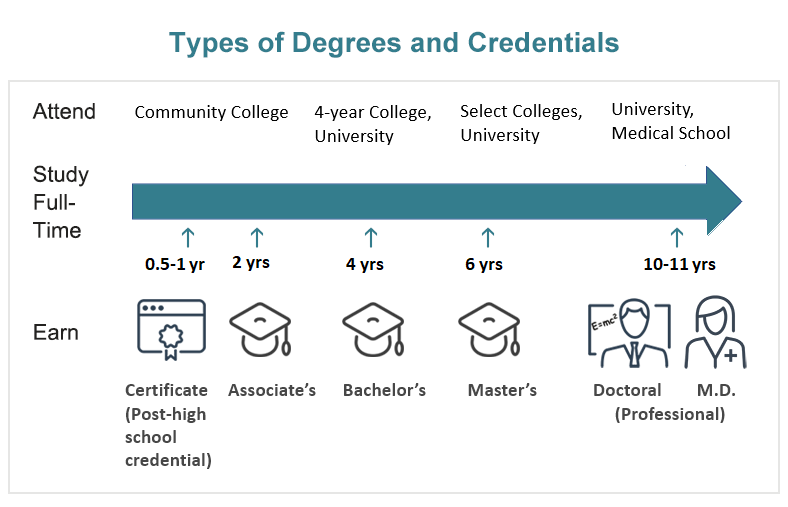
Most employers of nuclear monitoring technicians hire workers who have an associate's degree from a community college or technical school, or a minimum of two years of specialized training in nuclear technology. Most workers need on-the-job training in addition to their formal schooling. Throughout their careers, workers must continue to study new developments, because the field changes rapidly.
Companies That Hire Nuclear Monitoring Technicians
Try it Out with an Activity or Project
STEM Activities
STEM activities are fun hands-on explorations that usually take from 10 minutes to one hour and use readily available household or classroom materials while introducing you to STEM concepts common in this career.
/-/https/www.sciencebuddies.org/cdn/Files/16529/5/CoinsHalfLife.jpg)
Science Project Ideas
Project Ideas are in-depth STEM explorations that have a strong focus on controlling variables, taking accurate measurements, and analyzing data suitable for investigating the scientific method or the engineering design process.
/-/https/www.sciencebuddies.org/cdn/Files/4217/5/Phys_img172.jpg)
/-/https/www.sciencebuddies.org/cdn/Files/4457/6/SciF_Background-radiation_figure6_img.jpg)
/-/https/www.sciencebuddies.org/cdn/Files/4443/6/SciF_See-Radioactivity_Figure12_SDB_img.jpg)
/-/https/careerdiscovery.sciencebuddies.org/Dirs/37/0/img/thumbnail.png)
On the Job
Role Models

Nature of the Work
Nuclear monitoring technicians, sometimes also called health physics technicians or radiation monitors, work in places that use radiation and radioactive material, helping to protect people and the environment from hazardous radiation exposure. They use special equipment to measure and monitor the radiation levels of people, work areas and equipment, and notify supervisors when individual exposures or area radiation levels are approaching maximum permissible limits. They keep records and enforce safety regulations to ensure that the amount of radiation at a nuclear facility remains within the limits established by health physicists.
Nuclear monitoring technicians are involved in the initial response to abnormal events and to alarms from radiation monitoring equipment. They determine or recommend radioactive decontamination procedures, according to the size and nature of equipment and the degree of contamination. They may also be involved in decontamination of work areas and materials; that is, reducing the amount of radioactivity to a safe level.
Nuclear monitoring technicians are involved in education, instructing personnel in radiation safety procedures, and in demonstrating the use of protective clothing and equipment.
Work Environment
Nuclear monitoring technicians work in modern laboratories and plants. Since some employees work close to radioactive materials, many precautions are taken to keep them safe from radiation poisoning. The nuclear energy field has an excellent safety record. Many nuclear technicians work 35–40 hours a week. In many cases they must work or be on-call for night, holiday, and weekend shifts. Some workers are unionized.
More Information
Ask Questions
Do you have a specific question about a career as a Nuclear Monitoring Technician that isn't answered on this page? Post your question on the Science Buddies Ask an Expert Forum.
Additional Resources
- American Nuclear Society: www.ans.org
- Nuclear Energy Institute: https://www.nei.org/home
Sources
- U.S. Bureau of Labor Statistics BLS (2024). Occupational Outlook Handbook (OOH), 2024 Edition, Bureau of Labor Statistics. Retrieved August 25, 2025.
- National Center for O*NET Development O*Net Online (2024). National Center for O*Net Development. Retrieved August 25, 2025
- Net Industries. (2009). Nuclear Technician Job Description, Career as a Nuclear Technician, Salary, Employment - Definition and Nature of the Work, Education and Training Requirements, Getting the Job. Retrieved December 11, 2009.
- YouTube, Bruce Power. (2009, January 21). Radiation Protection. Retrieved December 11, 2009.