
/-/https/careerdiscovery.sciencebuddies.org/Files/21464/5/sb-logo.png)
Park Ranger
Overview and Key Facts
/-/https/careerdiscovery.sciencebuddies.org/Files/1576/17/iStock-459013781.jpg)

Education

Median Pay

Job Growth

Jobs in 2034
What Do They Do?
A park ranger could.../-/https/careerdiscovery.sciencebuddies.org/Files/1577/17/iStock-894667710.jpg)
/-/https/careerdiscovery.sciencebuddies.org/Files/1578/17/iStock-1185370851.jpg)
/-/https/careerdiscovery.sciencebuddies.org/Files/1579/17/iStock-1280080280.jpg)
/-/https/careerdiscovery.sciencebuddies.org/Files/1580/17/iStock-1009702574.jpg)
/-/https/careerdiscovery.sciencebuddies.org/Files/1577/17/iStock-894667710.jpg)
/-/https/careerdiscovery.sciencebuddies.org/Files/1578/17/iStock-1185370851.jpg)
/-/https/careerdiscovery.sciencebuddies.org/Files/1579/17/iStock-1280080280.jpg)
/-/https/careerdiscovery.sciencebuddies.org/Files/1580/17/iStock-1009702574.jpg)
Overview Listen to this section
Park rangers are the law enforcement officials of our state and national parks. They protect and preserve parklands, keeping park resources safe from people who might try to damage them, deliberately or through neglect, and keeping people safe from dangers within the park. To achieve this goal, park rangers work in a wide variety of positions, including education and interpretation for park visitors, emergency dispatch, firefighting, maintenance, law enforcement, search and rescue, and administration. There is a large global shortage of park rangers in developing countries./-/https/i.ytimg.com/vi/eyVgU7DK6Yw/hqdefault.jpg)
Do You Have the Skills and Characteristics of a Park Ranger?

Core Tasks
Think about if you'd like the typical tasks a Park Ranger might do:Salary & Job Openings
Median Salary (Yearly Pay)
Future Jobs
Blast-Off:
(10% or higher)
(7% - 10%)
(5% - 7%)
(3% - 5%)
(0% - 3%)

Steps to Get There: Becoming a Park Ranger
High School Subjects to Study
Engineering
Education- Typical Degree Needed After High School Listen to this section
high school credential
Typical degree for an entry-level position: Bachelor's degree ?
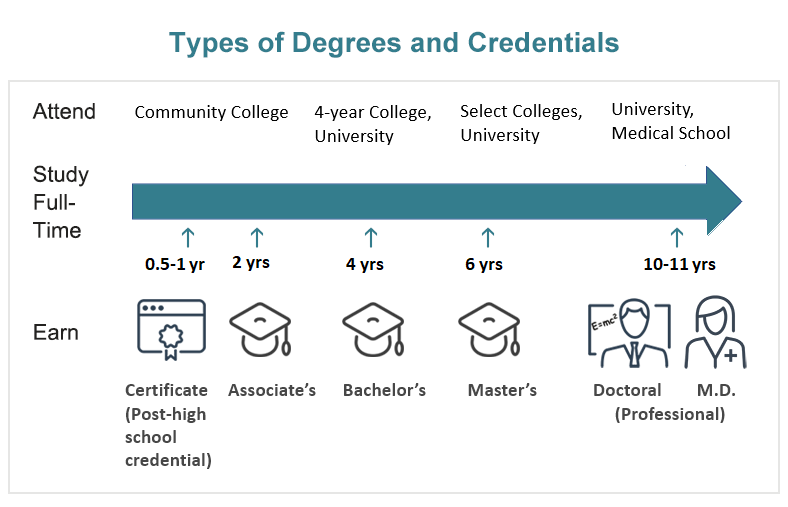
Park rangers are usually required to have a bachelor's degree; however, high school graduates are sometimes eligible for ranger jobs after three years of progressively responsible experience in conservation work or park operations. Interested individuals should study botany, zoology, geology, and ecology in college. Other useful subjects include park management, forestry, and the social sciences. Candidates with master's degrees in these fields often have an advantage over other applicants who are seeking jobs as park rangers.
Companies That Hire Park Rangers
Try it Out with an Activity or Project
STEM Activities
STEM activities are fun hands-on explorations that usually take from 10 minutes to one hour and use readily available household or classroom materials while introducing you to STEM concepts common in this career.
/-/https/www.sciencebuddies.org/Files/12961/5/beetle-in-field-habitat.jpg)
/-/https/www.sciencebuddies.org/Files/6418/7/grasshopper-brown.jpg)
Science Project Ideas
Project Ideas are in-depth STEM explorations that have a strong focus on controlling variables, taking accurate measurements, and analyzing data suitable for investigating the scientific method or the engineering design process.
/-/https/www.sciencebuddies.org/Files/12248/4/amaranthus-invasive.jpg)
/-/https/careerdiscovery.sciencebuddies.org/Dirs/37/0/img/thumbnail.png)
/-/https/www.sciencebuddies.org/Files/3491/5/Zoo_img037.jpg)
/-/https/www.sciencebuddies.org/Files/12218/4/fire-ants-thumbnail.jpg)
/-/https/www.sciencebuddies.org/Files/20802/6/blobid1726855511702.jpg)
/-/https/www.sciencebuddies.org/Files/12226/4/frog-water-lilies.jpg)
/-/https/www.sciencebuddies.org/Files/12124/4/tule-fog-thumbnail.jpg)
/-/https/www.sciencebuddies.org/Files/3859/8/PlantBio_img040.jpg)
/-/https/www.sciencebuddies.org/Files/12149/4/wind-bending-tree-thumbnail.jpg)
/-/https/www.sciencebuddies.org/Files/12234/4/clover-field-wildlife.jpg)
/-/https/www.sciencebuddies.org/Files/3619/5/Geo_img062.jpg)
/-/https/www.sciencebuddies.org/Files/3621/5/Zoo_img040.jpg)
On the Job
Role Models

Nature of the Work
Park rangers teach people to respect the delicate natural balance of our national and state parks and forests. They are employed by the National Park Service, which is an agency of the U.S. federal government, and by state agencies. Rangers work throughout the country preserving the natural environment for future generations. They protect these areas by enforcing park rules and regulations, preventing forest fires, helping to maintain an ecological balance, and seeing that visitors plan campsites wisely. Park rangers are skilled campers with a great deal of knowledge about botany and wildlife. Perhaps the greatest danger to our parks is the danger of overuse: rangers watch and regulate the number of visitors to parks. They also provide information regarding park use and points of interest, issue fire permits, and collect fees.
In addition to protecting natural resources, park rangers protect people. They may rescue a rock climber who has fallen or chase away a bear that is threatening campers. In addition, rangers act as educators by teaching campers how to use camping equipment, taking visitors on nature walks, setting up exhibits, and lecturing on historic topics. Park rangers also help to train new rangers.
Some rangers specialize in a certain type of patrol. There are backcountry rangers, who load up their mules with supplies and spend weeks at a time in isolated, undeveloped areas checking on hikers and watching for trails that need repairing. Snow rangers patrol their area on skis and are skilled in first aid, which includes applying splints to injured skiers. Some rangers make their rounds by boat or canoe. Many rangers are assisted by park aides.
Law enforcement is among the many duties of a park ranger. Some national park rangers carry guns. Park rangers sometimes recover stolen cars or quiet rowdy visitors. They are also in charge of investigating any suspected illegal activity committed in national parks.
Work Environment
Most rangers work outdoors in all kinds of weather, and their work is physically strenuous. They generally work long hours during the summer and somewhat shorter hours during the winter. Rangers in the National Park Service may have to spend time alone in isolated areas. They can expect to be assigned to several different parts of the country during their careers and receive no assurance that they will remain in a particular area. Despite these obstacles, most park rangers derive a great deal of satisfaction from their work.
More Information
Ask Questions
Do you have a specific question about a career as a Park Ranger that isn't answered on this page? Post your question on the Science Buddies Ask an Expert Forum.
Additional Resources
- American Forests: www.amercianforests.org
- Association of National Park Rangers: www.anpr.org
- National Park Service: https://www.nps.gov/index.htm
- National Recreation and Park Association: www.nrpa.org
Sources
- U.S. Bureau of Labor Statistics BLS (2024). Occupational Outlook Handbook (OOH), 2024 Edition, Bureau of Labor Statistics. Retrieved August 25, 2025.
- National Center for O*NET Development O*Net Online (2024). National Center for O*Net Development. Retrieved August 25, 2025
- Net Industries. 2009. Park Ranger Job Description, Career as a Park Ranger, Salary, Employment - Definition and Nature of the Work, Education and Training Requirements, Getting the Job. Retrieved October 2, 2009.
- Voice Of America. (2009, August 26). Urban Naturalist Leads Education Efforts in New York City Parks. Retrieved December 4, 2009.
- South Carolina Department of Parks, Recreation, and Tourism. (2019). South Carolina Parks–Ranger Profile. Retrieved March 20, 2019.