
/-/https/careerdiscovery.sciencebuddies.org/cdn/Files/21464/5/sb-logo.png)
Physics Teacher
Overview and Key Facts
/-/https/careerdiscovery.sciencebuddies.org/cdn/Files/1649/17/pexels-photo-1181398.jpg)

Education

Median Pay

Job Growth

Jobs in 2034
What Do They Do?
A physics teacher could.../-/https/careerdiscovery.sciencebuddies.org/cdn/Files/1650/22/pexels-photo-248547.jpg)
/-/https/careerdiscovery.sciencebuddies.org/cdn/Files/1651/17/iStock-1201282623.jpg)
/-/https/careerdiscovery.sciencebuddies.org/cdn/Files/1652/17/pexels-photo-586089.jpg)
/-/https/careerdiscovery.sciencebuddies.org/cdn/Files/1653/17/iStock-1133836400.jpg)
/-/https/careerdiscovery.sciencebuddies.org/cdn/Files/1650/22/pexels-photo-248547.jpg)
/-/https/careerdiscovery.sciencebuddies.org/cdn/Files/1651/17/iStock-1201282623.jpg)
/-/https/careerdiscovery.sciencebuddies.org/cdn/Files/1652/17/pexels-photo-586089.jpg)
/-/https/careerdiscovery.sciencebuddies.org/cdn/Files/1653/17/iStock-1133836400.jpg)
Overview Listen to this section
Our universe is full of matter and energy, and how that matter and energy moves and interacts in space and time is the subject of physics. Physics teachers spend their days showing and explaining the marvels of physics, which underlies all the other science subjects, including biology, chemistry, Earth and space science. Their work serves to develop the next generation of scientists and engineers, including all healthcare professionals. They also help all students better understand their physical world and how it works in their everyday lives, as well as how to become better citizens by understanding the process of scientific research./-/https/i.ytimg.com/vi/d4Mjv9lCmgo/hqdefault.jpg)
Do You Have the Skills and Characteristics of a Physics Teacher?

Core Tasks
Think about if you'd like the typical tasks a Physics Teacher might do:Salary & Job Openings
Median Salary (Yearly Pay)
Future Jobs
Blast-Off:
(10% or higher)
(7% - 10%)
(5% - 7%)
(3% - 5%)
(0% - 3%)

Steps to Get There: Becoming a Physics Teacher
High School Subjects to Study
Engineering
Career Pathway Listen to this section
The traditional route to becoming a physics teacher involves completing a bachelor's degree from a teacher education program and then obtaining a license. However, most states now offer alternative routes to licensure for those who have a college degree in physics. Private school teachers do not have to be licensed, but might still need a bachelor's degree.
Education- Typical Degree Needed After High School Listen to this section
high school credential
Typical degree for an entry-level position: Bachelor's degree ?
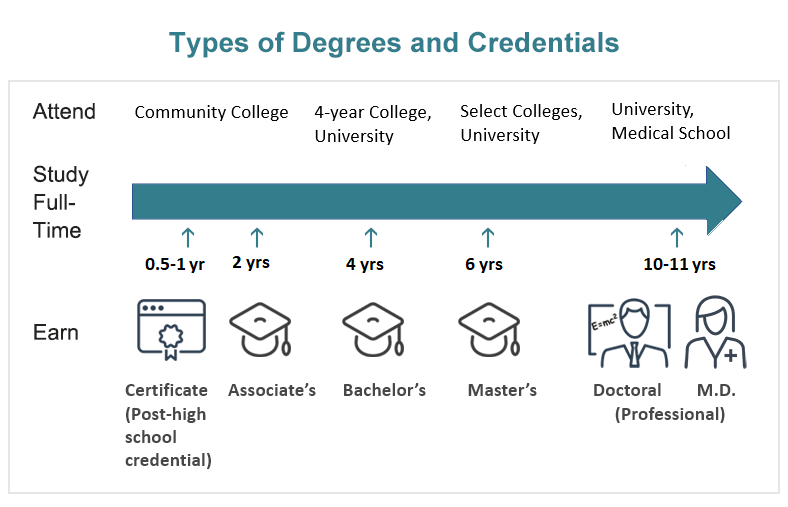
Teaching high school physics requires a bachelor's degree in physics or a related discipline. In addition to a college degree, each state requires prospective teachers to complete a state-approved teaching certification program. Requirements for these certifications vary by state.
Many 4-year colleges require students to wait until their sophomore year before applying for admission to teacher education programs. To maintain their accreditation, teacher education programs are now required to include classes in the use of computers and other technologies. Most programs require students to perform a student-teaching internship. Teacher education programs are accredited by the National Council for Accreditation of Teacher Education and the Teacher Education Accreditation Council. Graduation from an accredited program is not necessary to become a teacher, but it might make fulfilling licensure requirements easier.
Many states now offer professional development schools, which are partnerships between universities and elementary or secondary schools. Professional development schools merge theory with practice and allow the student to experience a year of teaching firsthand, under professional guidance. Students enter these 1-year programs after the completion of their bachelor's degree.
Companies That Hire Physics Teachers
Try it Out with an Activity or Project
STEM Activities
STEM activities are fun hands-on explorations that usually take from 10 minutes to one hour and use readily available household or classroom materials while introducing you to STEM concepts common in this career.
/-/https/www.sciencebuddies.org/cdn/Files/15225/6/mini-trebuchet-thumbnail.jpg)
/-/https/www.sciencebuddies.org/cdn/Files/13285/6/walking-water-thumbnail.jpg)
/-/https/www.sciencebuddies.org/cdn/Files/12736/4/milk-soap-rainbow-thumbnail.jpg)
/-/https/www.sciencebuddies.org/cdn/Files/6150/8/fireworks-colors.jpg)
/-/https/www.sciencebuddies.org/cdn/Files/6900/7/homemade-magnetic-compass.jpg)
/-/https/www.sciencebuddies.org/cdn/Files/14315/7/colorful-bottles-with-holes.jpg)
/-/https/www.sciencebuddies.org/cdn/Files/11762/8/black-hole-thumbnail.jpg)
/-/https/www.sciencebuddies.org/cdn/Files/7567/6/sticky-note-friction.jpg)
/-/https/www.sciencebuddies.org/cdn/Files/16555/4/milky-water-bottle-with-light.jpg)
/-/https/www.sciencebuddies.org/cdn/Files/12427/5/capillary-effect-thumbnail.jpg)
/-/https/www.sciencebuddies.org/cdn/Files/12213/6/rubber-band-hula-hoop-combined.jpg)
/-/https/www.sciencebuddies.org/cdn/Files/14336/6/blow-ball-in-bottle.jpg)
/-/https/www.sciencebuddies.org/cdn/Files/13005/7/balancing-objects-thumbnail.jpg)
/-/https/www.sciencebuddies.org/cdn/Files/4770/18/centripetal-force-jello-marble.jpg)
/-/https/www.sciencebuddies.org/cdn/Files/4467/23/homemade-hula-hoops.jpg)
Science Project Ideas
Project Ideas are in-depth STEM explorations that have a strong focus on controlling variables, taking accurate measurements, and analyzing data suitable for investigating the scientific method or the engineering design process.
/-/https/www.sciencebuddies.org/cdn/Files/4056/10/Aero_img086.jpg)
/-/https/www.sciencebuddies.org/Files/18245/9/paper-ball-run-thumbnail.jpg)
/-/https/www.sciencebuddies.org/cdn/Files/2126/3/Sports_img037.jpg)
/-/https/www.sciencebuddies.org/cdn/Files/6147/9/fireworks_show.jpg)
/-/https/careerdiscovery.sciencebuddies.org/Dirs/37/0/img/thumbnail.png)
/-/https/www.sciencebuddies.org/cdn/Files/19210/11/paper-grabber-challenge-engineering-project.jpg)
/-/https/www.sciencebuddies.org/cdn/Files/3715/5/Phys_img094.jpg)
/-/https/www.sciencebuddies.org/cdn/Files/5359/10/tracker-projectile_img.jpg)
/-/https/www.sciencebuddies.org/cdn/Files/6399/13/trebuchet.jpg)
/-/https/www.sciencebuddies.org/cdn/Files/2974/10/HumBeh_img019.gif)
/-/https/www.sciencebuddies.org/cdn/Files/6154/11/Kaleidoscope-image.jpg)
/-/https/www.sciencebuddies.org/cdn/Files/2127/3/Phys_img002.jpg)
/-/https/www.sciencebuddies.org/cdn/Files/3102/5/HumBeh_img019.gif)
/-/https/www.sciencebuddies.org/cdn/Files/7573/6/sticky-note-friction-project.jpg)
/-/https/www.sciencebuddies.org/cdn/Files/19806/10/car-horsepower-ramp-thumbnail.jpg)
/-/https/www.sciencebuddies.org/cdn/Files/13393/5/floating-magnets-pi-thumbnail.jpg)
/-/https/www.sciencebuddies.org/Files/21432/4/blobid1756387549873.jpg)
On the Job
Role Models

Nature of the Work
Physics teachers are responsible for educating students on the laws of matter and energy. Physics teachers must prepare lesson plans, assign homework, and create and grade exams to test students on the information they have learned. They are also responsible for working with parents, school administrators, and other teachers to further the education of all students.
Work Environment
Seeing students develop new skills and gain an appreciation of knowledge and learning can be very rewarding. However, teaching can be frustrating when one is dealing with unmotivated or disrespectful students. Occasionally, teachers must cope with unruly behavior and violence in the schools. Teachers might experience stress in dealing with large classes, heavy workloads, or old schools that are run down and lack modern amenities. Accountability standards also might increase stress levels, with teachers expected to produce students who are able to exhibit a satisfactory performance on standardized tests in core subjects. Many teachers, particularly in public schools, also are frustrated by the lack of control they have over what they are required to teach.
Teachers in private schools generally enjoy smaller class sizes and more control over establishing the curriculum and setting standards for performance and discipline. Their students also tend to be more motivated, since private schools can be selective in their admissions processes.
Teachers are sometimes isolated from their colleagues because they work alone in a classroom of students. However, some schools allow teachers to work in teams and with mentors, to enhance their professional development.
Many teachers work more than 40 hours a week, including school duties performed outside the classroom. Most teachers work the traditional 10-month school year, with a 2-month vacation during the summer. During the vacation break, those on the 10-month schedule may teach in summer sessions, take other jobs, travel, or pursue personal interests. Many enroll in college courses or workshops to continue their education. Teachers in districts with a year-round schedule typically work 8 weeks, are on vacation for 1 week, and have a 5-week midwinter break.
Most states have tenure laws that prevent public school teachers from being fired without just cause and due process. Teachers may obtain tenure after they have satisfactorily completed a probationary period of teaching, normally 3 years. Tenure does not absolutely guarantee a job, but it does provide some security.
More Information
Ask Questions
Do you have a specific question about a career as a Physics Teacher that isn't answered on this page? Post your question on the Science Buddies Ask an Expert Forum.
Additional Resources
- American Federation of Teachers: www.nea.org
- National Board for Professional Teaching Standards: https://www.nbpts.org/
- Graduate School of Education: https://teach-now.edu/
- National Council for Accreditation of Teacher Education: www.ncate.org
- National Science Teachers Association: https://www.nsta.org/
- Coalition of Higher Education Accreditation: https://www.chea.org/
- Physics Teacher Education Coalition: https://www.phystec.org/
- Teacher.org - How to Become a Science Teacher: https://www.teacher.org/career/science-teacher/
Sources
- U.S. Bureau of Labor Statistics BLS (2024). Occupational Outlook Handbook (OOH), 2024 Edition, Bureau of Labor Statistics. Retrieved August 25, 2025.
- National Center for O*NET Development O*Net Online (2024). National Center for O*Net Development. Retrieved August 25, 2025
- Physics Central. (2010). Mary Lee McJimsey. Retrieved May 17, 2010.
- Toplikar, D. (2007, April 30). 'Every kid can learn' philosophy helps physics teacher earn recognition. Retrieved May 18, 2010.
- Study.com. (2010). Physics Teacher: Employment Info and Requirements for Becoming a High School Physics Teacher. Retrieved May 17, 2010.
- APS Physics. (n.d.) Becoming a Physics Teacher. Retrieved May 22, 2019.