
/-/https/careerdiscovery.sciencebuddies.org/Files/21464/5/sb-logo.png)
Power Distributor & Dispatcher
Overview and Key Facts
/-/https/careerdiscovery.sciencebuddies.org/Files/1678/17/unsplash-WEDDt-u3q3o.jpg)

Education

Median Pay

Job Growth

Jobs in 2034
What Do They Do?
A power plant distributor and dispatcher could.../-/https/careerdiscovery.sciencebuddies.org/Files/1679/17/iStock-892496416.jpg)
/-/https/careerdiscovery.sciencebuddies.org/Files/1680/17/iStock-497214682.jpg)
/-/https/careerdiscovery.sciencebuddies.org/Files/1681/17/iStock-1181551837.jpg)
/-/https/careerdiscovery.sciencebuddies.org/Files/1682/17/unsplash-fHLdXfURDhA.jpg)
/-/https/careerdiscovery.sciencebuddies.org/Files/1679/17/iStock-892496416.jpg)
/-/https/careerdiscovery.sciencebuddies.org/Files/1680/17/iStock-497214682.jpg)
/-/https/careerdiscovery.sciencebuddies.org/Files/1681/17/iStock-1181551837.jpg)
/-/https/careerdiscovery.sciencebuddies.org/Files/1682/17/unsplash-fHLdXfURDhA.jpg)
Overview Listen to this section
Think of all the things in your home or school that use electricity, like the lights, TV, refrigerator, washer, microwave, music players, computer, and electronic devices. Now think of how you feel when the power goes out, even for just a moment. Power plant distributors and dispatchers have an important job—they work to keep electricity flowing to homes and businesses by carefully watching and planning for problems like big storms that could damage transmission lines, heat waves that cause a big surge in demand for power, or normal construction work, which could take transmission lines out of service./-/https/i.ytimg.com/vi/HX_AxDb8nS0/hqdefault.jpg)
Do You Have the Skills and Characteristics of a Power Distributor & Dispatcher?

Core Tasks
Think about if you'd like the typical tasks a Power Distributor & Dispatcher might do:Salary & Job Openings
Median Salary (Yearly Pay)
Future Jobs
Blast-Off:
(10% or higher)
(7% - 10%)
(5% - 7%)
(3% - 5%)
(0% - 3%)

Steps to Get There: Becoming a Power Distributor & Dispatcher
High School Subjects to Study
Engineering
Career Pathway Listen to this section
Dispatchers and distributors generally need a combination of education, on-the-job training, and experience. Candidates with strong computer and technical skills are generally preferred.
Education- Typical Degree Needed After High School Listen to this section
high school credential
Typical degree for an entry-level position: High school diploma or equivalent ?
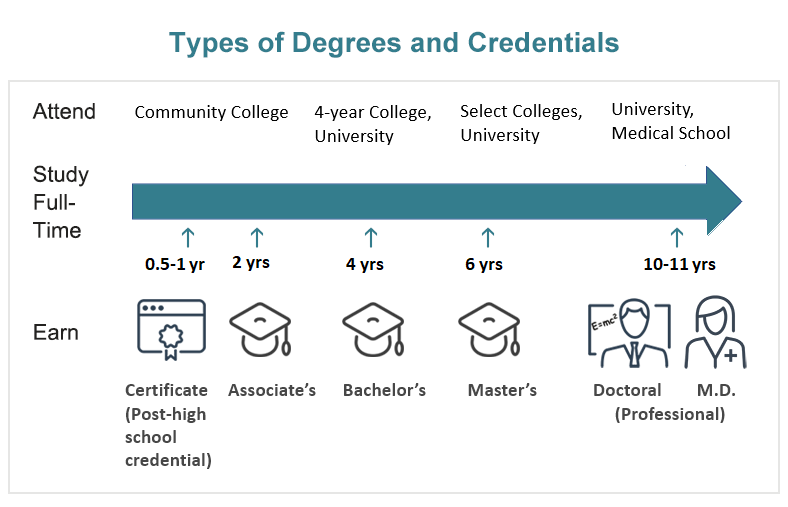
Employers often seek recent high school graduates for entry-level distributor and dispatcher positions. Workers with college or vocational school degrees will have more advancement opportunities, especially in nuclear power plants.
Workers selected for training as power plant distributors undergo extensive on-the-job and classroom instruction. Several years of training and experience are required for a worker to become a fully qualified control room operator or power plant distributor.
In addition to receiving initial training to become fully qualified as a power plant distributor or dispatcher, most workers are given periodic refresher training, especially the nuclear power plant operators. Refresher training is usually taken on plant simulators designed specifically to replicate procedures and situations that might be encountered at the trainee's plant.
Companies That Hire Power Distributor & Dispatchers
Try it Out with an Activity or Project
STEM Activities
STEM activities are fun hands-on explorations that usually take from 10 minutes to one hour and use readily available household or classroom materials while introducing you to STEM concepts common in this career.
Science Project Ideas
Project Ideas are in-depth STEM explorations that have a strong focus on controlling variables, taking accurate measurements, and analyzing data suitable for investigating the scientific method or the engineering design process.
/-/https/www.sciencebuddies.org/Files/3510/5/Energy_img014.jpg)
/-/https/www.sciencebuddies.org/Files/3534/5/Energy_img025.jpg)
/-/https/www.sciencebuddies.org/Files/4158/5/Energy_img085.jpg)
/-/https/careerdiscovery.sciencebuddies.org/Dirs/37/0/img/thumbnail.png)
/-/https/www.sciencebuddies.org/Files/3478/5/Energy_img007.jpg)
On the Job
Role Models

Nature of the Work
Electricity is vital for most everyday activities. From the moment you flip the first switch each morning, you are connecting to a huge network of people, electric lines, and generating equipment. Power plant operators control the machinery that generates electricity. Power plant distributors and dispatchers control the flow of electricity from the power plant, over a network of transmission lines, to industrial plants and substations, and, finally, over distribution lines to residential users.
Power distributors and dispatchers—also called load dispatchers or systems operators—control the flow of electricity through transmission lines to industrial plants and substations that supply residential needs for electricity. They monitor and operate current converters, voltage transformers, and circuit breakers. Dispatchers also monitor other distribution equipment and record readings at a pilot board—a map of the transmission grid system showing the status of transmission circuits and connections with substations and industrial plants.
Dispatchers also anticipate power needs, such as those caused by changes in the weather. They call control room operators to start or stop boilers and generators, in order to bring production into balance with needs. Dispatchers handle emergencies such as transformer or transmission line failures and route current around affected areas. In substations, they also operate and monitor equipment that increases or decreases voltage, and they operate switchboard levers to control the flow of electricity in and out of the substations.
Work Environment
Distributors and dispatchers who work in control rooms generally sit or stand at a control station. This work is not physically strenuous, but it does require constant attention. Operators who work outside the control room may be exposed to danger from electric shock, falls, and burns.
Because electricity is provided around the clock, distributors and dispatchers usually work one of three 8-hour shifts or one of two 12-hour shifts on a rotating basis. Shift assignments may change periodically, so that all operators share less desirable shifts. Work on rotating shifts can be stressful and fatiguing because of the constant change in living and sleeping patterns.
More Information
Ask Questions
Do you have a specific question about a career as a Power Distributor & Dispatcher that isn't answered on this page? Post your question on the Science Buddies Ask an Expert Forum.
Additional Resources
- American Public Power Association: http://www.publicpower.org/
Sources
- U.S. Bureau of Labor Statistics BLS (2024). Occupational Outlook Handbook (OOH), 2024 Edition, Bureau of Labor Statistics. Retrieved August 25, 2025.
- National Center for O*NET Development O*Net Online (2024). National Center for O*Net Development. Retrieved August 25, 2025
- Smith, W.H. (n.d.). Training for Blackouts. Retrieved May 19, 2017.
- AESO- Alberta's Electricity System. (June 4, 2015). Alberta Electric Systems Operator. Retrieved May 19, 2017.