
/-/https/careerdiscovery.sciencebuddies.org/cdn/Files/21464/5/sb-logo.png)
Power Plant Operator
Overview and Key Facts
/-/https/careerdiscovery.sciencebuddies.org/cdn/Files/1686/17/unsplash-oh40PfFL520.jpg)

Education

Median Pay

Job Growth

Jobs in 2034
What Do They Do?
A power plant operator could.../-/https/careerdiscovery.sciencebuddies.org/cdn/Files/1687/17/iStock-463802365.jpg)
/-/https/careerdiscovery.sciencebuddies.org/cdn/Files/1688/17/unsplash-BTSBVZd9jWo.jpg)
/-/https/careerdiscovery.sciencebuddies.org/cdn/Files/1689/17/pexels-photo-1036657.jpg)
/-/https/careerdiscovery.sciencebuddies.org/cdn/Files/1690/17/iStock-1056710882.jpg)
/-/https/careerdiscovery.sciencebuddies.org/cdn/Files/1687/17/iStock-463802365.jpg)
/-/https/careerdiscovery.sciencebuddies.org/cdn/Files/1688/17/unsplash-BTSBVZd9jWo.jpg)
/-/https/careerdiscovery.sciencebuddies.org/cdn/Files/1689/17/pexels-photo-1036657.jpg)
/-/https/careerdiscovery.sciencebuddies.org/cdn/Files/1690/17/iStock-1056710882.jpg)
Overview Listen to this section
No matter what time of the day or night, or what the weather is like, power plant operators work to ensure that homes and businesses have a reliable source of power. They switch the plant generators on and off, as needed, and monitor and maintain generators, turbines, and pumps to prevent failures./-/https/i.ytimg.com/vi/oZxD5p1mziM/hqdefault.jpg)
Do You Have the Skills and Characteristics of a Power Plant Operator?

- Operations Monitoring ?
- Operation and Control ?
- Critical Thinking ?
- Speaking ?
- Quality Control Analysis ?
Core Tasks
Think about if you'd like the typical tasks a Power Plant Operator might do:Salary & Job Openings
Median Salary (Yearly Pay)
Future Jobs
Blast-Off:
(10% or higher)
(7% - 10%)
(5% - 7%)
(3% - 5%)
(0% - 3%)

Steps to Get There: Becoming a Power Plant Operator
High School Subjects to Study
Engineering
Career Pathway Listen to this section
Power plant operators generally need a combination of education, on-the-job training, and experience. Candidates with strong computer and technical skills are generally preferred.
Education- Typical Degree Needed After High School Listen to this section
high school credential
Typical degree for an entry-level position: High school diploma or equivalent ?
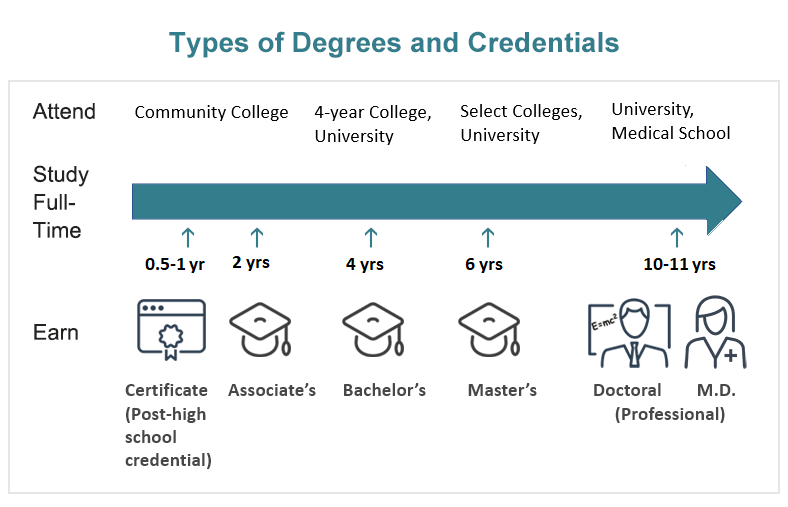
Employers often seek recent high school graduates for entry-level operator positions. Workers with college or vocational school degrees will have more advancement opportunities, especially in nuclear power plants. Although it is not a prerequisite, many senior reactor operators have a bachelor's degree in engineering or in the physical sciences.
Workers selected for training as power plant operators undergo extensive on-the-job and classroom instruction. Several years of training and experience are required for a worker to become a fully qualified control room operator.
In addition to receiving initial training to become fully qualified as a power plant operator, most workers are given periodic refresher training, especially the nuclear power plant operators. Refresher training usually is taken on plant simulators designed specifically to replicate procedures and situations that might be encountered at the trainee's plant.
Companies That Hire Power Plant Operators
Try it Out with an Activity or Project
STEM Activities
STEM activities are fun hands-on explorations that usually take from 10 minutes to one hour and use readily available household or classroom materials while introducing you to STEM concepts common in this career.
Science Project Ideas
Project Ideas are in-depth STEM explorations that have a strong focus on controlling variables, taking accurate measurements, and analyzing data suitable for investigating the scientific method or the engineering design process.
/-/https/www.sciencebuddies.org/cdn/Files/3510/5/Energy_img014.jpg)
/-/https/www.sciencebuddies.org/cdn/Files/3534/5/Energy_img025.jpg)
/-/https/www.sciencebuddies.org/cdn/Files/3779/5/Energy_img044.jpg)
/-/https/www.sciencebuddies.org/cdn/Files/4158/5/Energy_img085.jpg)
/-/https/www.sciencebuddies.org/cdn/Files/3772/5/Energy_img039.jpg)
On the Job
Nature of the Work
Electricity is vital for most everyday activities. From the moment you flip the first switch each morning, you are connecting to a huge network of people, electric lines, and generating equipment. Power plant operators control the machinery that generates electricity.
Power plant operators control and monitor boilers, turbines, generators, and auxiliary equipment in power-generating plants. Operators distribute power demands among generators, combine the current from several generators, and monitor instruments to maintain voltage and regulate electricity flows from the plant. When power requirements change, these workers start or stop generators and connect or disconnect them from circuits. They often use computers to keep records of switching operations and loads on generators, lines, and transformers. Operators also may use computers to prepare reports of unusual incidents, malfunctioning equipment, or maintenance performed during their shift.
Operators in plants with automated control systems work mainly in a central control room and usually are called control room operators or control room operator trainees or assistants. In older plants, the controls for the equipment are not centralized—switchboard operators control the flow of electricity from a central point, while auxiliary equipment operators work throughout the plant, operating and monitoring valves, switches, and gauges.
In nuclear power plants, most operators start working as equipment operators or as auxiliary operators. They help the more senior workers with equipment maintenance and operation, while learning the basics of plant operation. With experience and training, they may be licensed by the Nuclear Regulatory Commission as reactor operators and authorized to control equipment that affects the power of the reactor in a nuclear power plant. Senior reactor operators supervise the operation of all controls in the control room. At least one senior operator must be on duty during each shift to act as the plant supervisor.
Work Environment
Operators who work in control rooms generally sit or stand at a control station. This work is not physically strenuous, but it does require constant attention. Operators who work outside the control room may be exposed to danger from electric shock, falls, and burns.
Nuclear power plant operators are subject to random drug and alcohol tests, as are most workers at such plants. Additionally, they have to pass a medical examination every two years and may be exposed to small amounts of ionizing radiation as part of their jobs.
Because electricity is provided around the clock, operators, distributors, and dispatchers usually work one of three 8-hour shifts or one of two 12-hour shifts on a rotating basis. Shift assignments may change periodically, so that all operators share less desirable shifts. Work on rotating shifts can be stressful and fatiguing because of the constant change in living and sleeping patterns.
More Information
Ask Questions
Do you have a specific question about a career as a Power Plant Operator that isn't answered on this page? Post your question on the Science Buddies Ask an Expert Forum.
Additional Resources
- American Public Power Association: http://www.publicpower.org/
Sources
- U.S. Bureau of Labor Statistics BLS (2024). Occupational Outlook Handbook (OOH), 2024 Edition, Bureau of Labor Statistics. Retrieved August 25, 2025.
- National Center for O*NET Development O*Net Online (2024). National Center for O*Net Development. Retrieved August 25, 2025
- Get Into Energy. (n.d.). A Day in the Life of an Operator. Retrieved August 1, 2012.