
/-/https/careerdiscovery.sciencebuddies.org/Files/21464/5/sb-logo.png)
Soil Scientist
Overview and Key Facts
/-/https/careerdiscovery.sciencebuddies.org/Files/1783/17/nrcseprd423668.jpg)

Education

Median Pay

Job Growth

Jobs in 2034
What Do They Do?
A soil scientist could.../-/https/careerdiscovery.sciencebuddies.org/Files/1784/17/25537_PIA24309---rover-at-Jezero-web.jpg)
/-/https/careerdiscovery.sciencebuddies.org/Files/1785/17/iStock-1171878183.jpg)
/-/https/careerdiscovery.sciencebuddies.org/Files/1786/17/iStock-1053267584.jpg)
/-/https/careerdiscovery.sciencebuddies.org/Files/1787/17/pexels-photo-4555540.jpg)
/-/https/careerdiscovery.sciencebuddies.org/Files/1784/17/25537_PIA24309---rover-at-Jezero-web.jpg)
/-/https/careerdiscovery.sciencebuddies.org/Files/1785/17/iStock-1171878183.jpg)
/-/https/careerdiscovery.sciencebuddies.org/Files/1786/17/iStock-1053267584.jpg)
/-/https/careerdiscovery.sciencebuddies.org/Files/1787/17/pexels-photo-4555540.jpg)
Overview Listen to this section
Not all dirt is created equal. In fact, different types of soil can make a big difference in some very important areas of our society. A building constructed on sandy soil might collapse during an earthquake, and crops planted in soil that doesn't drain properly might become waterlogged and rot after a rainstorm. It is the job of a soil scientist to evaluate soil conditions and help farmers, builders, and environmentalists decide how best to take advantage of local soils./-/https/i.ytimg.com/vi/mLjvdVWAWII/hqdefault.jpg)
Do You Have the Skills and Characteristics of a Soil Scientist?

Core Tasks
Think about if you'd like the typical tasks a Soil Scientist might do:Salary & Job Openings
Median Salary (Yearly Pay)
Future Jobs
Blast-Off:
(10% or higher)
(7% - 10%)
(5% - 7%)
(3% - 5%)
(0% - 3%)

Steps to Get There: Becoming a Soil Scientist
High School Subjects to Study
Engineering
Career Pathway Listen to this section
A bachelor's degree in soil science or a related environmental field is necessary. Some employers prefer a master's degree or doctorate, too. Those who'd like to work as a professor will need to obtain a doctorate degree.
In addition to formal education, on-the-job training through internships can be very valuable for securing good employment. Soil scientists who have completed their bachelor's degrees may apply for certification through the American Society of Agronomy and Soil Science Society of America. This certification is not mandatory, but candidates who are certified may be preferred by some employers.
Education- Typical Degree Needed After High School Listen to this section
high school credential
Typical degree for an entry-level position: Bachelor's degree ?
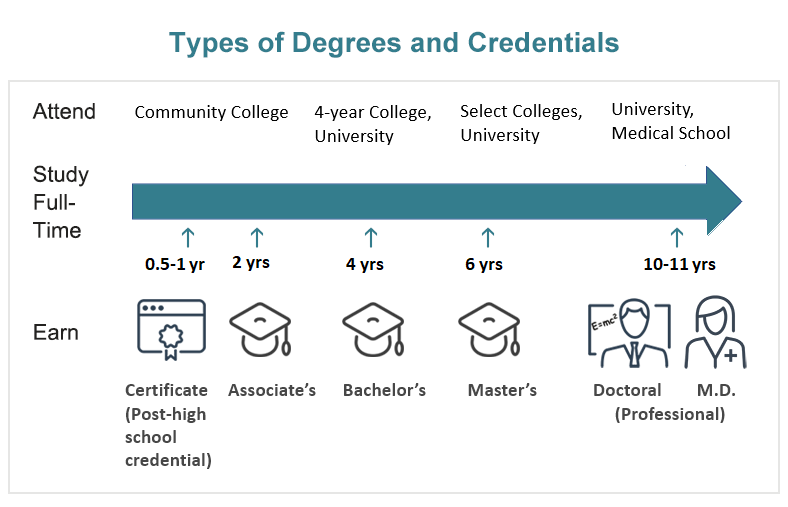
Students interested in pursuing a career as a soil scientist should take as many math and science courses as possible in high school. For college, they should attend a four-year agricultural college, or other university that offers a bachelor's degree in soil science or in environmental science, with a sub-specialty in soil.
Some employers prefer candidates with additional education. Both master's and doctoral degrees are available in soil sciences from agricultural colleges. A PhD is necessary for soil scientists who would like to teach and do research as university professors.
Companies That Hire Soil Scientists
Try it Out with an Activity or Project
STEM Activities
STEM activities are fun hands-on explorations that usually take from 10 minutes to one hour and use readily available household or classroom materials while introducing you to STEM concepts common in this career.
/-/https/www.sciencebuddies.org/Files/15232/5/river-water-flow-thumbnail.jpg)
/-/https/www.sciencebuddies.org/Files/15340/5/candy-core-samples.jpg)
/-/https/www.sciencebuddies.org/Files/7697/9/earthworms-digging-in.jpg)
/-/https/www.sciencebuddies.org/Files/15947/5/SoilErosion.jpg)
/-/https/www.sciencebuddies.org/Files/12995/6/winogradsky-column-thumbnail.jpg)
/-/https/www.sciencebuddies.org/Files/13587/7/beach-sand-activity-thumbnail.jpg)
/-/https/www.sciencebuddies.org/Files/13952/9/sweet-earthquake-shake-thumbnail.jpg)
/-/https/www.sciencebuddies.org/Files/13288/7/slippery-slopes-thumbnail.jpg)
/-/https/www.sciencebuddies.org/Files/15873/5/WaterWise.jpg)
Science Project Ideas
Project Ideas are in-depth STEM explorations that have a strong focus on controlling variables, taking accurate measurements, and analyzing data suitable for investigating the scientific method or the engineering design process.
/-/https/www.sciencebuddies.org/Files/19600/8/arduino-soil-moisture-sensor-thumbnail.jpg)
/-/https/www.sciencebuddies.org/Files/7101/6/soil-erosion-thumbnail.jpg)
/-/https/www.sciencebuddies.org/Files/19616/6/agricultural-hydrogel-plant.jpg)
/-/https/www.sciencebuddies.org/Files/4602/13/Colonia-Las-Colinas-Slide-Landslides_img.jpg)
/-/https/www.sciencebuddies.org/Files/15870/5/growing-plants-on-Mars.jpg)
/-/https/www.sciencebuddies.org/Files/12228/4/testing-ph-levels.jpg)
/-/https/www.sciencebuddies.org/Files/7623/5/soil-fertilizer.jpg)
/-/https/www.sciencebuddies.org/Files/14097/5/sugar-cube-peanut-butter.jpg)
/-/https/www.sciencebuddies.org/Files/7445/5/red-wigglers.jpg)
/-/https/www.sciencebuddies.org/Files/4642/13/F1-canyons_img.jpg)
/-/https/www.sciencebuddies.org/Files/20510/6/blobid1719430448182.jpg)
/-/https/www.sciencebuddies.org/Files/12122/4/soil-compaction-thumbnail.jpg)
/-/https/www.sciencebuddies.org/Files/12123/9/beach-footprints.jpg)
/-/https/www.sciencebuddies.org/Files/7720/6/bugs-microscope-thumbnail.jpg)
/-/https/www.sciencebuddies.org/Files/3276/5/CE_img046.jpg)
/-/https/www.sciencebuddies.org/Files/4148/5/PlantBio_img050.jpg)
/-/https/www.sciencebuddies.org/Files/6807/6/mud-closeup.jpg)
/-/https/www.sciencebuddies.org/Files/3864/5/EnvSci_img055.jpg)
/-/https/www.sciencebuddies.org/Files/12225/6/dirt-potting-soil-mud.jpg)
/-/https/www.sciencebuddies.org/Files/12227/4/soil-layers-thumbnail.jpg)
On the Job
Role Models

Nature of the Work
Soil scientists study the chemical, physical, biological, and mineralogical composition of soils as they relate to plant growth. They also study the responses of various soil types to fertilizers, tillage practices, and crop rotation. Many soil scientists who work for the federal government conduct soil surveys, classifying and mapping soils. They provide information and recommendations to farmers and other landowners regarding the best use of land, and plants to avoid or to correct problems, such as erosion. They may also consult with engineers and other technical personnel working on construction projects about the effects of, and solutions to, soil problems. Because soil science is closely related to environmental science, persons trained in soil science also work to ensure environmental quality and effective land use.
Employment for soil scientists usually falls into one of two sub fields:
- Agricultural Soil Scientist: These soil scientists focus on the food and farming aspects of soil. They often serve as farm advisors, crop consultants, or representatives of agricultural companies.
- Environmental Soil Scientist: These soil scientists focus on the soil's role in a healthy ecosystem. They often work in environmental positions dealing with water quality concerns, remediation of contaminants, or for on-site evaluation of soil properties in construction, waste disposal, or recreational facilities.
Work Environment
Soil scientists work both indoors, in laboratories and offices, and outdoors. The work may require walking over rough terrain and doing physical labor, such as digging, to gather samples. Soil scientists tend to work regular hours.
More Information
Ask Questions
Do you have a specific question about a career as a Soil Scientist that isn't answered on this page? Post your question on the Science Buddies Ask an Expert Forum.
Additional Resources
- Soil Science Society of America: https://www.soils.org/
- United States Consortium of Soil Science Associations: https://www.soils.org/certifications
Sources
- U.S. Bureau of Labor Statistics BLS (2024). Occupational Outlook Handbook (OOH), 2024 Edition, Bureau of Labor Statistics. Retrieved August 25, 2025.
- National Center for O*NET Development O*Net Online (2024). National Center for O*Net Development. Retrieved August 25, 2025
- SACNAS. (2002). Dr. Elvia Niebla - Soil Scientist. Retrieved December 21, 2009.
- Pedrazzini, Fausto. (2004, June 18). What is a Soil Scientist Doing in NATO? Science Magazine. Retrieved December 21, 2009.
- USDA. (n.d.). Careers in Soil Science. Retrieved December 30, 2009.