
/-/https/careerdiscovery.sciencebuddies.org/cdn/Files/21464/5/sb-logo.png)
Sound Engineering Technician
Overview and Key Facts
/-/https/careerdiscovery.sciencebuddies.org/cdn/Files/1801/18/pexels-photo-4988130.jpg)

Education

Median Pay

Job Growth

Jobs in 2034
What Do They Do?
A sound engineering technician could.../-/https/careerdiscovery.sciencebuddies.org/cdn/Files/1802/18/iStock-154002685.jpg)
/-/https/careerdiscovery.sciencebuddies.org/cdn/Files/1803/18/unsplash-t-LqbaOzDa4.jpg)
/-/https/careerdiscovery.sciencebuddies.org/cdn/Files/1804/18/pexels-photo-3812949.jpg)
/-/https/careerdiscovery.sciencebuddies.org/cdn/Files/1805/18/pexels-photo-2123606.jpg)
/-/https/careerdiscovery.sciencebuddies.org/cdn/Files/1802/18/iStock-154002685.jpg)
/-/https/careerdiscovery.sciencebuddies.org/cdn/Files/1803/18/unsplash-t-LqbaOzDa4.jpg)
/-/https/careerdiscovery.sciencebuddies.org/cdn/Files/1804/18/pexels-photo-3812949.jpg)
/-/https/careerdiscovery.sciencebuddies.org/cdn/Files/1805/18/pexels-photo-2123606.jpg)
Overview Listen to this section
Any time you hear music at a concert, a live speech, the police sirens in a TV show, or the six o'clock news you're hearing the work of a sound engineering technician. Sound engineering technicians operate machines and equipment to record, synchronize, mix, or reproduce music, voices, or sound effects in recording studios, sporting arenas, theater productions, or movie and video productions./-/https/i.ytimg.com/vi/Xnzdk1fZsQ0/hqdefault.jpg)
Do You Have the Skills and Characteristics of a Sound Engineering Technician?

Core Tasks
Think about if you'd like the typical tasks a Sound Engineering Technician might do:Salary & Job Openings
Median Salary (Yearly Pay)
Future Jobs
Blast-Off:
(10% or higher)
(7% - 10%)
(5% - 7%)
(3% - 5%)
(0% - 3%)

Steps to Get There: Becoming a Sound Engineering Technician
High School Subjects to Study
Engineering
Career Pathway Listen to this section
Sound engineering technicians usually receive some kind of formal training prior to beginning work.
Education- Typical Degree Needed After High School Listen to this section
high school credential
Typical degree for an entry-level position: Post high school credential ?
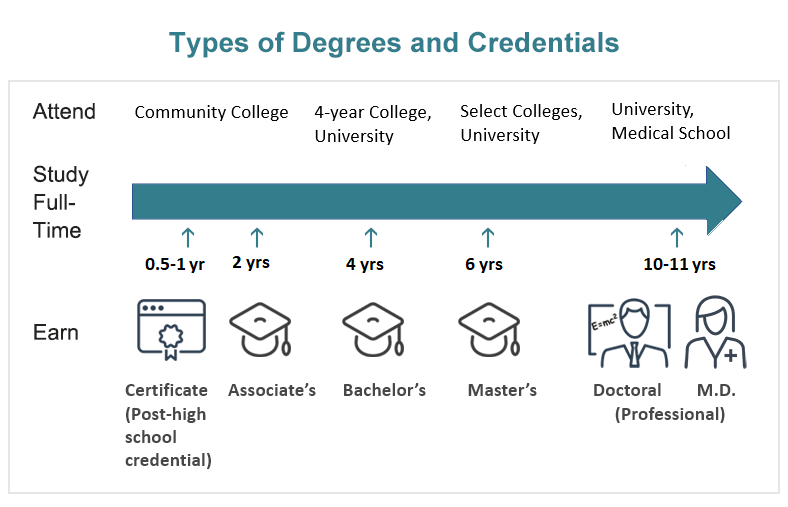
Prospective technicians should take high school courses in math, physics, and electronics.
After high school, the best way to train for a career as a sound engineering technician is to enroll in a technical school community college, or a university program in electronics, computer networking, or broadcast technology. New employees usually learn on the job from more experienced technicians and supervisors. Some begin their careers working in smaller, local stations and, after gaining valuable experience, move on to larger stations and networks.
Experienced technicians can become supervisory technicians or chief engineers. A college degree in engineering is needed to become chief engineer at a large television station.
Continuing education to become familiar with emerging technologies is recommended for all sound engineering technicians.
Companies That Hire Sound Engineering Technicians
Try it Out with an Activity or Project
STEM Activities
STEM activities are fun hands-on explorations that usually take from 10 minutes to one hour and use readily available household or classroom materials while introducing you to STEM concepts common in this career.
/-/https/www.sciencebuddies.org/cdn/Files/7450/11/paper-speaker.jpg)
/-/https/www.sciencebuddies.org/cdn/Files/12830/6/playing-the-harmonica-thumbnail.jpg)
/-/https/www.sciencebuddies.org/cdn/Files/12161/5/rubber-band-guitar-thumbnail.jpg)
/-/https/www.sciencebuddies.org/cdn/Files/12912/5/using-kazoo-science-activity-thumbnail.jpg)
/-/https/www.sciencebuddies.org/cdn/Files/5838/7/musical-straws.jpg)
/-/https/www.sciencebuddies.org/cdn/Files/6420/15/blow-in-bottle.jpg)
/-/https/www.sciencebuddies.org/cdn/Files/12922/6/disk-siren-science-activity.jpg)
Science Project Ideas
Project Ideas are in-depth STEM explorations that have a strong focus on controlling variables, taking accurate measurements, and analyzing data suitable for investigating the scientific method or the engineering design process.
/-/https/www.sciencebuddies.org/cdn/Files/12033/12/crystal-radio-thumbnail.jpg)
/-/https/careerdiscovery.sciencebuddies.org/Dirs/37/0/img/thumbnail.png)
/-/https/www.sciencebuddies.org/cdn/Files/20361/6/blobid1713983673480.jpg)
/-/https/www.sciencebuddies.org/cdn/Files/7000/6/AM-radio-transmitter.jpg)
/-/https/www.sciencebuddies.org/cdn/Files/3448/10/Phys_img048.jpg)
/-/https/www.sciencebuddies.org/cdn/Files/3419/10/Elec_img105.jpg)
/-/https/www.sciencebuddies.org/cdn/Files/18240/5/paper-speaker-experiment-setup-thumbnail.jpg)
/-/https/www.sciencebuddies.org/cdn/Files/3429/10/Phys_img067.jpg)
/-/https/www.sciencebuddies.org/cdn/Files/2653/8/Phys_img016.gif)
/-/https/www.sciencebuddies.org/cdn/Files/8999/11/thumbnail-sound-in-space.jpg)
/-/https/www.sciencebuddies.org/cdn/Files/3443/10/Phys_img024.jpg)
/-/https/www.sciencebuddies.org/cdn/Files/3436/10/Phys_img024.jpg)
/-/https/www.sciencebuddies.org/cdn/Files/5694/8/music_frequencies_straws_img.jpg)
/-/https/www.sciencebuddies.org/cdn/Files/9007/6/thumbnail-city-traffic.png)
/-/https/www.sciencebuddies.org/cdn/Files/9001/10/thumbnail-piano-sing-music.jpg)
/-/https/www.sciencebuddies.org/cdn/Files/4110/5/Phys_img118.jpg)
/-/https/www.sciencebuddies.org/cdn/Files/20556/5/fortnite-4129124_1280.jpg)
On the Job
Role Models

Nature of the Work
Sound engineering technicians operate machines and equipment to record, synchronize, mix, or reproduce music, voices, or sound effects in recording studios, sporting arenas, theater productions, or movie and video productions.
The transition to digital recording, editing, and broadcasting is still in progress, and affects sound engineering technicians and radio operators. Software on desktop computers has replaced specialized electronic equipment in many recording and editing functions. This transition has made it necessary for technicians to learn computer networking and software skills.
Sound engineering technicians perform a variety of duties in small radio and television stations. In large stations and at the networks, technicians are more specialized, although job assignments may change from day to day. The terms "operator," "engineer," and "technician" often are used interchangeably to describe these jobs.
Sound engineering technicians also work in program production. They operate and maintain sound recording equipment, and may also operate equipment designed to produce special effects, such as the noise of a police siren. Some sound engineering technicians produce soundtracks for movies or television programs. After filming or recording is complete, these workers may use a process called "dubbing" to insert sounds. Those that work in the field, rather than in a studio, set up and operate portable transmission equipment. Because television news coverage requires so much electronic equipment and the technology is changing so rapidly, many stations assign technicians exclusively to news.
In the motion picture industry, people are hired as apprentice editorial assistants and work their way up to more skilled jobs. Employers in the motion picture industry usually hire experienced freelance technicians on a picture-by-picture basis. Reputation and determination are important in getting jobs.
Work Environment
Sound engineering technicians generally work indoors in pleasant surroundings. However, those who broadcast news and other programs from locations outside the studio may work outdoors in all types of weather, or in other dangerous conditions. Technicians who are setting up equipment may do heavy lifting.
Technicians at large stations and the networks usually work a 40-hour week under great pressure to meet broadcast deadlines, and may occasionally work overtime. Technicians at small stations routinely work more than 40 hours a week. Evening, weekend, and holiday work is usual because most stations are on the air 18-24 hours a day, seven days a week. Even though a technician may not be on duty when the station is broadcasting, some technicians may be on call during non-work hours; these workers must handle any problems that occur when they are on call.
Technicians who work on motion pictures may be on a tight schedule and may work long hours to meet contractual deadlines.
More Information
Ask Questions
Do you have a specific question about a career as a Sound Engineering Technician that isn't answered on this page? Post your question on the Science Buddies Ask an Expert Forum.
Sources
- U.S. Bureau of Labor Statistics BLS (2024). Occupational Outlook Handbook (OOH), 2024 Edition, Bureau of Labor Statistics. Retrieved August 25, 2025.
- National Center for O*NET Development O*Net Online (2024). National Center for O*Net Development. Retrieved August 25, 2025
- NOVA scienceNOW. (2009, April). Auto-tune. Retrieved February 27, 2019.