
/-/https/careerdiscovery.sciencebuddies.org/cdn/Files/21464/5/sb-logo.png)
Automotive Engineer
Overview and Key Facts
/-/https/careerdiscovery.sciencebuddies.org/cdn/Files/928/17/ThomasWallner.jpg)

Education

Median Pay

Job Growth

Jobs in 2034
What Do They Do?
An automotive engineer could.../-/https/careerdiscovery.sciencebuddies.org/cdn/Files/929/17/pexels-photo-2745835.jpg)
/-/https/careerdiscovery.sciencebuddies.org/cdn/Files/930/17/iStock-1211046378.jpg)
/-/https/careerdiscovery.sciencebuddies.org/cdn/Files/931/17/Peugeot_2008_HYbrid_air_SAO_2014_0299.JPG)
/-/https/careerdiscovery.sciencebuddies.org/cdn/Files/932/17/pexels-photo-2827755.jpg)
/-/https/careerdiscovery.sciencebuddies.org/cdn/Files/929/17/pexels-photo-2745835.jpg)
/-/https/careerdiscovery.sciencebuddies.org/cdn/Files/930/17/iStock-1211046378.jpg)
/-/https/careerdiscovery.sciencebuddies.org/cdn/Files/931/17/Peugeot_2008_HYbrid_air_SAO_2014_0299.JPG)
/-/https/careerdiscovery.sciencebuddies.org/cdn/Files/932/17/pexels-photo-2827755.jpg)
Overview Listen to this section
Cars are an important part of our daily lives. We depend on them to perform everyday tasks—getting to and from school and work, sports practice, grocery shopping, and various errands—and also to keep us safe while doing so. Our cars can keep us cool or warm while we drive them, and they even help us find our way. The automobile is made up of complicated braking, steering, and electrical systems, in addition to the engine and drive train. All of these systems require a tremendous amount of engineering, which is the responsibility of automotive engineers. They develop the components and systems that make our vehicles efficient and safe./-/https/i.ytimg.com/vi/Tq6vHmP6uCg/maxresdefault.jpg)
Do You Have the Skills and Characteristics of an Automotive Engineer?

- Complex Problem Solving ?
- Critical Thinking ?
- Reading Comprehension ?
- Writing ?
- Judgment and Decision Making ?
Core Tasks
Think about if you'd like the typical tasks an Automotive Engineer might do:Salary & Job Openings
Median Salary (Yearly Pay)
Future Jobs
Blast-Off:
(10% or higher)
(7% - 10%)
(5% - 7%)
(3% - 5%)
(0% - 3%)

Steps to Get There: Becoming an Automotive Engineer
High School Subjects to Study
Engineering
Education- Typical Degree Needed After High School Listen to this section
high school credential
Typical degree for an entry-level position: Bachelor's degree ?
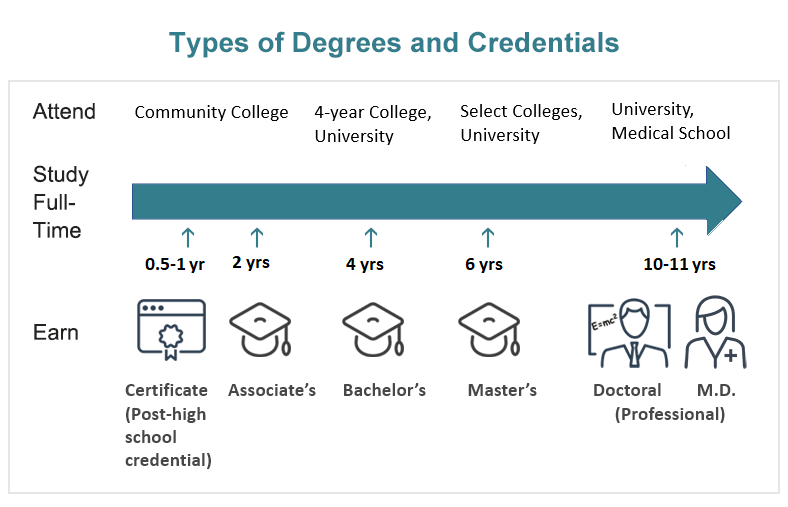
The minimum degree required for an entry-level position as an automotive engineer is a bachelor's degree in mechanical engineering or related engineering field. However, due to the complexity of the various electrical systems of cars, many employers prefer applicants with a master's degree. Applicants with a PhD teach at the university level or conduct high-level research.
Most engineering programs involve a concentration of study in an engineering specialty, along with courses in both mathematics and the physical and life sciences. Many programs also include courses in general engineering. A design course, sometimes accompanied by a computer or laboratory class or both, is part of the curriculum of most programs. Often, general courses not directly related to engineering, such as those in the social sciences or humanities, also are required.
Admissions requirements for undergraduate engineering schools include a solid background in mathematics (algebra, geometry, trigonometry, and calculus) and science (biology, chemistry, and physics), in addition to courses in English, social studies, and humanities. Bachelor's degree programs in engineering typically are designed to last four years, but many students find that it takes between four and five years to complete their studies. In a typical four-year college curriculum, the first two years are spent studying mathematics, basic sciences, introductory engineering, humanities, and social sciences. In the last two years, most courses are in engineering, usually with a concentration in one specialty. Some programs offer a general engineering curriculum; students then specialize on the job or in graduate school.
Companies That Hire Automotive Engineers
Try it Out with an Activity or Project
STEM Activities
STEM activities are fun hands-on explorations that usually take from 10 minutes to one hour and use readily available household or classroom materials while introducing you to STEM concepts common in this career.
/-/https/www.sciencebuddies.org/cdn/Files/14817/6/balloon-car-activity-thumbnail.jpg)
/-/https/www.sciencebuddies.org/cdn/Files/13906/5/rubber-band-car-activity-thumbnail.jpg)
/-/https/www.sciencebuddies.org/cdn/Files/13934/11/wind-powered-car.jpg)
/-/https/www.sciencebuddies.org/cdn/Files/16518/5/ScissorLift.jpg)
/-/https/www.sciencebuddies.org/cdn/Files/16716/5/knex-differential-2.jpg)
/-/https/www.sciencebuddies.org/cdn/Files/16495/5/ShockAbsorbers.jpg)
/-/https/www.sciencebuddies.org/cdn/Files/14110/5/moving-two-gears-around-thumbnail.jpg)
Science Project Ideas
Project Ideas are in-depth STEM explorations that have a strong focus on controlling variables, taking accurate measurements, and analyzing data suitable for investigating the scientific method or the engineering design process.
/-/https/www.sciencebuddies.org/cdn/Files/6747/7/balloon-car-CD.jpg)
/-/https/www.sciencebuddies.org/cdn/Files/12657/6/solar-powered-car.jpg)
/-/https/www.sciencebuddies.org/cdn/Files/18248/10/bluebot-autonomous-car.jpg)
/-/https/www.sciencebuddies.org/cdn/Files/3561/10/Aero_img071.gif)
/-/https/www.sciencebuddies.org/cdn/Files/4246/11/hydraulic-lift-theory-explained-2.png)
/-/https/www.sciencebuddies.org/cdn/Files/17631/6/impossible-wind-powered-car.jpg)
/-/https/www.sciencebuddies.org/cdn/Files/19806/10/car-horsepower-ramp-thumbnail.jpg)
/-/https/www.sciencebuddies.org/cdn/Files/19801/8/car-aerodynamic-roof-extension.jpg)
/-/https/www.sciencebuddies.org/cdn/Files/18284/11/ultrasonic-IR-sensors.jpg)
/-/https/careerdiscovery.sciencebuddies.org/Dirs/37/0/img/thumbnail.png)
/-/https/www.sciencebuddies.org/cdn/Files/2832/4/ApMech_img023.gif)
/-/https/www.sciencebuddies.org/cdn/Files/4032/5/Elec_img163.jpg)
/-/https/www.sciencebuddies.org/cdn/Files/18301/11/autonomous-car-braking.jpg)
/-/https/www.sciencebuddies.org/cdn/Files/3525/5/Energy_img019.jpg)
/-/https/www.sciencebuddies.org/cdn/Files/3519/5/ApMech_img047.jpg)
/-/https/www.sciencebuddies.org/cdn/Files/5346/11/car-air-resistance_img.jpg)
/-/https/www.sciencebuddies.org/cdn/Files/4325/5/ApMech_img079.jpg)
/-/https/www.sciencebuddies.org/cdn/Files/19822/7/spark-plug-closeup.jpg)
/-/https/www.sciencebuddies.org/cdn/Files/5406/7/bike-forces_img.jpg)
On the Job
Role Models

Nature of the Work
The automobile, or any motorized vehicle, is such a fixture in most of our lives that we take for granted that someone designed it for maximum efficiency and minimum cost. Automotive engineers develop components and systems for vehicles (cars, motorcycles, and heavy vehicles) that provide great customer value and satisfaction at an affordable price while increasing their employers' profitability. Automotive engineers create new or improved designs for all parts of a vehicle using computer-aided design technology. They are responsible for analyzing and providing creative and technically-feasible solutions to all problems that are encountered during the production of the vehicle.
Automotive engineers can be involved in the entire process of creating a car, from initial concept to testing of the finished product. They are concerned with the safety, fuel efficiency, and comfort of their designs. Automotive engineers can specialize in a particular area, such as structural design, exhaust systems, and engines, and they can also work with focus groups and market specialists to determine what customers would like in their vehicles.
If customers return cars or motorcycles due to some kind of failure, automotive engineers work on failure-analysis teams to figure out the root cause of the problem and develop solutions. Some engineers work exclusively on testing vehicles and components to ensure safety and efficiency.
Work Environment
Automotive engineers work for engineering consulting firms, automobile companies, and in the manufacturing and transportation industries. The average workweek for an automotive engineer is between 40 and 55 hours, but it can be longer as deadlines approach.
Automotive engineers generally work in offices on computers, but they also travel to manufacturing plants to conduct experiments or collect data.
More Information
Ask Questions
Do you have a specific question about a career as an Automotive Engineer that isn't answered on this page? Post your question on the Science Buddies Ask an Expert Forum.
Additional Resources
Sources
- U.S. Bureau of Labor Statistics BLS (2024). Occupational Outlook Handbook (OOH), 2024 Edition, Bureau of Labor Statistics. Retrieved August 25, 2025.
- National Center for O*NET Development O*Net Online (2024). National Center for O*Net Development. Retrieved August 25, 2025
- SchoolsintheUSA.com. (2011). Automotive engineer. Retrieved April 12, 2011.
- ConnectEd. (2015, September 8). Day in the Life: Electric Motorcycle Engineer. Retrieved January 3, 2018.
- Voelcker, J. (2011, January 14). Five questions: Peter Rawlinson, Tesla Motors chief engineer. High Gear Media. Retrieved June 27, 2011.
- The Princeton Review. (n.d.). Major: automotive engineering. Retrieved April 13, 2011.