
/-/https/careerdiscovery.sciencebuddies.org/cdn/Files/21464/5/sb-logo.png)
Civil Engineers
Overview and Key Facts
/-/https/careerdiscovery.sciencebuddies.org/cdn/Files/1133/17/pexels-photo-3862135.jpg)

Education

Median Pay

Job Growth

Jobs in 2034
What Do They Do?
A civil engineer could.../-/https/careerdiscovery.sciencebuddies.org/cdn/Files/1134/17/pexels-photo-273209.jpg)
/-/https/careerdiscovery.sciencebuddies.org/cdn/Files/1135/17/pexels-photo-2699258.jpg)
/-/https/careerdiscovery.sciencebuddies.org/cdn/Files/1136/17/pexels-photo-208684.jpg)
/-/https/careerdiscovery.sciencebuddies.org/cdn/Files/1137/17/pexels-photo-1560546.jpg)
/-/https/careerdiscovery.sciencebuddies.org/cdn/Files/1134/17/pexels-photo-273209.jpg)
/-/https/careerdiscovery.sciencebuddies.org/cdn/Files/1135/17/pexels-photo-2699258.jpg)
/-/https/careerdiscovery.sciencebuddies.org/cdn/Files/1136/17/pexels-photo-208684.jpg)
/-/https/careerdiscovery.sciencebuddies.org/cdn/Files/1137/17/pexels-photo-1560546.jpg)
Overview Listen to this section
If you turned on a faucet, used a bathroom, or visited a public space (like a road, a building, or a bridge) today, then you've used or visited a project that civil engineers helped to design and build. Civil engineers work to improve travel and commerce, provide people with safe drinking water and sanitation, and protect communities from earthquakes and floods. This important and ancient work is combined with a desire to make structures that are as beautiful and environmentally sound, as they are functional and cost-effective./-/https/i.ytimg.com/vi/t8nvuASMdhU/maxresdefault.jpg)
Do You Have the Skills and Characteristics of a Civil Engineers?

Core Tasks
Think about if you'd like the typical tasks a Civil Engineers might do:Salary & Job Openings
Median Salary (Yearly Pay)
Future Jobs
Blast-Off:
(10% or higher)
(7% - 10%)
(5% - 7%)
(3% - 5%)
(0% - 3%)

Steps to Get There: Becoming a Civil Engineers
High School Subjects to Study
Engineering
Career Pathway Listen to this section
Engineers typically enter the occupation with a bachelor's degree in an engineering specialty, but some basic research positions may require a graduate degree. Engineers offering their services directly to the public must be licensed. Continuing education to keep current with rapidly changing technology is important for engineers.
Education- Typical Degree Needed After High School Listen to this section
high school credential
Typical degree for an entry-level position: Bachelor's degree ?
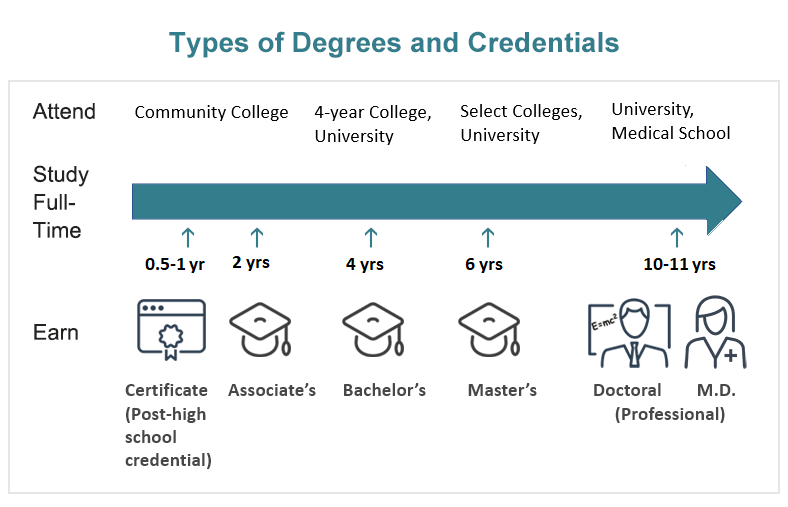
A bachelor's degree in engineering is required for almost all entry-level engineering jobs. College graduates with a degree in a natural science or mathematics occasionally may qualify for some engineering jobs, especially in specialties in high demand. Most engineering degrees are granted in electrical, electronics, mechanical, or civil engineering. However, engineers trained in one branch may work in related branches. For example, many aerospace engineers have training in mechanical engineering. This flexibility allows employers to meet staffing needs in new technologies and specialties in which engineers may be in short supply. It also allows engineers to shift to fields with better employment prospects or to those that more closely match their interests.
Most engineering programs involve a concentration of study in an engineering specialty, along with courses in both mathematics and the physical and life sciences. Many programs also include courses in general engineering. A design course, sometimes accompanied by a computer or laboratory class or both, is part of the curriculum of most programs. General courses not directly related to engineering, such as those in the social sciences or humanities, are also often required.
In addition to the standard engineering degree, many colleges offer 2-year or 4-year degree programs in engineering technology. These programs, which usually include various hands-on laboratory classes that focus on current issues in the application of engineering principles, prepare students for practical design and production work, rather than for jobs that require more theoretical and scientific knowledge. Graduates of 4-year technology programs may get jobs similar to those obtained by graduates with a bachelor's degree in engineering. Engineering technology graduates, however, are not qualified to register as professional engineers under the same terms as graduates with degrees in engineering. Some employers regard technology program graduates as having skills between those of a technician and an engineer.
Graduate training is essential for engineering faculty positions and many research and development programs, but is not required for the majority of entry-level engineering jobs. Many experienced engineers obtain graduate degrees in engineering or business administration to learn new technology and broaden their education. Many high-level executives in government and industry began their careers as engineers.
Companies That Hire Civil Engineerses
Try it Out with an Activity or Project
STEM Activities
STEM activities are fun hands-on explorations that usually take from 10 minutes to one hour and use readily available household or classroom materials while introducing you to STEM concepts common in this career.
/-/https/www.sciencebuddies.org/cdn/Files/13162/6/paper-bridge-stem-science-activity.jpg)
/-/https/www.sciencebuddies.org/cdn/Files/13273/5/archimedes-screw-thumbnail.jpg)
/-/https/www.sciencebuddies.org/cdn/Files/12741/5/geodesic-dome-gumdrops-thumbnail.jpg)
/-/https/www.sciencebuddies.org/cdn/Files/5582/15/bridges_suspension.jpg)
/-/https/www.sciencebuddies.org/cdn/Files/5908/7/balance-marshmallows-rectangle.jpg)
/-/https/www.sciencebuddies.org/cdn/Files/13014/5/block-tower-thumbnail-img.jpg)
/-/https/www.sciencebuddies.org/cdn/Files/13952/9/sweet-earthquake-shake-thumbnail.jpg)
/-/https/www.sciencebuddies.org/cdn/Files/5822/11/eggshells-strength-test.jpg)
/-/https/www.sciencebuddies.org/cdn/Files/18612/6/sandcastle-grass-brick-thumbnail.jpg)
Science Project Ideas
Project Ideas are in-depth STEM explorations that have a strong focus on controlling variables, taking accurate measurements, and analyzing data suitable for investigating the scientific method or the engineering design process.
/-/https/www.sciencebuddies.org/cdn/Files/15965/6/paper-tower-truss-thumbnail.jpg)
/-/https/www.sciencebuddies.org/cdn/Files/12146/4/bridge-design-weight-thumbnail.jpg)
/-/https/www.sciencebuddies.org/Files/18245/9/paper-ball-run-thumbnail.jpg)
/-/https/www.sciencebuddies.org/cdn/Files/5820/12/eggshell-arches.jpg)
/-/https/www.sciencebuddies.org/cdn/Files/8978/11/tallest-tower-thumbnail-SB.jpg)
/-/https/www.sciencebuddies.org/cdn/Files/4836/11/Fig8_Setup_img.jpg)
/-/https/www.sciencebuddies.org/cdn/Files/3271/5/ApMech_img041.jpg)
/-/https/www.sciencebuddies.org/cdn/Files/5950/6/geodesic-dome-load-testing.jpg)
/-/https/www.sciencebuddies.org/cdn/Files/5583/5/bridges_suspension_load.jpg)
/-/https/www.sciencebuddies.org/cdn/Files/14097/5/sugar-cube-peanut-butter.jpg)
/-/https/www.sciencebuddies.org/cdn/Files/7039/5/I-35W_Bridge_2.jpg)
/-/https/careerdiscovery.sciencebuddies.org/Dirs/37/0/img/thumbnail.png)
/-/https/www.sciencebuddies.org/cdn/Files/4060/5/OceanSci_img054.jpg)
/-/https/www.sciencebuddies.org/Files/2141/8/CE_img005.jpg)
/-/https/www.sciencebuddies.org/cdn/Files/4334/5/Phys_img187.jpg)
/-/https/www.sciencebuddies.org/cdn/Files/8236/5/castle-seige-catapult-thumbnail.jpg)
/-/https/www.sciencebuddies.org/cdn/Files/8290/11/banaue-rice-terrace.jpg)
On the Job
Role Models

Nature of the Work
Engineers apply the principles of science and mathematics to develop economical solutions to technical problems. Their work is the link between scientific discoveries and the commercial applications that meet societal and consumer needs.
Civil engineers design and supervise the construction of roads, buildings, airports, tunnels, dams, bridges, and water supply and sewage systems. They must consider many factors in the design process—from the construction costs and expected lifetime of a project to government regulations and potential environmental hazards, such as earthquakes and hurricanes. Civil engineering, considered one of the oldest engineering disciplines, encompasses many specialties. The major ones are structural, water resources, construction, environmental, transportation, and geotechnical engineering. Many civil engineers hold supervisory or administrative positions, from supervisor of a construction site to city engineer. Others may work in design, construction, research, and teaching.
Work Environment
Most engineers work in office buildings, laboratories, or industrial plants. Others may spend time outdoors at construction sites and at oil and gas exploration and production sites, where they monitor or direct operations or solve onsite problems. Some engineers travel extensively to plants or worksites both here and abroad.
Many engineers work a standard 40-hour week. At times, deadlines or design standards may bring extra pressure to a job, requiring engineers to work longer hours.
More Information
Ask Questions
Do you have a specific question about a career as a Civil Engineers that isn't answered on this page? Post your question on the Science Buddies Ask an Expert Forum.
Additional Resources
- American Society of Civil Engineers: http://www.asce.org
- American Society for Engineering Education: http://www.asee.org
Sources
- U.S. Bureau of Labor Statistics BLS (2024). Occupational Outlook Handbook (OOH), 2024 Edition, Bureau of Labor Statistics. Retrieved August 25, 2025.
- National Center for O*NET Development O*Net Online (2024). National Center for O*Net Development. Retrieved August 25, 2025
- KQED Quest. (2016, January 15). Career Spotlight: Civil Engineer.. Retrieved January 3, 2018.
- Audrey, S. (n.d.). Interview with Civil Engineer Don S. Retrieved September 18, 2009.
- The Princeton Review. (n.d.). A Day in the Life of a Civil Engineer. Retrieved September 18, 2009.