
/-/https/careerdiscovery.sciencebuddies.org/cdn/Files/21464/5/sb-logo.png)
Engineering Manager
Overview and Key Facts
/-/https/careerdiscovery.sciencebuddies.org/cdn/Files/4978/19/unsplash-bIltCMXIwRE.jpg)

Education

Median Pay

Job Growth

Jobs in 2034
What Do They Do?
An Engineering Manager could.../-/https/careerdiscovery.sciencebuddies.org/cdn/Files/4979/10/unsplash-qqwC1K7od0E.jpg)
/-/https/careerdiscovery.sciencebuddies.org/cdn/Files/1454/19/iStock-1146858727.jpg)
/-/https/careerdiscovery.sciencebuddies.org/cdn/Files/1263/19/pexels-photo-4491459.jpg)
/-/https/careerdiscovery.sciencebuddies.org/cdn/Files/1507/19/pexels-photo-3184328.jpg)
/-/https/careerdiscovery.sciencebuddies.org/cdn/Files/4979/10/unsplash-qqwC1K7od0E.jpg)
/-/https/careerdiscovery.sciencebuddies.org/cdn/Files/1454/19/iStock-1146858727.jpg)
/-/https/careerdiscovery.sciencebuddies.org/cdn/Files/1263/19/pexels-photo-4491459.jpg)
/-/https/careerdiscovery.sciencebuddies.org/cdn/Files/1507/19/pexels-photo-3184328.jpg)
Overview Listen to this section
Engineering managers not only have to be knowledgeable about engineering, but they also need the right skills to be a good manager. Engineering managers supervise and coordinate a team of engineers. There are many specific engineering fields in which they could work, including manufacturing, electrical design, nuclear engineering, software, aerospace, and many others./-/https/i.ytimg.com/vi/zNHemPJPW6U/maxresdefault.jpg)
Do You Have the Skills and Characteristics of an Engineering Manager?

Core Tasks
Think about if you'd like the typical tasks an Engineering Manager might do:Salary & Job Openings
Median Salary (Yearly Pay)
Future Jobs
Blast-Off:
(10% or higher)
(7% - 10%)
(5% - 7%)
(3% - 5%)
(0% - 3%)

Steps to Get There: Becoming an Engineering Manager
High School Subjects to Study
Engineering
Career Pathway Listen to this section
To become an engineering manager, experience in an engineering discipline is important in order to understand and guide the work of subordinate engineers, and to explain the work in nontechnical terms to senior management and potential customers. Consequently, most engineering managers typically have a bachelor's degree in an engineering discipline and professional work experience as an engineer, as well as management experience or training (sometimes in the form of a specialized master's degree).
If an engineering manager is in an engineering discipline that is rapidly changing, they may pursue continuing education, attend professional development seminars and conferences, read research and trade journals, and do other activities to keep their knowledge and skills up to date.
Education- Typical Degree Needed After High School Listen to this section
high school credential
Typical degree for an entry-level position: Bachelor's degree ?
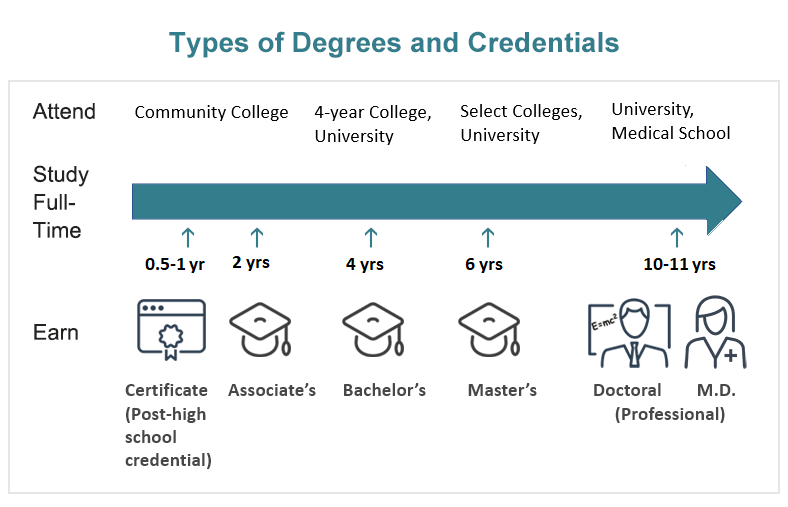
A bachelor's degree in a relevant engineering discipline is typically required for all entry-level engineering jobs. Most engineering-related degrees are granted in electrical engineering, electronics engineering, mechanical engineering, civil engineering, chemical engineering, computer science, or software engineering. Occasionally, college graduates with a degree in a natural science, architecture, or mathematics may qualify for some engineering jobs, especially in specialties that are in high demand. Engineers trained in one branch may work in related branches. For example, many aerospace engineers have training in mechanical engineering.
Some engineering managers have more educational training in a management-related area than they do in engineering. For example, they may have a bachelor's degree in accounting and finance but not in an engineering discipline. However, they still need to be experienced in, and have technical knowledge of, the particular engineering discipline that they supervise.
A master's degree in engineering management (MEM), technology management (MSTM), or business administration (MBA) is common for an engineering manager to have to be more competitive.
Companies That Hire Engineering Managers
Try it Out with an Activity or Project
STEM Activities
STEM activities are fun hands-on explorations that usually take from 10 minutes to one hour and use readily available household or classroom materials while introducing you to STEM concepts common in this career.
/-/https/www.sciencebuddies.org/cdn/Files/16516/5/SortingMachine.jpg)
/-/https/www.sciencebuddies.org/cdn/Files/14495/5/scratch-covid-19-simulator.jpg)
Science Project Ideas
Project Ideas are in-depth STEM explorations that have a strong focus on controlling variables, taking accurate measurements, and analyzing data suitable for investigating the scientific method or the engineering design process.
/-/https/www.sciencebuddies.org/cdn/Files/11737/6/ball-launcher-receiver-thumbnail.jpg)
/-/https/www.sciencebuddies.org/cdn/Files/12920/12/2019-engineering-challenge-project.png)
/-/https/www.sciencebuddies.org/cdn/Files/14095/10/engineering-2020-challenge-cricket-wicket.jpg)
/-/https/www.sciencebuddies.org/cdn/Files/3723/8/Chem_img045.jpg)
/-/https/www.sciencebuddies.org/cdn/Files/5069/6/Asteroids-scale_img.jpg)
On the Job
Role Models

Nature of the Work
Engineering managers plan, coordinate, and direct research, design, and production activities. They may supervise and manage junior engineers, technicians, specialists, and other support personnel. Senior management typically outlines projects and goals that need to be accomplished in general terms, and engineering managers then break the projects and goals down into smaller, feasible goals. Engineering managers must use relevant engineering skills to create detailed plans to accomplish these goals by specific deadlines. This can involve planning, strategizing, and innovating with other engineers for years in advance, and may include developing a new product, and/or upgrading and improving an existing product. Once detailed plans are made, the engineering manager must then guide, supervise, and coordinate subordinates to meet specific deadlines, while anticipating potential delays, troubleshooting, and setbacks.
Engineering managers may need to carry out several administrative-related procedures. In addition to planning and coordinating production with engineers, this can include hiring, interacting with people in sales, going over financial reviews and budgeting, and overall helping to determine the best financial strategy to pursue in the marketplace for the company to succeed.
Engineering managers also frequently interact with customers, typically showing them the company's product, discussing how it could help customers, and discussing how the product could be improved/altered (or a new product developed) to better meet customers' specific needs. Customer feedback is passed back to the company and the company determines whether it should be altered, or if a new one should be made. Frequent travel may be involved.
Work Environment
Engineering managers spend most of their time in an office, but depending on how involved they are with the production aspect, they may also work in manufacturing plants, laboratories, or other places where production is being done. Engineering managers may also travel to meet with customers. Many engineering managers work at least 40 hours a week and might work much longer, on occasion, to meet project deadlines. Some might experience considerable pressure to meet production goal deadlines and work within a tight budget.
More Information
Ask Questions
Do you have a specific question about a career as an Engineering Manager that isn't answered on this page? Post your question on the Science Buddies Ask an Expert Forum.
Additional Resources
Sources
- U.S. Bureau of Labor Statistics BLS (2024). Occupational Outlook Handbook (OOH), 2024 Edition, Bureau of Labor Statistics. Retrieved August 25, 2025.
- National Center for O*NET Development O*Net Online (2024). National Center for O*Net Development. Retrieved August 25, 2025
- United States Department of Labor, Bureau of Labor Statistics. (2012, March 29). Architectural and Engineering Managers Occupational Outlook Handbook. Retrieved August 23, 2013.
- Career Thoughts. (n.d.). Engineering Manager Jobs. Retrieved August 23, 2013.
- Campus Explorer, Inc. (n.d.). Engineering Managers. Retrieved August 23, 2013.
- Wikipedia contributors. (2013, August 7). Engineering management. Retrieved August 23, 2013.
- STEMworksINDIANA. (n.d.) Engineering Management. Retrieved August 27, 2013.
- Science Buddies. (n.d.). Science Careers: Interview with Imran Akbar. Retrieved August 27, 2013.
- TryEngineering. (n.d.). Julie A. Pollitt, P.E. (Aerospace Engineer). Retrieved August 2, 2019.
- Science Buddies. (n.d.). Science Careers: Interview with Jeff Hagen. Retrieved August 27, 2013.