
/-/https/careerdiscovery.sciencebuddies.org/cdn/Files/21464/5/sb-logo.png)
Environmental Engineering Technician
Overview and Key Facts
/-/https/careerdiscovery.sciencebuddies.org/cdn/Files/1281/17/pexels-photo-3580281.jpg)

Education

Median Pay

Job Growth

Jobs in 2034
What Do They Do?
An environmental engineering technician could.../-/https/careerdiscovery.sciencebuddies.org/cdn/Files/20217/5/EnvEngTech_WhatDoTheyDo.jpg)
/-/https/careerdiscovery.sciencebuddies.org/cdn/Files/1283/17/iStock-1172146123.jpg)
/-/https/careerdiscovery.sciencebuddies.org/cdn/Files/1284/17/iStock-670632110.jpg)
/-/https/careerdiscovery.sciencebuddies.org/cdn/Files/1285/17/iStock-1215474756.jpg)
/-/https/careerdiscovery.sciencebuddies.org/cdn/Files/20217/5/EnvEngTech_WhatDoTheyDo.jpg)
/-/https/careerdiscovery.sciencebuddies.org/cdn/Files/1283/17/iStock-1172146123.jpg)
/-/https/careerdiscovery.sciencebuddies.org/cdn/Files/1284/17/iStock-670632110.jpg)
/-/https/careerdiscovery.sciencebuddies.org/cdn/Files/1285/17/iStock-1215474756.jpg)
Overview Listen to this section
Smog, car emissions, industry waste—unfortunately, pollution is a reality that humans have to deal with. However, we can all breathe a little easier with environmental engineering technicians on the job. These people test our water, air, and soil to help us find ways to lessen the impact of pollution./-/https/i.ytimg.com/vi/gBIUUlrJKjU/maxresdefault.jpg)
Do You Have the Skills and Characteristics of an Environmental Engineering Technician?

Core Tasks
Think about if you'd like the typical tasks an Environmental Engineering Technician might do:Salary & Job Openings
Median Salary (Yearly Pay)
Future Jobs
Blast-Off:
(10% or higher)
(7% - 10%)
(5% - 7%)
(3% - 5%)
(0% - 3%)

Steps to Get There: Becoming an Environmental Engineering Technician
High School Subjects to Study
Engineering
Career Pathway Listen to this section
Most environmental engineering technicians enter the occupation with an associate's degree in environmental engineering technology. Training is available at technical institutes, community colleges, extension divisions of colleges and universities, public and private vocational-technical schools, and in the Armed Forces. Because the type and quality of training programs vary considerably, prospective students should carefully investigate training programs before enrolling.
Training in technical areas may be obtained in the Armed Forces. Many military technical training programs are highly regarded by employers; however, skills acquired in military programs are often narrowly focused and might be of limited applicability in civilian industry, which often requires broader training. Therefore, some additional training may be needed, depending on the acquired skills and the kind of job.
Environmental engineering technicians usually begin by performing routine duties under the close supervision of an experienced technician, technologist, engineer, or scientist. As they gain experience, they are given more difficult assignments with only general supervision. Some environmental engineering technicians eventually become supervisors.
Education- Typical Degree Needed After High School Listen to this section
high school credential
Typical degree for an entry-level position: Associate's degree ?
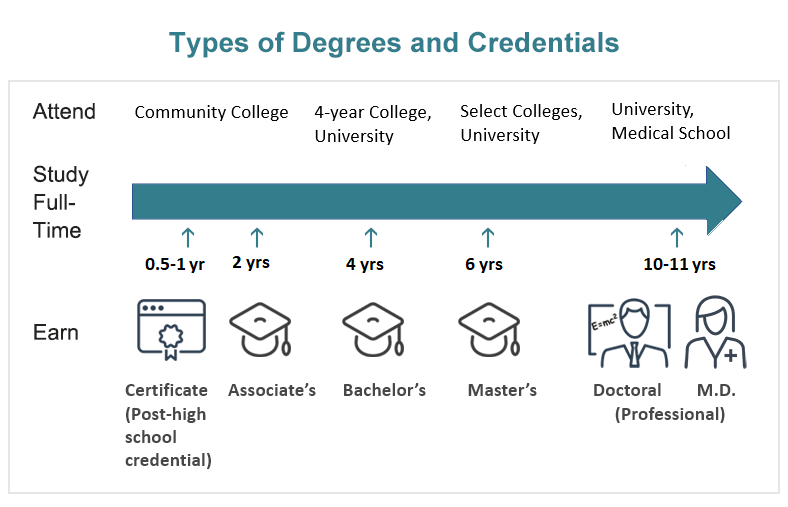
An associate's degree in environmental engineering technology is the minimum requirement for entry-level positions. Although it may be possible to qualify for certain engineering technician jobs without formal training, most employers prefer to hire someone with at least a 2-year associate's degree in environmental engineering technology. People with college courses in science, engineering, and mathematics may qualify for some positions, but may need additional specialized training and experience. Prospective environmental engineering technicians should take as many high school science and math courses as possible to prepare for programs in environmental engineering technology after high school.
The type of technical courses required depends on the specialty. Those preparing to work in environmental engineering technology need courses in environmental regulations and safe handling of hazardous materials.
Companies That Hire Environmental Engineering Technicians
Try it Out with an Activity or Project
STEM Activities
STEM activities are fun hands-on explorations that usually take from 10 minutes to one hour and use readily available household or classroom materials while introducing you to STEM concepts common in this career.
/-/https/www.sciencebuddies.org/cdn/Files/6923/6/pizza-box-solar-oven.jpg)
/-/https/www.sciencebuddies.org/cdn/Files/13898/5/fog-catcher-thumbnail.jpg)
/-/https/www.sciencebuddies.org/cdn/Files/16567/5/WildWinds.jpg)
Science Project Ideas
Project Ideas are in-depth STEM explorations that have a strong focus on controlling variables, taking accurate measurements, and analyzing data suitable for investigating the scientific method or the engineering design process.
/-/https/www.sciencebuddies.org/cdn/Files/21244/4/blobid1749044493094.jpg)
/-/https/www.sciencebuddies.org/cdn/Files/3091/5/EnvEng_img085.jpg)
/-/https/www.sciencebuddies.org/cdn/Files/2505/5/OceanSci_img001.gif)
/-/https/www.sciencebuddies.org/cdn/Files/12125/5/homemade-testtube-holder-thumbnail.jpg)
/-/https/www.sciencebuddies.org/cdn/Files/6763/7/oil-spill-clean-up.jpg)
/-/https/www.sciencebuddies.org/cdn/Files/4907/10/Ferrofluid_Project-work-area_img.jpg)
/-/https/www.sciencebuddies.org/cdn/Files/12233/4/green-pond-algae.jpg)
/-/https/www.sciencebuddies.org/cdn/Files/8088/12/aerial-jameson-island-big-muddy.jpg)
/-/https/www.sciencebuddies.org/cdn/Files/3324/5/EnvEng_img052.jpg)
/-/https/www.sciencebuddies.org/cdn/Files/4116/5/EnvEng_img077.jpg)
/-/https/www.sciencebuddies.org/cdn/Files/3469/5/EnvEng_img064.jpg)
/-/https/www.sciencebuddies.org/cdn/Files/12230/4/noaa-oil-spill-response.jpg)
/-/https/www.sciencebuddies.org/cdn/Files/3867/5/Energy_img054.jpg)
/-/https/www.sciencebuddies.org/cdn/Files/3628/5/EnvEng_img070.jpg)
/-/https/www.sciencebuddies.org/cdn/Files/3916/5/Energy_img059.jpg)
/-/https/www.sciencebuddies.org/cdn/Files/7498/13/daphnia-magna.jpg)
/-/https/careerdiscovery.sciencebuddies.org/Dirs/37/0/img/thumbnail.png)
On the Job
Role Models

Nature of the Work
Environmental engineering technicians use the principles and theories of science, engineering, and mathematics to solve technical problems in research and development, inspection, and maintenance. Their work is more narrowly focused and application-oriented than that of scientists and engineers. Many environmental engineering technicians assist engineers and scientists, especially in research and development. Environmental engineering technicians who work in research and development build or set up equipment, prepare and conduct experiments, collect data, calculate or record results, and help engineers or scientists in other ways, such as making prototype versions of newly designed equipment.
Environmental engineering technicians work closely with environmental engineers and scientists to develop methods and devices used in the prevention, control, or correction of environmental hazards. They inspect and maintain equipment related to air pollution and recycling. Some inspect water and wastewater treatment systems to ensure that pollution control requirements are met.
Work Environment
Most environmental engineering technicians work 40 hours a week in laboratories, or outdoors. Some may be exposed to hazards from equipment, chemicals, or toxic materials.
More Information
Ask Questions
Do you have a specific question about a career as an Environmental Engineering Technician that isn't answered on this page? Post your question on the Science Buddies Ask an Expert Forum.
Sources
- U.S. Bureau of Labor Statistics BLS (2024). Occupational Outlook Handbook (OOH), 2024 Edition, Bureau of Labor Statistics. Retrieved August 25, 2025.
- National Center for O*NET Development O*Net Online (2024). National Center for O*Net Development. Retrieved August 25, 2025
- Science Buddies, YouTube. (2010, January 26). Science Career: Environmental Engineering Technician. Department of Labor and Workforce Development. Retrieved March 19, 2019.