

Marine Engineer and Naval Architect
Overview and Key Facts


Education

Median Pay

Job Growth

Jobs in 2034
What Do They Do?
A marine engineer and naval architect could...


Overview Listen to this section
Water covers more than 70 percent of Earth's surface, and marine engineers and naval architects design vessels that allow humans and their cargo to cross through or under those waters safely and efficiently. Some of their watercraft designs are enormous, like merchant ships, which carry huge loads of oil, cars, food, clothing, toys, and other goods, across thousands of miles of open waters. These ships are essential for trade between countries. Other vessels are smaller and more specialized, like luxury yachts or cruise liners. Still others are designed for military purposes.
Do You Have the Skills and Characteristics of a Marine Engineer and Naval Architect?

- Reading Comprehension ?
- Critical Thinking ?
- Active Listening ?
- Speaking ?
- Judgment and Decision Making ?
Core Tasks
Think about if you'd like the typical tasks a Marine Engineer and Naval Architect might do:Salary & Job Openings
Median Salary (Yearly Pay)
Future Jobs
Blast-Off:
(10% or higher)
(7% - 10%)
(5% - 7%)
(3% - 5%)
(0% - 3%)

Steps to Get There: Becoming a Marine Engineer and Naval Architect
High School Subjects to Study
Engineering
Career Pathway Listen to this section
A bachelor's degree in architecture or a related engineering degree is required to enter the field. Only a few schools offer course work or degree programs in marine or naval architecture, so students may want to choose to major in marine engineering, ocean engineering, or mechanical engineering. Undergraduate programs should include the basic courses needed, such as hydraulics, materials testing, electrical theory and practice, and mathematics.
Education- Typical Degree Needed After High School Listen to this section
high school credential
Typical degree for an entry-level position: Bachelor's degree ?
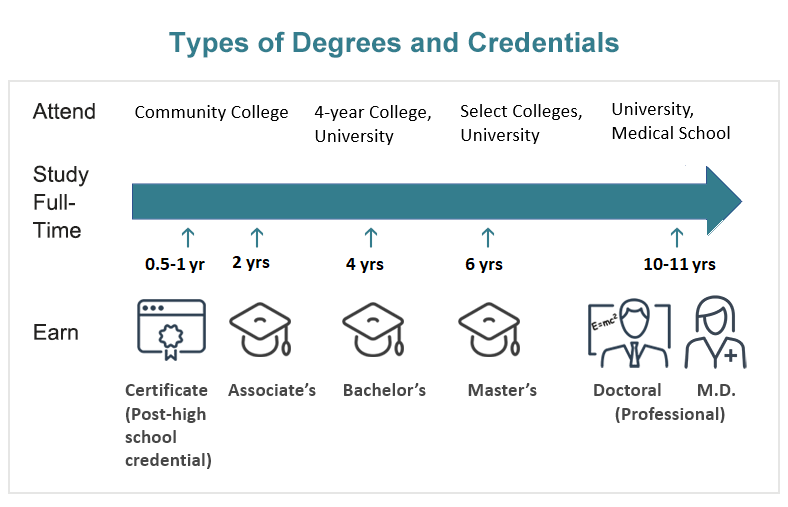
For those seeking to become a marine engineer or a naval architect through an engineering degree, most engineering programs involve a concentration of study in an engineering specialty, such as mechanical engineering, along with courses in both mathematics and the physical and life sciences. Many programs also include courses in general engineering. A design course, sometimes accompanied by a computer or laboratory class, or both, is part of the curriculum of most programs. General courses not directly related to engineering, such as those in the social sciences or humanities, are also often required.
In addition to the standard engineering degree, many colleges offer 2-year or 4-year degree programs in engineering technology. These programs, which usually include various hands-on laboratory classes that focus on current issues in the application of engineering principles, prepare students for practical design and production work, rather than for jobs that require more theoretical and scientific knowledge. Graduates of 4-year technology programs may get jobs similar to those obtained by graduates with a bachelor's degree in engineering. Engineering technology graduates, however, are not qualified to register as professional engineers under the same terms as graduates with degrees in engineering. Some employers regard technology program graduates as having skills between those of a technician and an engineer.
Graduate training is essential for marine engineering faculty positions and many research and development programs, but is not required for the majority of entry-level jobs. Many experienced marine engineers obtain graduate degrees in engineering or business administration to learn new technology and broaden their education. Many high-level executives in government and industry began their careers as engineers.
About 1,830 programs at colleges and universities offer bachelor's degrees in engineering that are accredited by the Accreditation Board for Engineering and Technology (ABET), Inc., and there are another 710 accredited programs in engineering technology. ABET accreditation is based on a program's faculty, curriculum, and facilities; the achievement of a program's students; program improvements; and institutional commitment to specific principles of quality and ethics. Although most institutions offer programs in the major branches of engineering, only a few offer programs in the smaller specialties. Also, programs of the same title may vary in content. For example, some programs emphasize industrial practices, preparing students for a job in industry, whereas others are more theoretical and are designed to prepare students for graduate work. Therefore, students should investigate curricula and check accreditations carefully before selecting a college.
Admissions requirements for undergraduate engineering schools include a solid background in mathematics (algebra, geometry, trigonometry, and calculus) and science (biology, chemistry, and physics), with courses in English, social studies, and humanities. Bachelor's degree programs in engineering typically are designed to last 4 years, but many students find that it takes between 4 and 5 years to complete their studies. Some programs offer a general engineering curriculum; students then specialize on the job or in graduate school.
Some engineering schools have agreements with 2-year colleges whereby the college provides the initial engineering education, and the engineering school automatically admits students for their last 2 years. In addition, a few engineering schools have arrangements that allow students who spend 3 years in a liberal arts college studying pre-engineering subjects and 2 years in an engineering school studying core subjects to receive a bachelor's degree from each school. Some colleges and universities offer 5-year master's degree programs. Some 5-year or even 6-year cooperative plans combine classroom study and practical work, permitting students to gain valuable experience and to finance part of their education.
Companies That Hire Marine Engineer and Naval Architects
Try it Out with an Activity or Project
STEM Activities
STEM activities are fun hands-on explorations that usually take from 10 minutes to one hour and use readily available household or classroom materials while introducing you to STEM concepts common in this career.


Science Project Ideas
Project Ideas are in-depth STEM explorations that have a strong focus on controlling variables, taking accurate measurements, and analyzing data suitable for investigating the scientific method or the engineering design process.


On the Job
Role Models

Nature of the Work
Marine engineers and naval architects are designers of ship structures, hulls, and compartments. They work closely with equipment engineers and shipbuilders to ensure that a ship functions efficiently and that its overall system is sound. Most Marine engineers and naval architects work for private shipbuilding companies, but some work for design or research firms or are self-employed consultants. Many are employed by the U.S. Navy's Naval Sea System Command, the U.S. Coast Guard, or other branches of government.
Marine engineers and naval architects design the hull according to the needs of the buyer or client. The ship's structural design must allow for the equipment needed to run it, the people who will occupy it, the speed and maneuverability it will require, the stress it must withstand, and many other factors. The requirements of a luxury liner differ considerably from those of an oil tanker. The ship must be economical to build, as well as to operate. Architects also select materials and write specifications for suppliers and construction workers. The architect's work usually continues throughout the building process, because some portions of ship design must be completed during the actual construction.
Some marine engineers and naval architects specialize in certain aspects of the work. They may concentrate on remodeling vessels or on researching the use of new materials or techniques. An architect may specialize in designing particular kinds of ships, such as yachts or freight vessels.
Work Environment
Marine engineers and naval architects divide their time between their offices and work sites. Work sites may be hazardous. Architects may be required to travel to business meetings and professional conferences. They generally work 40 hours a week. They may work longer hours to meet deadlines.
More Information
Ask Questions
Do you have a specific question about a career as a Marine Engineer and Naval Architect that isn't answered on this page? Post your question on the Science Buddies Ask an Expert Forum.
Additional Resources
- American Society of Naval Engineers: www.navalengineers.org
- National Marine Educators Association: www.marine-ed.org
- Society of Naval Architects and Marine Engineers: www.sname.org
Sources
- U.S. Bureau of Labor Statistics BLS (2024). Occupational Outlook Handbook (OOH), 2024 Edition, Bureau of Labor Statistics. Retrieved August 25, 2025.
- National Center for O*NET Development O*Net Online (2024). National Center for O*Net Development. Retrieved August 25, 2025
- Cruise & Ferry. (2019, July 2). In Conversation with cruise ship design legend Joe Farcus. Retrieved February 24, 2021.
- Net Industries. (2009). Naval Architect Job Description, Career as a Naval Architect, Salary, Employment - Definition and Nature of the Work, Education and Training Requirements, Getting the Job. Retrieved August 6, 2009.
- Career OneStop, YouTube. (2018, August 13). Marine Engineer and Naval Architect Career Video. Retrieved February 24, 2021.