
/-/https/careerdiscovery.sciencebuddies.org/cdn/Files/21464/5/sb-logo.png)
Quality Control Inspector
Overview and Key Facts
/-/https/careerdiscovery.sciencebuddies.org/cdn/Files/20156/6/quality-control-inspector-worker.jpg)

Education

Median Pay

Job Growth

Jobs in 2034
What Do They Do?
A quality control inspector could.../-/https/careerdiscovery.sciencebuddies.org/cdn/Files/20157/6/SmartHomeTech.jpg)
/-/https/careerdiscovery.sciencebuddies.org/cdn/Files/20158/6/AirplaneExitDoor.jpg)
/-/https/careerdiscovery.sciencebuddies.org/cdn/Files/20159/6/jeans.jpg)
/-/https/careerdiscovery.sciencebuddies.org/cdn/Files/20160/6/ArtificialJoint.jpg)
/-/https/careerdiscovery.sciencebuddies.org/cdn/Files/20157/6/SmartHomeTech.jpg)
/-/https/careerdiscovery.sciencebuddies.org/cdn/Files/20158/6/AirplaneExitDoor.jpg)
/-/https/careerdiscovery.sciencebuddies.org/cdn/Files/20159/6/jeans.jpg)
/-/https/careerdiscovery.sciencebuddies.org/cdn/Files/20160/6/ArtificialJoint.jpg)
Overview Listen to this section
Imagine having the superpower to ensure that everything around us is top-notch and meets the highest standards. As a Quality Control Inspector, you become a super detective. You inspect and test products like toys, technology and cars. You make sure the products are perfect before they reach the hands of customers. Paying attention to detail and commitment to perfection leads to making sure every item is made exactly as it should be.
/-/https/i.ytimg.com/vi/RCTxteXoiAA/maxresdefault.jpg)
Do You Have the Skills and Characteristics of a Quality Control Inspector?

- Quality Control Analysis ?
- Writing ?
- Critical Thinking ?
- Judgment and Decision Making ?
- Active Listening ?
Core Tasks
Think about if you'd like the typical tasks a Quality Control Inspector might do:Salary & Job Openings
Median Salary (Yearly Pay)
Future Jobs
Blast-Off:
(10% or higher)
(7% - 10%)
(5% - 7%)
(3% - 5%)
(0% - 3%)

Steps to Get There: Becoming a Quality Control Inspector
High School Subjects to Study
Engineering
Career Pathway Listen to this section
Workers typically receive on-the-job training that lasts more than 1 month and up to 1 year.
In some industries, such as automobile and aerospace manufacturing, inspectors train for the occupation in an apprenticeship program. Apprentices typically receive paid on-the-job training and instruction. Requirements for entering these programs, which are typically sponsored by trade associations or businesses, may include having a high school diploma, related work experience, or relevant licenses.
Training for new inspectors may cover the use of special meters, gauges, computers, and other instruments; quality control techniques such as Six Sigma; blueprint reading; safety; and reporting requirements.
Education- Typical Degree Needed After High School Listen to this section
high school credential
Typical degree for an entry-level position: High school diploma or equivalent ?
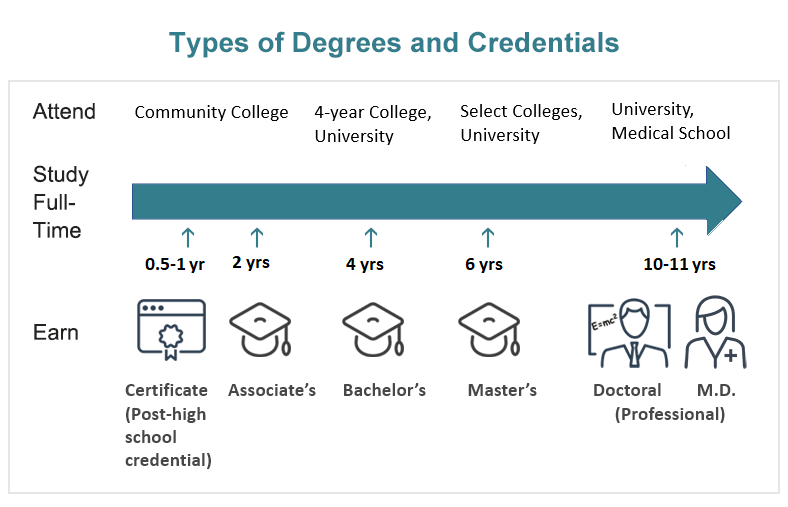
Quality control inspectors typically need a high school diploma for entry-level jobs. Postsecondary certificate programs are available for instruction on quality control concepts, such as inspection planning and auditing. Students in these programs also gain familiarity with tools and technologies that quality control inspectors use.
Some employers require or prefer to hire candidates who have an associate's or bachelor's degree in a field such as quality control management or engineering.
Companies That Hire Quality Control Inspectors
- onsemi
- Cargill
- International Paper
- Northrop Grumman
- Eaton Corporation
- SpaceX
Try it Out with an Activity or Project
STEM Activities
STEM activities are fun hands-on explorations that usually take from 10 minutes to one hour and use readily available household or classroom materials while introducing you to STEM concepts common in this career.
/-/https/www.sciencebuddies.org/cdn/Files/15393/8/lp-milk-curdling-thumbnail.jpg)
/-/https/www.sciencebuddies.org/cdn/Files/18904/7/finalized-dust-sensor-thumbnail.jpg)
Science Project Ideas
Project Ideas are in-depth STEM explorations that have a strong focus on controlling variables, taking accurate measurements, and analyzing data suitable for investigating the scientific method or the engineering design process.
/-/https/www.sciencebuddies.org/cdn/Files/4086/5/EnvEng_img072.jpg)
/-/https/www.sciencebuddies.org/cdn/Files/8530/6/store-shampoo-selection.jpg)
/-/https/careerdiscovery.sciencebuddies.org/Dirs/37/0/img/thumbnail.png)
/-/https/www.sciencebuddies.org/cdn/Files/12217/9/industry-sunrise-clouds-fog.jpg)
/-/https/www.sciencebuddies.org/Files/19982/12/iphone-lenses.jpg)
/-/https/www.sciencebuddies.org/cdn/Files/20186/11/sun-paper-exposure-time-thumbnail.jpg)
/-/https/www.sciencebuddies.org/cdn/Files/2981/5/MatlSci_img055.jpg)
On the Job
Role Models

Nature of the Work
Quality control inspectors are also called testers, sorters, samplers, and weighers. They monitor nearly all manufactured products to ensure that they meet specified standards. Job duties vary across the manufacturing industries in which most of these inspectors work. They could work in areas such as foods, glassware, motor vehicles, electronic components, and structural steel.
Quality control workers use a variety of tools. Although some still use hand-held measuring devices, such as calipers and alignment gauges, workers more commonly operate electronic inspection equipment, such as coordinate-measuring machines (CMMs) and three-dimensional (3D) scanners. Inspectors testing electrical devices may use voltmeters, ammeters, and ohmmeters to test potential difference, current flow, and resistance, respectively.
Quality control workers record the results of their inspections through test reports. When they find defects, inspectors notify supervisors and help to analyze and correct production problems.
Some manufacturers have automated inspection processes, with advanced vision inspection systems installed at one or several production points. Inspectors monitoring these automated systems check equipment, review output, and conduct random product checks.
The following are examples of types of quality control inspectors:
Materials inspectors check production materials by sight, sound, or feel to locate imperfections such as cuts, scratches, missing pieces, or crooked seams. Materials inspectors also may use devices such as infrared microscopes to analyze plastic, rubber, and other substances and to look for deterioration or defects.
Mechanical inspectors generally verify that parts fit, move correctly, and are properly lubricated. They may check the pressure of gases and the level of liquids, test the flow of electricity, and conduct test runs to ensure that machines run properly.
Work Environment
Quality control inspectors generally work in a manufacturing facility, but also can work in professional or technical, administrative or wholesale environment. Inspectors may be required to stand for long periods and may have to lift heavy items.
Some quality control inspectors are exposed to loud noises, moving mechanical parts, and hazardous contaminants, such as airborne particles that irritate the eyes and skin. Workers typically wear protective eyewear, ear plugs, and appropriate clothing to help protect themselves from injury.
Most quality control inspectors work full time. Some inspectors work evenings, overnight, or weekend shifts. Shift assignments may be based on seniority. Overtime may be required to meet production deadlines.
More Information
Ask Questions
Do you have a specific question about a career as a Quality Control Inspector that isn't answered on this page? Post your question on the Science Buddies Ask an Expert Forum.
Sources
- U.S. Bureau of Labor Statistics BLS (2024). Occupational Outlook Handbook (OOH), 2024 Edition, Bureau of Labor Statistics. Retrieved August 25, 2025.
- National Center for O*NET Development O*Net Online (2024). National Center for O*Net Development. Retrieved August 25, 2025
- U.S. Bureau of Labor Statistics BLS. (2022). Quality Control Inspector. Occupational Outlook Handbook. Retrieved February 9, 2024.