
/-/https/careerdiscovery.sciencebuddies.org/cdn/Files/21464/5/sb-logo.png)
Wind Turbine Service Technician
Overview and Key Facts
/-/https/careerdiscovery.sciencebuddies.org/cdn/Files/1894/17/iStock-870031246.jpg)

Education

Median Pay

Job Growth

Jobs in 2034
What Do They Do?
A wind turbine service technician could.../-/https/careerdiscovery.sciencebuddies.org/cdn/Files/1895/17/iStock-1272925052.jpg)
/-/https/careerdiscovery.sciencebuddies.org/cdn/Files/1896/17/pexels-photo-414807.jpg)
/-/https/careerdiscovery.sciencebuddies.org/cdn/Files/1897/21/iStock-1215929859.jpg)
/-/https/careerdiscovery.sciencebuddies.org/cdn/Files/1898/17/unsplash-4NhqyQeErP8.jpg)
/-/https/careerdiscovery.sciencebuddies.org/cdn/Files/1895/17/iStock-1272925052.jpg)
/-/https/careerdiscovery.sciencebuddies.org/cdn/Files/1896/17/pexels-photo-414807.jpg)
/-/https/careerdiscovery.sciencebuddies.org/cdn/Files/1897/21/iStock-1215929859.jpg)
/-/https/careerdiscovery.sciencebuddies.org/cdn/Files/1898/17/unsplash-4NhqyQeErP8.jpg)
Overview Listen to this section
Have you ever seen a wind farm or a collection of wind turbines? When the wind blows, the turbines rotate, turning the wind into energy for communities to use. But in order for the wind turbine to produce the greatest amount of energy efficiently, a wind turbine service technician must inspect, troubleshoot, repair, and ensure that the wind turbine is in good working order. This is a job that requires no fear of heights along with great mechanical aptitude and a good working knowledge of electronics./-/https/i.ytimg.com/vi/ZgaD5b_bdzs/maxresdefault.jpg)
Do You Have the Skills and Characteristics of a Wind Turbine Service Technician?

Core Tasks
Think about if you'd like the typical tasks a Wind Turbine Service Technician might do:Salary & Job Openings
Median Salary (Yearly Pay)
Future Jobs
Blast-Off:
(10% or higher)
(7% - 10%)
(5% - 7%)
(3% - 5%)
(0% - 3%)

Steps to Get There: Becoming a Wind Turbine Service Technician
High School Subjects to Study
Engineering
Career Pathway Listen to this section
Some employers may require Occupational Safety and Health Administration (OSHA) safety-guidelines training in order for technicians to start working in this field.
While certification is not required to work as a wind turbine service technician, the North American Board of Certified Energy Practitioners (NABCEP) does provide optional certification for small wind energy system installers. Candidates must be at least 18 years of age, meet the prerequisites, such as having installed four wind systems during a four-year period prior to submitting the application, and pass a written exam. Continuing education is required to maintain certification by the NABCEP. Applicants must complete 18 hours of continuing education within three years of their initial certification. The education requirements consist of 12 hours covering the NABCEP task analysis for small wind energy system installers and six hours of small wind energy system installation instruction. In addition, installers must provide evidence of having installed three small wind energy systems during the three-year certification period.
Education- Typical Degree Needed After High School Listen to this section
high school credential
Typical degree for an entry-level position: Post high school credential ?
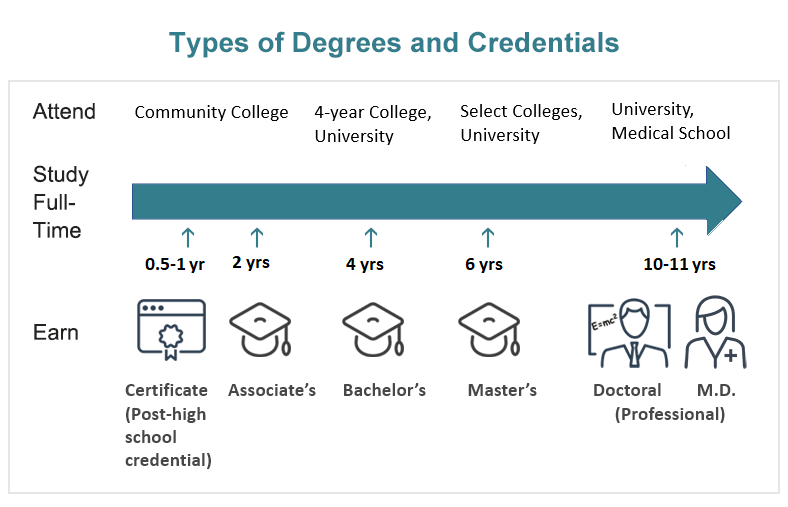
The minimum degree required for an entry-level position in this field is an associate's degree. Entry-level wind turbine service technicians may have attended wind energy programs at community colleges or vocational schools to acquire the technical skills needed for the wind-energy industry. Entry-level wind turbine service technicians generally receive on-the-job training by working with an experienced wind technician. Entrants into this occupation frequently transfer into wind-energy occupations from related construction or mechanical fields.
Try it Out with an Activity or Project
STEM Activities
STEM activities are fun hands-on explorations that usually take from 10 minutes to one hour and use readily available household or classroom materials while introducing you to STEM concepts common in this career.
/-/https/www.sciencebuddies.org/cdn/Files/17439/4/pinwheel-thumbnail.jpg)
/-/https/www.sciencebuddies.org/cdn/Files/16530/5/PinwheelSensitivity.jpg)
Science Project Ideas
Project Ideas are in-depth STEM explorations that have a strong focus on controlling variables, taking accurate measurements, and analyzing data suitable for investigating the scientific method or the engineering design process.
/-/https/www.sciencebuddies.org/cdn/Files/3570/8/Aero_img077.jpg)
/-/https/www.sciencebuddies.org/cdn/Files/8482/8/candle-carousel-thumb.jpg)
/-/https/www.sciencebuddies.org/cdn/Files/2663/3/Weather_img032.gif)
/-/https/www.sciencebuddies.org/cdn/Files/3628/5/EnvEng_img070.jpg)
/-/https/www.sciencebuddies.org/cdn/Files/5923/8/pinwheels-wind-turbines-energy-measure.jpg)
/-/https/www.sciencebuddies.org/cdn/Files/12149/4/wind-bending-tree-thumbnail.jpg)
/-/https/careerdiscovery.sciencebuddies.org/Dirs/37/0/img/thumbnail.png)
/-/https/www.sciencebuddies.org/cdn/Files/3332/5/EnvEng_img060.jpg)
On the Job
Role Models

Nature of the Work
Wind is a renewable energy resource. Wind turbines convert the energy from the wind into mechanical or electrical energy. The electrical energy that is generated from the wind turbines can be used to power homes and businesses or sold to utility companies. Wind turbine service technicians inspect, diagnose, adjust, or repair the external and internal components of wind turbines. They perform regular service and maintenance on the equipment, including oil changes and gearbox lubrication. Wind turbine service technicians adjust electrical or electronic equipment and repair any non-working mechanical devices. They also help with the construction and installation of wind turbines. Wind turbine service technicians should be able to understand manuals, blueprints, schematics, and diagrams so that they can troubleshoot any electrical, mechanical, or hydraulic malfunctions. They document all work performed on computer-based reporting programs and maintain a detailed parts list.
Wind turbine service technicians use a variety of tools, including computers, cordless drills, grease guns, harnesses, hammers, multimeter testing kits, torque wrenches, welding equipment, and wire cutters.
- Blade technicians inspect, service, repair, or replace wind turbine blades. They perform regular service on the blades, the nacelle (the housing that encloses the mechanical parts of a wind turbine), and the nose cone by inspecting them for cracked, chipped, and warped areas. Additionally, blade technicians monitor the speed of the blades to make sure they are working at their most efficient level. Most wind-turbine blades are made of fiberglass; therefore, blade technicians should have extensive fiberglass training to perform their job properly. These technicians must also keep service records, read and follow written instructions, and understand blade schematics.
- Small wind turbine installers construct and install small wind turbines that have a 100-kilowatt capacity or lower. Most of these installations occur at private residences, businesses, or telecommunications sites. Small wind turbine installers should be familiar with the equipment and system design; many times, adjustments are required to satisfy the customer's needs.
Work Environment
Wind turbine service technicians work in a variety of settings, such as desert and mountainous regions, as well as manufacturing and power industry facilities. Regardless of the setting, most wind turbine service technicians work outside in all types of weather conditions. Their work consists of climbing wind towers at heights greater than 100 feet, lifting heavy tools and equipment, and working in cramped quarters at the top of towers. Some towers may require that wind turbine service technicians and their equipment be air-lifted by helicopters.
Wind turbine service technicians must be in good physical condition. They may risk suffering injuries from tools or falls; however, risks are usually minimized by following proper safety procedures. These technicians generally work a standard 40-hour week or a rotation-shift schedule. Wind turbine service technicians may also travel extensively due to a shortage of experienced technicians.
More Information
Ask Questions
Do you have a specific question about a career as a Wind Turbine Service Technician that isn't answered on this page? Post your question on the Science Buddies Ask an Expert Forum.
Sources
- U.S. Bureau of Labor Statistics BLS (2024). Occupational Outlook Handbook (OOH), 2024 Edition, Bureau of Labor Statistics. Retrieved August 25, 2025.
- National Center for O*NET Development O*Net Online (2024). National Center for O*Net Development. Retrieved August 25, 2025
- Liming, D. (2010, Fall). Wind Turbine Service Technician. Occupational Outlook Quarterly. Retrieved November 15, 2010.
- CareerTV. (2009, September 10). On top of the world; a career as a Vestas service technician. Retrieved May 30, 2017.
- Illinois workNet. (2010, June 17). Wind Turbine Technicians. Retrieved May 30, 2017.
- The California Employment Development Department Labor Market Information Division. (2010, November 10). California Occupational Guides: Guide for Wind Turbine Service Technicians in California. Retrieved July 1, 2019.