
/-/https/careerdiscovery.sciencebuddies.org/cdn/Files/21464/5/sb-logo.png)
Biomedical Engineer
Overview and Key Facts
/-/https/careerdiscovery.sciencebuddies.org/cdn/Files/979/18/pexels-photo-3912962.jpg)

Education

Median Pay

Job Growth

Jobs in 2034
What Do They Do?
A biomedical engineer could.../-/https/careerdiscovery.sciencebuddies.org/cdn/Files/980/18/pexels-photo-5721300.jpg)
/-/https/careerdiscovery.sciencebuddies.org/cdn/Files/981/24/iStock-1265898922.jpg)
/-/https/careerdiscovery.sciencebuddies.org/cdn/Files/982/18/cerebral-palsy-11-things_456px.jpg)
/-/https/careerdiscovery.sciencebuddies.org/cdn/Files/983/24/iStock-460467455.jpg)
/-/https/careerdiscovery.sciencebuddies.org/cdn/Files/980/18/pexels-photo-5721300.jpg)
/-/https/careerdiscovery.sciencebuddies.org/cdn/Files/981/24/iStock-1265898922.jpg)
/-/https/careerdiscovery.sciencebuddies.org/cdn/Files/982/18/cerebral-palsy-11-things_456px.jpg)
/-/https/careerdiscovery.sciencebuddies.org/cdn/Files/983/24/iStock-460467455.jpg)
Overview Listen to this section
Shakespeare described humans as a "piece of work," and others have called the body "the most beautiful machine," but like any machine, sometimes body parts need repairs or servicing when the body cannot take care of the problems itself. That's where biomedical engineers come in. They use engineering to solve problems in medicine, such as creating replacement body parts, drug-delivery systems, medical instruments, and test equipment. Their work helps restore health and function, and improves the quality of life for people who are sick or injured./-/https/i.ytimg.com/vi/KSmQ3F21ovo/maxresdefault.jpg)
Do You Have the Skills and Characteristics of a Biomedical Engineer?

- Critical Thinking ?
- Judgment and Decision Making ?
- Active Listening ?
- Complex Problem Solving ?
- Reading Comprehension ?
Core Tasks
Think about if you'd like the typical tasks a Biomedical Engineer might do:Salary & Job Openings
Median Salary (Yearly Pay)
Future Jobs
Blast-Off:
(10% or higher)
(7% - 10%)
(5% - 7%)
(3% - 5%)
(0% - 3%)

Steps to Get There: Becoming a Biomedical Engineer
High School Subjects to Study
Engineering
Career Pathway Listen to this section
A biomedical engineering student should first plan to become a good engineer, who then acquires a working understanding of life sciences and terminology, according to the Biomedical Engineering Society website. Good communication skills are also important, because biomedical engineers provide a vital link to professionals with different backgrounds.
Education- Typical Degree Needed After High School Listen to this section
high school credential
Typical degree for an entry-level position: Bachelor's degree ?
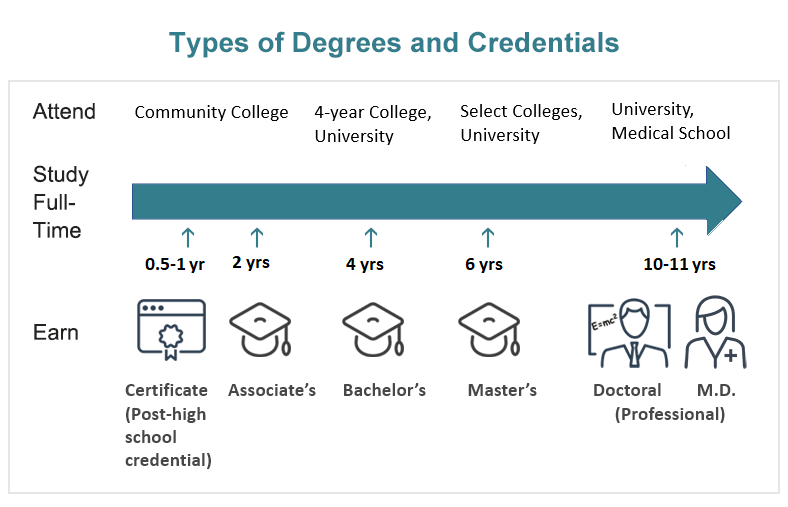
In college, prospective biomedical engineers usually select engineering as a field of study, and then choose a discipline concentration within engineering. Some students will major in biomedical engineering, while others might major in chemical, electrical, or mechanical engineering with a specialty in biomedical engineering. Many students continue their education in graduate school, where they obtain valuable biomedical research experience at the master's or doctoral level.
When entering the job market, the graduate should be able to point to well-defined engineering skills for application to the biomedical field, with a project or in-the-field experience in biomedical engineering. Some biomedical engineers also have advanced training in other fields. For example, many biomedical engineers also have a Doctor of Medicine (MD) degree, thereby combining an understanding of advanced technology with direct patient care or clinical research.
Companies That Hire Biomedical Engineers
Try it Out with an Activity or Project
STEM Activities
STEM activities are fun hands-on explorations that usually take from 10 minutes to one hour and use readily available household or classroom materials while introducing you to STEM concepts common in this career.
/-/https/www.sciencebuddies.org/cdn/Files/8315/5/robot-hand.jpg)
/-/https/www.sciencebuddies.org/cdn/Files/730/27/make-stethoscope-listen-heart-beat.jpg)
/-/https/www.sciencebuddies.org/cdn/Files/13562/6/blood-flow-activity-thumbnail.jpg)
Science Project Ideas
Project Ideas are in-depth STEM explorations that have a strong focus on controlling variables, taking accurate measurements, and analyzing data suitable for investigating the scientific method or the engineering design process.
/-/https/www.sciencebuddies.org/cdn/Files/4310/13/Straw-hand-Examples.jpg)
/-/https/www.sciencebuddies.org/cdn/Files/15741/9/glowing-jellyfish-thumbnail.jpg)
/-/https/www.sciencebuddies.org/cdn/Files/18817/10/artificial-pancreas-experiment-setup-thumbnail.jpg)
/-/https/www.sciencebuddies.org/cdn/Files/20680/7/blobid1723565203039.jpg)
/-/https/www.sciencebuddies.org/cdn/Files/20485/6/blobid1718827895625.jpg)
/-/https/www.sciencebuddies.org/cdn/Files/21800/4/blobid1769061724165.jpg)
/-/https/www.sciencebuddies.org/cdn/Files/20709/6/blobid1724247182574.jpg)
/-/https/www.sciencebuddies.org/cdn/Files/6680/5/prosthesis-hand-pictures.jpg)
/-/https/www.sciencebuddies.org/cdn/Files/17505/9/color-release-side.jpg)
/-/https/www.sciencebuddies.org/cdn/Files/19947/4/robotic-prosthetic-hand.jpg)
/-/https/www.sciencebuddies.org/cdn/Files/4299/5/Photo_img055.jpg)
/-/https/www.sciencebuddies.org/cdn/Files/15737/8/Cas9_Anders_DNA_bound_structure.png)
/-/https/www.sciencebuddies.org/cdn/Files/4164/10/HumBio_img160.jpg)
/-/https/www.sciencebuddies.org/cdn/Files/20550/6/blobid1720554526780.jpg)
/-/https/www.sciencebuddies.org/cdn/Files/15748/7/Saccharomyces_cerevisiae_SEM-yeast.jpg)
/-/https/www.sciencebuddies.org/cdn/Files/21204/6/blobid1744921593551.png)
/-/https/careerdiscovery.sciencebuddies.org/Dirs/37/0/img/thumbnail.png)
/-/https/www.sciencebuddies.org/cdn/Files/3384/6/ApMech_img030.jpg)
/-/https/www.sciencebuddies.org/cdn/Files/21102/6/blobid1740505996557.png)
On the Job
Role Models

Nature of the Work
Biomedical engineers develop devices and procedures that solve medical and health-related problems by combining their knowledge of biology and medicine with engineering principles and practices. Many do research with medical scientists to develop and evaluate systems and products, such as artificial organs, prostheses (artificial devices that replace missing body parts), instrumentation, medical information systems, and health-management and care-delivery systems.
Biomedical engineers also might design devices used in various medical procedures; imaging systems, such as magnetic resonance imaging (MRI); and devices for automating insulin injections or controlling body functions. Most engineers in this specialty need a solid background in another engineering specialty, such as mechanical or electronics engineering, in addition to specialized biomedical training. Some specialties within biomedical engineering are biomaterials, biomechanics, medical imaging, rehabilitation engineering, and orthopedic engineering.
In industry, they might create designs where an in-depth understanding of living systems and of technology is essential. They might be involved in performance testing of new or proposed products. Government positions often involve product testing and safety, as well as establishing safety standards for devices. In the hospital, biomedical engineers might provide advice on the selection and use of medical equipment and supervise its performance testing and maintenance.
They might also build customized devices for special healthcare or research needs. In research institutions, biomedical engineers supervise laboratories and equipment and participate in, or direct, research activities in collaboration with other researchers with such backgrounds as medicine, physiology, and nursing. Some biomedical engineers are technical advisors for marketing departments of companies, and some are in management positions.
Work Environment
Biomedical engineers are employed in education, industry, hospitals, research facilities of educational and medical institutions, and government regulatory agencies. They often serve a coordinating or interfacing function, using their background in both the engineering and medical fields.
They generally work indoors in environmentally controlled conditions, must be very exact and highly accurate in performing their jobs, are often required to wear protective or safety equipment, and require the use of their hands to handle and control objects, tools, or controls.
More Information
Ask Questions
Do you have a specific question about a career as a Biomedical Engineer that isn't answered on this page? Post your question on the Science Buddies Ask an Expert Forum.
Additional Resources
Sources
- U.S. Bureau of Labor Statistics BLS (2024). Occupational Outlook Handbook (OOH), 2024 Edition, Bureau of Labor Statistics. Retrieved August 25, 2025.
- National Center for O*NET Development O*Net Online (2024). National Center for O*Net Development. Retrieved August 25, 2025
- NIH LifeWorks. (2004, August 17). Meet a Real Biomedical Engineer, Abby Vogel. Retrieved January 11, 2018.
- Medtronic, Inc. (2010). Kaleigh's Story. Retrieved August 4, 2025.
- Sloan Career Cornerstone Center. (n.d.). Lori Laird (Biomedical Engineer). Retrieved May 5, 2010.
- UC San Francisco. (2010, February 14). Tejal Desai, Biomedical Engineer. Retrieved Januray 11, 2018.