

Chiropractor
Overview and Key Facts


Education

Median Pay

Job Growth

Jobs in 2034
What Do They Do?
A chiropractor could...


Overview Listen to this section
Some patients prefer to treat certain medical problems without the use of medications, surgery, or other traditional therapies. Chiropractors diagnose and treat problems involving the muscles, skeleton, and nervous system using alternative therapies, such as manipulation of the spine and joints, acupuncture, massage, bracing, and heat therapy. They also counsel patients on how to achieve good overall health through diet, exercise, stress management, and rest. They try to treat the patient as a whole.
Do You Have the Skills and Characteristics of a Chiropractor?

Core Tasks
Think about if you'd like the typical tasks a Chiropractor might do:Salary & Job Openings
Median Salary (Yearly Pay)
Future Jobs
Blast-Off:
(10% or higher)
(7% - 10%)
(5% - 7%)
(3% - 5%)
(0% - 3%)

Steps to Get There: Becoming a Chiropractor
High School Subjects to Study
Engineering
Career Pathway Listen to this section
Chiropractors must be licensed, which requires 2-4 years of undergraduate education, the completion of a 4-year chiropractic college course, and passing scores on national and state examinations.
Education- Typical Degree Needed After High School Listen to this section
high school credential
Typical degree for an entry-level position: Doctoral or professional degree ?
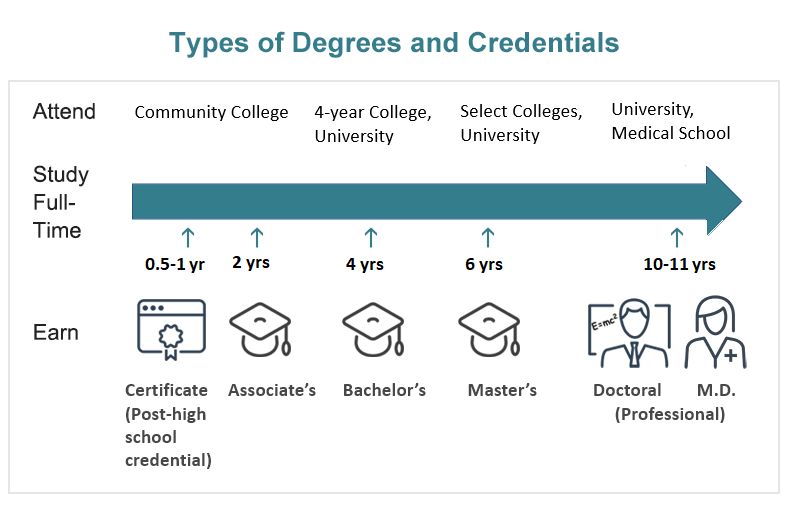
In 2009, 16 chiropractic programs in the United States were accredited by the Council on Chiropractic Education. Applicants must have at least 90 semester hours of undergraduate study leading toward a bachelor's degree, including courses in English, the social sciences or humanities, organic and inorganic chemistry, biology, physics, and psychology. Many applicants have a bachelor's degree, which might eventually become the minimum entry requirement. Several chiropractic colleges offer pre-chiropractic study, as well as a bachelor's degree program. Recognition of prechiropractic education offered by chiropractic colleges varies among states.
Chiropractic programs require a minimum of 4,200 hours of combined classroom, laboratory, and clinical experience. During the first 2 years, most chiropractic programs emphasize classroom and laboratory work in sciences such as anatomy, physiology, public health, microbiology, pathology, and biochemistry. The last 2 years focus on courses in manipulation and spinal adjustment and provide clinical experience in physical and laboratory diagnosis, neurology, orthopedics, geriatrics, physiotherapy, and nutrition. Chiropractic programs and institutions grant the degree of Doctor of Chiropractic (DC).
Chiropractic colleges also offer postdoctoral training in orthopedics, neurology, sports injuries, nutrition, rehabilitation, radiology, industrial consulting, family practice, pediatrics, and applied chiropractic sciences. Once such training is complete, chiropractors may take specialty exams leading to "diplomate" status in a given specialty. Exams are administered by chiropractic specialty boards.
Companies That Hire Chiropractors
Try it Out with an Activity or Project
STEM Activities
STEM activities are fun hands-on explorations that usually take from 10 minutes to one hour and use readily available household or classroom materials while introducing you to STEM concepts common in this career.

Science Project Ideas
Project Ideas are in-depth STEM explorations that have a strong focus on controlling variables, taking accurate measurements, and analyzing data suitable for investigating the scientific method or the engineering design process.


On the Job
Role Models

Nature of the Work
Chiropractors, also known as doctors of chiropractic or chiropractic physicians, diagnose and treat patients with health problems of the musculoskeletal system and treat the effects of those problems on the nervous system and on general health. Many chiropractic treatments deal specifically with the spine and the manipulation of the spine. Chiropractic is based on the principle that spinal joint misalignments interfere with the nervous system and can result in lower resistance to disease and many different conditions of diminished health.
The chiropractic approach to healthcare focuses on the patient's overall health. Chiropractors provide natural, drugless, nonsurgical health treatments, relying on the body's inherent recuperative abilities. They also recognize that many factors affect health, including exercise, diet, rest, environment, and heredity. Chiropractors recommend changes in lifestyle that affect those factors. In some situations, chiropractors refer patients to or consult with other health practitioners.
Like other health practitioners, chiropractors follow a standard routine to get information needed to diagnose and treat patients. They take the patient's health history; conduct physical, neurological, and orthopedic examinations; and might order laboratory tests. X-rays and other diagnostic images are important tools because of the chiropractor's emphasis on the spine and its proper function. Chiropractors also analyze the patient's posture and spine using a specialized technique. For patients whose health problems can be traced to the musculoskeletal system, chiropractors manually adjust the spinal column.
Some chiropractors use additional procedures in their practices, including therapies using heat, water, light, massage, ultrasound, electric currents, and acupuncture. They might apply supports such as straps, tape, braces, or shoe inserts. Chiropractors often counsel patients about health concepts such as nutrition, exercise, changes in lifestyle, and stress management, but chiropractors do not prescribe drugs or perform surgery.
In addition to general chiropractic practice, some chiropractors specialize in sports injuries, neurology, orthopedics, pediatrics, nutrition, internal disorders, or diagnostic imaging.
Many chiropractors are solo or group practitioners who also have the administrative responsibilities of running a practice. In larger offices, chiropractors delegate these tasks to office managers and chiropractic assistants. Chiropractors in private practice are responsible for developing a patient base, hiring employees, and keeping records.
Work Environment
Chiropractors work in clean, comfortable offices. Like other health practitioners, chiropractors are sometimes on their feet for long periods. Chiropractors who take X-rays must employ appropriate precautions against the dangers of repeated exposure to radiation.
Chiropractors work, on average, about 40 hours per week, although longer hours are not uncommon. Solo practitioners set their own hours, but might work evenings or weekends to accommodate patients. Like other healthcare practitioners, chiropractors in a group practice will sometimes be on call or treat patients of other chiropractors in the group.
More Information
Ask Questions
Do you have a specific question about a career as a Chiropractor that isn't answered on this page? Post your question on the Science Buddies Ask an Expert Forum.
Additional Resources
- American Chiropractic Association: https://www.acatoday.org/
- Council on Chiropractic Education: www.cce-usa.org
- Federation of Chiropractic Licensing Boards: https://www.fclb.org/
- International Chiropractors Association: https://www.chiropractic.org/
- National Board of Chiropractic Examiners: https://www.nbce.org/
Sources
- U.S. Bureau of Labor Statistics BLS (2024). Occupational Outlook Handbook (OOH), 2024 Edition, Bureau of Labor Statistics. Retrieved August 25, 2025.
- National Center for O*NET Development O*Net Online (2024). National Center for O*Net Development. Retrieved August 25, 2025
- American Chiropractic Association. (2009). Your Career in Chiropractic. Retrieved May 16, 2019.
- Jacobs Chiropractic. (2017, March 14). Welcome to Jacobs Chiropractic in Arlington VA | Dr. Wendy Jacobs. Retrieved May 16, 2019.
- Kartch Chiropractic, P.C. (2019). Dr. Karen Kartch - Doctor of Chiropractic. Retrieved May 16, 2019.
- Palmer College. (2007, April 11). Palmer College of Chiropractic. Retrieved May 20, 2010.