
/-/https/careerdiscovery.sciencebuddies.org/Files/21464/5/sb-logo.png)
Dental Hygienist
Overview and Key Facts
/-/https/careerdiscovery.sciencebuddies.org/Files/1196/17/pexels-photo-3845653.jpg)

Education

Median Pay

Job Growth

Jobs in 2034
What Do They Do?
A dental hygienist could.../-/https/careerdiscovery.sciencebuddies.org/Files/1197/17/iStock-472156571.jpg)
/-/https/careerdiscovery.sciencebuddies.org/Files/1198/17/pexels-photo-4546115.jpg)
/-/https/careerdiscovery.sciencebuddies.org/Files/1199/17/pexels-photo-5434017.jpg)
/-/https/careerdiscovery.sciencebuddies.org/Files/1200/17/iStock-1094816100.jpg)
/-/https/careerdiscovery.sciencebuddies.org/Files/1197/17/iStock-472156571.jpg)
/-/https/careerdiscovery.sciencebuddies.org/Files/1198/17/pexels-photo-4546115.jpg)
/-/https/careerdiscovery.sciencebuddies.org/Files/1199/17/pexels-photo-5434017.jpg)
/-/https/careerdiscovery.sciencebuddies.org/Files/1200/17/iStock-1094816100.jpg)
Overview Listen to this section
Good oral hygiene protects not only teeth and gums, but the whole body, reducing the risk of infections, heart disease, clogged arteries, and stroke. Dental hygienists help prevent and correct dental problems by taking X-rays, examining teeth and gums, removing plaque, polishing teeth, injecting local anesthetics, and assisting with dental procedures. They also play a key role in educating patients about how and when to brush and floss./-/https/i.ytimg.com/vi/_H5TMEeOlJo/hqdefault.jpg)
Do You Have the Skills and Characteristics of a Dental Hygienist?

Core Tasks
Think about if you'd like the typical tasks a Dental Hygienist might do:Salary & Job Openings
Median Salary (Yearly Pay)
Future Jobs
Blast-Off:
(10% or higher)
(7% - 10%)
(5% - 7%)
(3% - 5%)
(0% - 3%)

Steps to Get There: Becoming a Dental Hygienist
High School Subjects to Study
Engineering
Career Pathway Listen to this section
A degree from an accredited dental hygiene school and a state license are required for this job.
Education- Typical Degree Needed After High School Listen to this section
high school credential
Typical degree for an entry-level position: Associate's degree ?
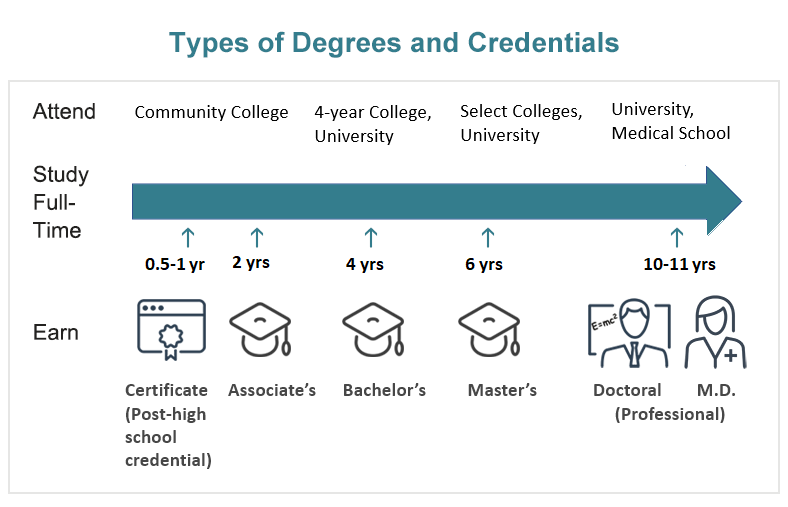
A high school diploma and college entrance test scores are usually required for admission to a dental hygiene program. High school students interested in becoming dental hygienists should take courses in biology, chemistry, and mathematics. Some dental hygiene programs also require applicants to have completed at least one year of college. Specific entrance requirements typically vary from one school to another.
In 2008, there were 301 dental hygiene programs accredited by the Commission on Dental Accreditation. Most dental hygiene programs grant an associate degree, although some also offer a certificate, a bachelor's degree, or a master's degree. A minimum of an associate's degree or certificate in dental hygiene is generally required for practice in a private dental office. A bachelor's or master's degree usually is required for research, teaching, or clinical practice in public or school health programs.
Schools offer laboratory, clinical, and classroom instruction in subjects such as anatomy, physiology, chemistry, microbiology, pharmacology, nutrition, radiography, histology (the study of tissue structure), periodontology (the study of gum diseases), pathology, dental materials, clinical dental hygiene, and social and behavioral sciences.
Companies That Hire Dental Hygienists
Try it Out with an Activity or Project
STEM Activities
STEM activities are fun hands-on explorations that usually take from 10 minutes to one hour and use readily available household or classroom materials while introducing you to STEM concepts common in this career.
Science Project Ideas
Project Ideas are in-depth STEM explorations that have a strong focus on controlling variables, taking accurate measurements, and analyzing data suitable for investigating the scientific method or the engineering design process.
/-/https/careerdiscovery.sciencebuddies.org/Dirs/37/0/img/thumbnail.png)
On the Job
Role Models

Nature of the Work
Dental hygienists remove soft and hard deposits from teeth, teach patients how to practice good oral hygiene, and provide other preventive dental care. They examine patients' teeth and gums, recording the presence of diseases or abnormalities.
Dental hygienists use an assortment of tools to complete their tasks. Hand and rotary instruments, as well as ultrasonic devices, are used to clean and polish teeth, including removing tartar, stains, and plaque. Hygienists use x-ray machines to take dental pictures, and sometimes develop the film. They might use models of teeth to explain oral hygiene, perform root planning as a periodontal therapy, or apply cavity-preventive agents, such as fluorides and pit and fissure sealants.
Other tasks hygienists might perform vary by state. In some states, hygienists are allowed to administer anesthetics, while in others they administer local anesthetics using syringes. Some states also allow hygienists to place and carve filling materials, temporary fillings, and periodontal dressings; remove sutures; and smooth and polish metal restorations.
Dental hygienists also help patients develop and maintain good oral health. For example, they might explain the relationship between diet and oral health or inform patients about how to select toothbrushes and show them how to brush and floss their teeth.
Hygienists sometimes make a diagnosis, and other times, prepare clinical and laboratory diagnostic tests for the dentist to interpret. Hygienists sometimes work chair-side with the dentist during treatment.
Work Environment
Dental hygienists work in clean, well-lit offices. Important health safeguards include strict adherence to proper radiological procedures and the use of appropriate protective devices when administering anesthetic gas. Dental hygienists also wear safety glasses, surgical masks, and gloves to protect themselves and patients from infectious diseases. Dental hygienists also should be careful to avoid possible shoulder and neck injury from sitting for long periods of time while working with patients.
Flexible scheduling is a distinctive feature of this job. Full-time, part-time, evening, and weekend schedules are common. Dentists frequently hire hygienists to work only two or three days a week, so hygienists might hold jobs in more than one dental office. In 2008, about half of all dental hygienists worked part-time—less than 35 hours a week.
More Information
Ask Questions
Do you have a specific question about a career as a Dental Hygienist that isn't answered on this page? Post your question on the Science Buddies Ask an Expert Forum.
Additional Resources
- American Dental Hygienists' Association
- Commission on Dental Accreditation, American Dental Association
Sources
- U.S. Bureau of Labor Statistics BLS (2024). Occupational Outlook Handbook (OOH), 2024 Edition, Bureau of Labor Statistics. Retrieved August 25, 2025.
- National Center for O*NET Development O*Net Online (2024). National Center for O*Net Development. Retrieved August 25, 2025
- Commonwealth of Massachusetts Department of Public Health. (n.d.). So You Want to Be a Public Health Dental Hygienist? Working In The Schools. Retrieved August 24, 2010.
- National Institutes of Health. (2006, June 12). Meet a real Dental Hygienist, Sherri Gollins. Retrieved May 20, 2010.