
/-/https/careerdiscovery.sciencebuddies.org/cdn/Files/21464/5/sb-logo.png)
Emergency Medical Technicians & Paramedic
Overview and Key Facts
/-/https/careerdiscovery.sciencebuddies.org/cdn/Files/1255/17/pexels-photo-3452997.jpg)

Education

Median Pay

Job Growth

Jobs in 2034
What Do They Do?
An emergency medical technician or paramedic could.../-/https/careerdiscovery.sciencebuddies.org/cdn/Files/1256/17/pexels-photo-3719815.jpg)
/-/https/careerdiscovery.sciencebuddies.org/cdn/Files/1257/17/iStock-610989928.jpg)
/-/https/careerdiscovery.sciencebuddies.org/cdn/Files/1258/17/unsplash-Jf5WbV0uVpg.jpg)
/-/https/careerdiscovery.sciencebuddies.org/cdn/Files/1259/17/iStock-467329857.jpg)
/-/https/careerdiscovery.sciencebuddies.org/cdn/Files/1256/17/pexels-photo-3719815.jpg)
/-/https/careerdiscovery.sciencebuddies.org/cdn/Files/1257/17/iStock-610989928.jpg)
/-/https/careerdiscovery.sciencebuddies.org/cdn/Files/1258/17/unsplash-Jf5WbV0uVpg.jpg)
/-/https/careerdiscovery.sciencebuddies.org/cdn/Files/1259/17/iStock-467329857.jpg)
Overview Listen to this section
Emergency medical technicians and paramedics belong to a group of healthcare workers known as first responders. They are among the first people to respond to an accident or emergency, providing prehospital care for conditions such as heart attacks, strokes, gunshot wounds, childbirth, or falls. Although this work is physically and emotionally demanding, many emergency medical technicians and paramedics enjoy the challenges and the satisfaction of knowing their work is critical in saving lives./-/https/i.ytimg.com/vi/87DvYA3nX_M/maxresdefault.jpg)
Do You Have the Skills and Characteristics of an Emergency Medical Technicians & Paramedic?

Core Tasks
Think about if you'd like the typical tasks an Emergency Medical Technicians & Paramedic might do:Salary & Job Openings
Median Salary (Yearly Pay)
Future Jobs
Blast-Off:
(10% or higher)
(7% - 10%)
(5% - 7%)
(3% - 5%)
(0% - 3%)

Steps to Get There: Becoming an Emergency Medical Technicians & Paramedic
High School Subjects to Study
Engineering
Career Pathway Listen to this section
Generally, a high school diploma is required to enter a training program to become an EMT or paramedic. Workers must complete a formal training and certification process.
Education- Typical Degree Needed After High School Listen to this section
high school credential
Typical degree for an entry-level position: ?
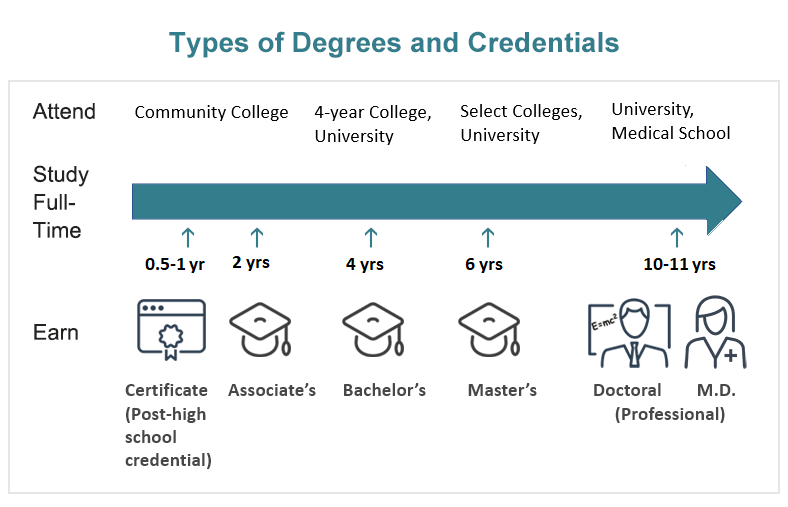
A high school diploma is usually required to enter a formal emergency medical technician training program. Training is offered at progressive levels: EMT-Basic, EMT-Intermediate, and EMT-Paramedic.
At the EMT-Basic level, coursework emphasizes emergency skills, such as managing respiratory, trauma, and cardiac emergencies, as well as patient assessment. Formal courses are often combined with time in an emergency room or ambulance. The program provides instruction and practice in dealing with bleeding, fractures, airway obstruction, cardiac arrest, and emergency childbirth. Students learn how to use and maintain common emergency equipment, such as backboards, suction devices, splints, oxygen delivery systems, and stretchers. Graduates of approved EMT-Basic training programs must pass a written and practical examination administered by the state certifying agency or the NREMT.
At the EMT-Intermediate level, training requirements vary by state. The nationally defined levels (EMT-Intermediate 1985 and EMT-Intermediate 1999) typically require 30 to 350 hours of training based on scope of practice. Students learn advanced skills, such the use of advanced airway devices, intravenous fluids, and some medications.
The most advanced level of training for this occupation is EMT-Paramedic. At this level, the caregiver receives training in anatomy and physiology as well as advanced medical skills. Most commonly, the training is conducted in community colleges and technical schools over 1 to 2 years and may result in an associate's degree. Such education prepares the graduate to take the NREMT examination and become certified as a Paramedic. Extensive related coursework and clinical and field experience is required. Refresher courses and continuing education are available for EMTs and paramedics at all levels.
Companies That Hire Emergency Medical Technicians & Paramedics
Try it Out with an Activity or Project
STEM Activities
STEM activities are fun hands-on explorations that usually take from 10 minutes to one hour and use readily available household or classroom materials while introducing you to STEM concepts common in this career.
/-/https/www.sciencebuddies.org/cdn/Files/13562/6/blood-flow-activity-thumbnail.jpg)
/-/https/www.sciencebuddies.org/cdn/Files/18012/5/girl-temperature-thermometer.jpg)
Science Project Ideas
Project Ideas are in-depth STEM explorations that have a strong focus on controlling variables, taking accurate measurements, and analyzing data suitable for investigating the scientific method or the engineering design process.
/-/https/www.sciencebuddies.org/cdn/Files/20516/6/blobid1719842768448.jpg)
/-/https/careerdiscovery.sciencebuddies.org/Dirs/37/0/img/thumbnail.png)
On the Job
Nature of the Work
People whose lives are in danger often depend on the quick reaction and competent care of emergency medical technicians (EMTs) and paramedics. Incidents as varied as automobile accidents, heart attacks, slips and falls, childbirth, and gunshot wounds all require immediate medical attention. EMTs and paramedics provide this vital service as they care for and transport the sick or injured to a medical facility.
In an emergency, EMTs and paramedics are typically dispatched by a 911 operator to the scene, where they often work with police and firefighters. Once they arrive, EMTs and paramedics assess the nature of the patient's condition while trying to determine whether the patient has any pre-existing medical conditions. Following medical protocols and guidelines, they provide appropriate emergency care and, when necessary, transport the patient. Some paramedics are trained to treat patients with minor injuries on the scene of an accident or they may treat them at their home without transporting them to a medical facility. Emergency treatment is carried out under the medical direction of physicians.
EMTs and paramedics may use special equipment, such as backboards, to immobilize patients before placing them on stretchers and securing them in the ambulance for transport to a medical facility. These workers generally work in teams. During the transport of a patient, one EMT or paramedic drives while the other monitors the patient's vital signs and gives additional care as needed. Some paramedics work as part of a helicopter's flight crew to transport critically ill or injured patients to hospital trauma centers.
At the medical facility, EMTs and paramedics help transfer patients to the emergency department, report their observations and actions to emergency department staff, and may provide additional emergency treatment. After each run, EMTs and paramedics replace used supplies and check equipment. If a transported patient had a contagious disease, EMTs and paramedics decontaminate the interior of the ambulance and report cases to the proper authorities.
EMTs and paramedics also provide transportation for patients from one medical facility to another, particularly if they work for private ambulance services. Patients often need to be transferred to a hospital that specializes in their injury or illness or to a nursing home.
Beyond these general duties, the specific responsibilities of EMTs and paramedics depend on their level of qualification and training. The National Registry of Emergency Medical Technicians (NREMT) certifies emergency medical service providers at five levels: First Responder; EMT-Basic; EMT-Intermediate, which has two levels called 1985 and 1999; and Paramedic. Some states, however, have their own certification programs and use distinct names and titles.
- The EMT-Basic represents the first component of the emergency medical technician system. An EMT trained at this level is prepared to care for patients at the scene of an accident and while transporting patients by ambulance to the hospital under medical direction. The EMT-Basic has the emergency skills to assess a patient's condition and manage respiratory, cardiac, and trauma emergencies.
- The EMT-Intermediate has more-advanced training. However, the specific tasks that those certified at this level are allowed to perform varies greatly from state to state.
- EMT-Paramedics provide the most extensive prehospital care. In addition to carrying out the procedures of the other levels, paramedics may administer drugs orally and intravenously, interpret electrocardiograms (EKGs), perform endotracheal intubations, and use monitors and other complex equipment. However, like EMT-Intermediate, what paramedics are permitted to do varies by state.
Work Environment
EMTs and paramedics work both indoors and out, in all types of weather. They are required to do considerable kneeling, bending, and heavy lifting. These workers risk noise-induced hearing loss from sirens, and back injuries from lifting patients. In addition, EMTs and paramedics may be exposed to diseases such as hepatitis-B and AIDS, as well as violence from mentally unstable patients. The work is not only physically strenuous, but can be stressful, sometimes involving life-or-death situations and suffering patients. Nonetheless, many people find the work exciting and challenging and enjoy the opportunity to help others.
EMTs and paramedics employed by fire departments work about 50 hours a week. Those employed by hospitals frequently work between 45 and 60 hours a week, and those in private ambulance services, between 45 and 50 hours. Some of these workers, especially those in police and fire departments, are on call for extended periods. Because emergency services function 24 hours a day, EMTs and paramedics have irregular working hours.
More Information
Ask Questions
Do you have a specific question about a career as an Emergency Medical Technicians & Paramedic that isn't answered on this page? Post your question on the Science Buddies Ask an Expert Forum.
Additional Resources
- National Association of Emergency Medical Technicians: www.naemt.org
- National Highway Traffic Safety Administration, EMS Division: https://www.nhtsa.gov/about-nhtsa/careers-and-internships
- National Registry of Emergency Medical Technicians: https://www.nremt.org
Sources
- U.S. Bureau of Labor Statistics BLS (2024). Occupational Outlook Handbook (OOH), 2024 Edition, Bureau of Labor Statistics. Retrieved August 25, 2025.
- National Center for O*NET Development O*Net Online (2024). National Center for O*Net Development. Retrieved August 25, 2025
- YouTube, Regina QuAppelle. (2014, May 27). Ride-Along With Regina EMS. Retrieved August 10, 2022.
- Wisconsin Technical Colleges. (2007, November 9). Emergency Medical Technician - Paramedic. Retrieved December 29, 2009.
- EMS1. (2019, January 25). EMS Stories: Liverpool EMS - Liverpool, PA. Retrieved March 25, 2019.