
/-/https/careerdiscovery.sciencebuddies.org/Files/21464/5/sb-logo.png)
Nursing Assistant and Orderly
Overview and Key Facts
/-/https/careerdiscovery.sciencebuddies.org/Files/21409/4/NurseAssistant_Hero.jpg)

Education

Median Pay

Job Growth

Jobs in 2034
What Do They Do?
A nurse assistant and orderly could.../-/https/careerdiscovery.sciencebuddies.org/Files/21407/4/NurseAssist_Shaving.jpg)
/-/https/careerdiscovery.sciencebuddies.org/Files/21405/4/Nurse_BloodPressure.jpg)
/-/https/careerdiscovery.sciencebuddies.org/Files/21406/4/NurseAssist_Happy.jpg)
/-/https/careerdiscovery.sciencebuddies.org/Files/21408/4/NurseAssist_Wheelchair.jpg)
/-/https/careerdiscovery.sciencebuddies.org/Files/21407/4/NurseAssist_Shaving.jpg)
/-/https/careerdiscovery.sciencebuddies.org/Files/21405/4/Nurse_BloodPressure.jpg)
/-/https/careerdiscovery.sciencebuddies.org/Files/21406/4/NurseAssist_Happy.jpg)
/-/https/careerdiscovery.sciencebuddies.org/Files/21408/4/NurseAssist_Wheelchair.jpg)
Overview Listen to this section
Nursing assistants and orderlies are real-life helpers who work in hospitals and care homes. They help people eat, get dressed, take baths, and move around safely—like helping a friend who isn’t feeling well. You might help someone sit up for the first time or make them smile when they’re scared. This job lets you make a big difference in people’s lives every day./-/https/i.ytimg.com/vi/rzpbOs0hLTI/maxresdefault.jpg)
Do You Have the Skills and Characteristics of a Nursing Assistant and Orderly?

Core Tasks
Think about if you'd like the typical tasks a Nursing Assistant and Orderly might do:Salary & Job Openings
Median Salary (Yearly Pay)
Future Jobs
Blast-Off:
(10% or higher)
(7% - 10%)
(5% - 7%)
(3% - 5%)
(0% - 3%)

Steps to Get There: Becoming a Nursing Assistant and Orderly
High School Subjects to Study
Engineering
Career Pathway Listen to this section
Nursing assistants typically complete a brief period of on-the-job training to learn about their specific employer’s policies and procedures. Orderlies typically receive a short period of on-the-job training.
Education- Typical Degree Needed After High School Listen to this section
high school credential
Typical degree for an entry-level position: Post high school credential ?
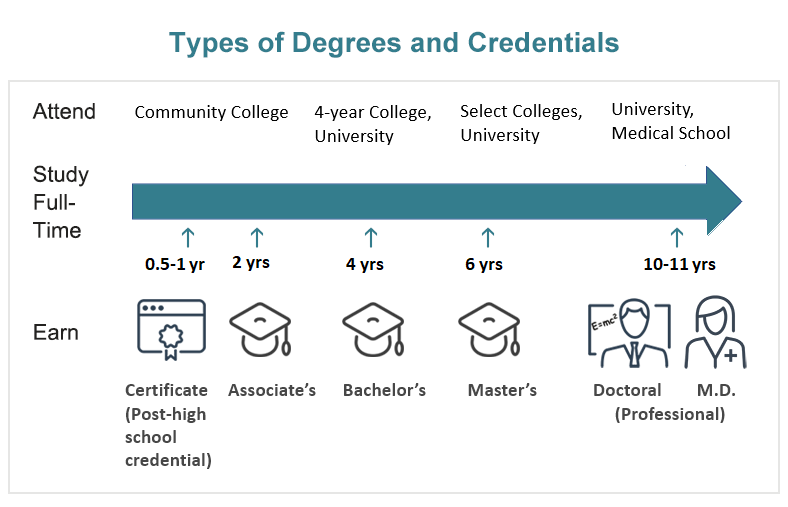
Nursing assistants often need to complete a state-approved education program that includes both instruction on the principles of nursing and supervised clinical work. These programs are available in high schools, community colleges, vocational and technical schools, hospitals, and nursing homes.
Orderlies typically have at least a high school diploma or equivalent.
Companies That Hire Nursing Assistant and Orderlies
- McKesson
- Veterans Affairs, Veterans Health Administration
- Kaiser Permanente
- Dignity Health
- Sevita
Try it Out with an Activity or Project
STEM Activities
STEM activities are fun hands-on explorations that usually take from 10 minutes to one hour and use readily available household or classroom materials while introducing you to STEM concepts common in this career.
/-/https/www.sciencebuddies.org/Files/730/27/make-stethoscope-listen-heart-beat.jpg)
/-/https/www.sciencebuddies.org/Files/13562/6/blood-flow-activity-thumbnail.jpg)
/-/https/www.sciencebuddies.org/Files/14469/8/cough-virus-thumbnail.jpg)
/-/https/www.sciencebuddies.org/Files/18012/5/girl-temperature-thermometer.jpg)
Science Project Ideas
Project Ideas are in-depth STEM explorations that have a strong focus on controlling variables, taking accurate measurements, and analyzing data suitable for investigating the scientific method or the engineering design process.
/-/https/www.sciencebuddies.org/Files/20680/7/blobid1723565203039.jpg)
/-/https/www.sciencebuddies.org/Files/4164/10/HumBio_img160.jpg)
/-/https/www.sciencebuddies.org/Files/9167/9/heart-shape-hand.jpg)
/-/https/www.sciencebuddies.org/Files/6247/12/medicine-reminder-box.jpg)
/-/https/careerdiscovery.sciencebuddies.org/Dirs/37/0/img/thumbnail.png)
/-/https/www.sciencebuddies.org/Files/20093/10/staging-script.png)
On the Job
Role Models

Nature of the Work
Nursing assistants, also called nursing aides, help take care of people who are sick, hurt, or elderly. They are important members of the healthcare team and work under the supervision of nurses. Every day, nursing assistants help patients with basic needs. This includes helping them get dressed, take a bath, brush their teeth, and use the toilet. They also help move patients from beds to wheelchairs, make beds, and keep rooms clean and neat.
Nursing assistants often bring meals to patients and may help feed them if needed. They check important health signs like temperature, pulse, and blood pressure, and they tell the nurse if something seems wrong. Sometimes, they help with exercises or take patients for walks to keep their bodies moving. In some states, if they have extra training, nursing assistants can also give patients their medicine.
Many nursing assistants work in nursing homes or long-term care facilities where they care for the same people every day. This helps them build close relationships with the patients and understand their needs better.
Orderlies do similar work, but their main job is to keep the hospital or care center running smoothly. They help move patients from one room to another or to different parts of the hospital by pushing stretchers or wheelchairs. They also clean equipment like wheelchairs and hospital beds, change dirty sheets, and make sure there are enough supplies like gloves, bandages, and clean towels. Both nursing assistants and orderlies help people feel safe, clean, and cared for every day.
Work Environment
Most nursing assistants and orderlies work in nursing care facilities or hospitals. They may also work in continuing care retirement communities and assisted living facilities for the elderly, home healthcare services, government medical clinics, or ambulatory healthcare services.
The work of nursing assistants and orderlies may be strenuous. They spend much of their time on their feet as they care for patients. Nursing assistants and orderlies have one of the highest rates of injuries and illnesses of all occupations. These workers frequently move patients and have other physically demanding tasks. They typically get training in how to properly lift people, which can reduce the risk of injuries.
Although most nursing assistants and orderlies work full time, some work part time. Because nursing and residential care facilities and hospitals provide care at all hours, nursing assistants and orderlies may need to work nights, weekends, and holidays.
More Information
Ask Questions
Do you have a specific question about a career as a Nursing Assistant and Orderly that isn't answered on this page? Post your question on the Science Buddies Ask an Expert Forum.
Additional Resources
- Centers for Medicare & Medicaid Services: https://www.cms.gov/priorities/nursing-home-careers/overview/certified-nursing-assistant-cna
- NLN CNEA five Standards for Accreditation: https://cnea.nln.org/
- CNA Association: https://www.nahcacna.org/
Sources
- U.S. Bureau of Labor Statistics BLS (2024). Occupational Outlook Handbook (OOH), 2024 Edition, Bureau of Labor Statistics. Retrieved August 25, 2025.
- National Center for O*NET Development O*Net Online (2024). National Center for O*Net Development. Retrieved August 25, 2025