

Pharmacy Technician
Overview and Key Facts


Education

Median Pay

Job Growth
Jobs in 2034
What Do They Do?
A pharmacy technician could...


Overview Listen to this section
Pharmacy technicians play a very important role at a pharmacy. Pharmacy technicians help pharmacists in many different ways. They make sure a pharmacy runs smoothly every day. They may have a role in customer service by taking personal information, answering questions, and taking payments. A technician can measure or mix drugs and package and label containers. They may also count all of the medications to let the pharmacists know if there are low stock items. Pharmacy technicians can work in a hospital to make sure all patients are given the medications they need.

Do You Have the Skills and Characteristics of a Pharmacy Technician?

Core Tasks
Think about if you'd like the typical tasks a Pharmacy Technician might do:Salary & Job Openings
Median Salary (Yearly Pay)
Future Jobs
Blast-Off:
(10% or higher)
(7% - 10%)
(5% - 7%)
(3% - 5%)
(0% - 3%)

Steps to Get There: Becoming a Pharmacy Technician
High School Subjects to Study
Engineering
Career Pathway Listen to this section
Most states regulate pharmacy technicians, which is a process that may require passing an exam or completing a formal education or training program.
The American Society of Health-System Pharmacists (ASHP) accredits pharmacy technician programs that include at least 600 hours of instruction over a minimum of 15 weeks.
Requirements for pharmacy technicians in the states that regulate them typically include some or all of the following:
- High school diploma or GED
- Formal education or training program
- Exam
- Fees
- Continuing education
- Criminal background check
Education- Typical Degree Needed After High School Listen to this section
high school credential
Typical degree for an entry-level position: High school diploma or equivalent ?
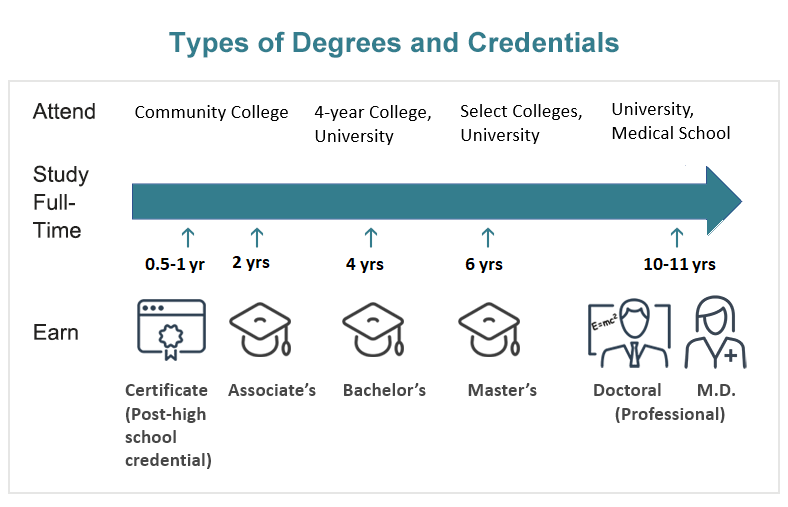
Pharmacy technicians usually need a high school diploma or equivalent and typically learn their duties through on-the-job training.
Other pharmacy technicians enter the occupations after completing postsecondary education programs in pharmacy technology. These programs are usually offered by vocational schools or community colleges. Most programs award a certificate after 1 year or less, although some programs last longer and lead to an associate's degree. They cover a variety of subjects, such as arithmetic used in pharmacies, recordkeeping, ways of dispensing medications, and pharmacy law and ethics. Technicians also learn the names, uses, and doses of medications. Most programs also include clinical experience opportunities, in which students gain hands-on experience in a pharmacy.
Companies That Hire Pharmacy Technicians
- CVS Health
- United Health Group
- Walgreens
- Hospital Corporation of America
- Defense Health Agency
- Kaiser Permanente
Try it Out with an Activity or Project
STEM Activities
STEM activities are fun hands-on explorations that usually take from 10 minutes to one hour and use readily available household or classroom materials while introducing you to STEM concepts common in this career.


Science Project Ideas
Project Ideas are in-depth STEM explorations that have a strong focus on controlling variables, taking accurate measurements, and analyzing data suitable for investigating the scientific method or the engineering design process.


On the Job
Role Models

Nature of the Work
Pharmacy technicians work under the supervision of a pharmacist. They often act as a link between the pharmacist and the customer. First, a pharmacist will review and approve a medication. Then, a pharmacy technician will prepare a medication to give to the patient. They may use a computer system to update patient records, take payment for a medication and to bill insurance companies. They can use patient records to make sure a new medication does not interfere with current medications. This helps to make sure that the new medication is safe for the patient to take. In this role you may also answer customer phone calls, take and organize inventory of the pharmacy, and refer customers to the pharmacist. After taking inventory of the medications in the pharmacy, the technician can alert the pharmacist to medications they are out of or those that are in low supply.
In most states, technicians can prepare some medications. This may include calling doctors to approve a prescription refill. To prepare medications a pharmacy technician may need to count, retrieve, weigh, pour and even mix a medication. Technicians may need to operate equipment when filling prescription orders.
Pharmacy technicians working in medical buildings, like a hospital, prepare different types of medications. One common way to dispense medication in a hospital is intravenous (IV) medications. They may walk around the hospital to give medications to patients. A technician will make medications for surgery or take care of the laboratory preparation. As patients leave the hospital, they can pick up needed medications from a pharmacy technician.
Work Environment
Pharmacy technicians work in clean, well-lit and well-ventilated areas. Many community and hospital pharmacies are open for extended hours, so pharmacy technicians may be required to work nights, weekends, and holidays. Many pharmacy technicians spend most of their workday on their feet and may wear gloves, masks, and other protective equipment.
Pharmacy technicians working in hospitals and other medical facilities prepare a greater variety of medications, such as intravenous medications. They may make rounds in the hospital, giving medications to patients.
More Information
Ask Questions
Do you have a specific question about a career as a Pharmacy Technician that isn't answered on this page? Post your question on the Science Buddies Ask an Expert Forum.
Additional Resources
Sources
- U.S. Bureau of Labor Statistics BLS (2024). Occupational Outlook Handbook (OOH), 2024 Edition, Bureau of Labor Statistics. Retrieved August 25, 2025.
- National Center for O*NET Development O*Net Online (2024). National Center for O*Net Development. Retrieved August 25, 2025
- NPTA. (n.d.). What is a Pharmacy Technician. National Pharmacy Technician Association. Retrieved April 12, 2023.