
/-/https/careerdiscovery.sciencebuddies.org/cdn/Files/21464/5/sb-logo.png)
Respiratory Therapist
Overview and Key Facts
/-/https/careerdiscovery.sciencebuddies.org/cdn/Files/1719/17/Respiratory_therapist.jpg)

Education

Median Pay

Job Growth

Jobs in 2034
What Do They Do?
A respiratory therapist could.../-/https/careerdiscovery.sciencebuddies.org/cdn/Files/1720/17/unsplash-WbC9XIlQb4k.jpg)
/-/https/careerdiscovery.sciencebuddies.org/cdn/Files/1721/17/Heart_Auscultation.jpg)
/-/https/careerdiscovery.sciencebuddies.org/cdn/Files/1722/18/Air_Ambulance_6516.JPG)
/-/https/careerdiscovery.sciencebuddies.org/cdn/Files/1723/17/iStock-1158514531.jpg)
/-/https/careerdiscovery.sciencebuddies.org/cdn/Files/1720/17/unsplash-WbC9XIlQb4k.jpg)
/-/https/careerdiscovery.sciencebuddies.org/cdn/Files/1721/17/Heart_Auscultation.jpg)
/-/https/careerdiscovery.sciencebuddies.org/cdn/Files/1722/18/Air_Ambulance_6516.JPG)
/-/https/careerdiscovery.sciencebuddies.org/cdn/Files/1723/17/iStock-1158514531.jpg)
Overview Listen to this section
In any medical emergency, health care workers first check a patient's airway and breathing, since oxygen is the first thing needed to survive. Respiratory therapists specialize in treating airway and breathing problems. They help, for example, premature infants whose lungs are poorly developed, or children and adults with asthma or pneumonia. They also treat people who have had heart attacks or who have been in swimming or other accidents. Their critical work helps to provide the breath of life./-/https/i.ytimg.com/vi/Ay1OmNpYwYQ/sddefault.jpg)
Do You Have the Skills and Characteristics of a Respiratory Therapist?

Core Tasks
Think about if you'd like the typical tasks a Respiratory Therapist might do:Salary & Job Openings
Median Salary (Yearly Pay)
Future Jobs
Blast-Off:
(10% or higher)
(7% - 10%)
(5% - 7%)
(3% - 5%)
(0% - 3%)

Steps to Get There: Becoming a Respiratory Therapist
High School Subjects to Study
Engineering
Career Pathway Listen to this section
An associate's degree is the minimum educational requirement, but a bachelor's or a master's degree may be important for advancement. All states, except Alaska and Hawaii, require respiratory therapists to be licensed.
Education- Typical Degree Needed After High School Listen to this section
high school credential
Typical degree for an entry-level position: Associate's degree ?
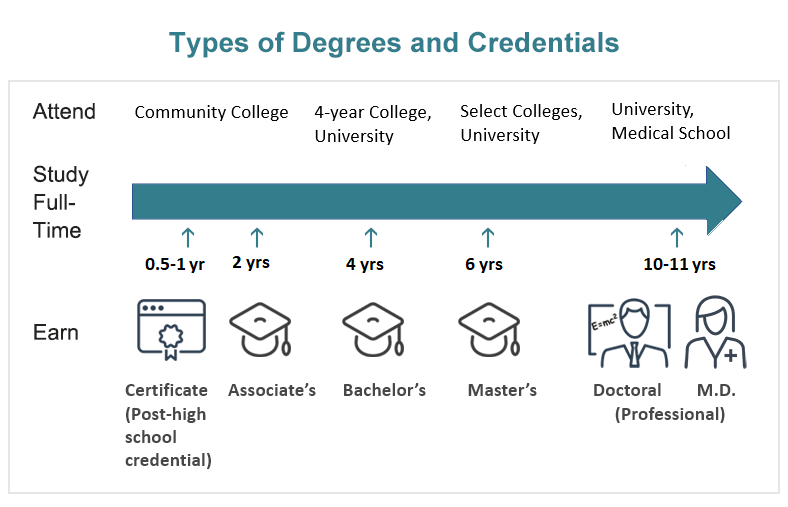
An associate's degree is required to become a respiratory therapist. Training is offered at the postsecondary level by colleges and universities, medical schools, vocational—technical institutes, and the Armed Forces. Most programs award associate's or bachelor's degree and prepare graduates for jobs as advanced respiratory therapists. A limited number of associate's degree programs lead to jobs as entry-level respiratory therapists. According to the Commission on Accreditation of Allied Health Education Programs (CAAHEP), 45 entry-level and 334 advanced respiratory therapy programs were accredited in the United States in 2006.
Among the areas of study in respiratory therapy programs are human anatomy and physiology, pathophysiology, chemistry, physics, microbiology, pharmacology, and mathematics. Other courses deal with therapeutic and diagnostic procedures and tests, equipment, patient assessment, cardiopulmonary resuscitation, the application of clinical practice guidelines, patient care outside of hospitals, cardiac and pulmonary rehabilitation, respiratory health promotion and disease prevention, and medical recordkeeping and reimbursement.
High school students interested in applying to respiratory therapy programs should take courses in health, biology, mathematics, chemistry, and physics. Respiratory care involves basic mathematical problem solving and an understanding of chemical and physical principles. For example, respiratory care workers must be able to compute dosages of medication and calculate gas concentrations.
Companies That Hire Respiratory Therapists
Try it Out with an Activity or Project
STEM Activities
STEM activities are fun hands-on explorations that usually take from 10 minutes to one hour and use readily available household or classroom materials while introducing you to STEM concepts common in this career.
/-/https/www.sciencebuddies.org/cdn/Files/13612/6/simple-lung-model-activity-thumbnail.jpg)
/-/https/www.sciencebuddies.org/cdn/Files/14690/6/lung-model-cough-up-mucus-thumbnail.jpg)
Science Project Ideas
Project Ideas are in-depth STEM explorations that have a strong focus on controlling variables, taking accurate measurements, and analyzing data suitable for investigating the scientific method or the engineering design process.
/-/https/www.sciencebuddies.org/cdn/Files/9024/9/exercise-respirator-bottle-green.jpg)
/-/https/www.sciencebuddies.org/cdn/Files/3388/5/MamBio_img005.gif)
/-/https/careerdiscovery.sciencebuddies.org/Dirs/37/0/img/thumbnail.png)
On the Job
Role Models

Nature of the Work
Respiratory therapists and respiratory therapy technicians—also known as respiratory care practitioners—evaluate, treat, and care for patients with breathing or other cardiopulmonary disorders. Practicing under the direction of a physician, respiratory therapists assume primary responsibility for all respiratory care therapeutic treatments and diagnostic procedures, including the supervision of respiratory therapy technicians. Respiratory therapy technicians follow specific, well-defined respiratory care procedures under the direction of respiratory therapists and physicians.
In clinical practice, many of the daily duties of therapists and technicians overlap. However, therapists generally have greater responsibility than technicians. For example, respiratory therapists consult with physicians and other health care staff to help develop and modify patient care plans. Respiratory therapists also are more likely to provide complex therapy requiring considerable independent judgment, such as caring for patients on life support in intensive-care units of hospitals.
Respiratory therapists evaluate and treat all types of patients, ranging from premature infants whose lungs are not fully developed to elderly people whose lungs are diseased. Respiratory therapists provide temporary relief to patients with chronic asthma or emphysema, and they give emergency care to patients who are victims of a heart attack, stroke, drowning, or shock.
To evaluate patients, respiratory therapists interview them, perform limited physical examinations, and conduct diagnostic tests. For example, respiratory therapists test a patient's breathing capacity and determine the concentration of oxygen and other gases in a patient's blood. They also measure a patient's pH, which indicates the acidity or alkalinity of the blood. To evaluate a patient's lung capacity, respiratory therapists have the patient breathe into an instrument that measures the volume and flow of oxygen during inhalation and exhalation. By comparing the reading with the norm for the patient's age, height, weight, and sex, respiratory therapists can provide information that helps determine whether the patient has any lung deficiencies. To analyze oxygen, carbon dioxide, and blood pH levels, therapists draw an arterial blood sample, place it in a blood gas analyzer, and relay the results to a physician, who then makes treatment decisions.
To treat patients, respiratory therapists use oxygen or oxygen mixtures, chest physiotherapy, and aerosol medications—liquid medications suspended in a gas that forms a mist which is inhaled. They teach patients how to inhale the aerosol properly to ensure its effectiveness. When a patient has difficulty getting enough oxygen into his or her blood, therapists increase the patient's concentration of oxygen by placing an oxygen mask or nasal cannula on the patient and setting the oxygen flow at the level prescribed by a physician. Therapists also connect patients who cannot breathe on their own to ventilators that deliver pressurized oxygen into the lungs. The therapists insert a tube into the patient's trachea, or windpipe; connect the tube to the ventilator; and set the rate, volume, and oxygen concentration of the oxygen mixture entering the patient's lungs.
Therapists perform regular assessments of patients and equipment. If a patient appears to be having difficulty breathing or if the oxygen, carbon dioxide, or pH level of the blood is abnormal, therapists change the ventilator setting according to the doctor's orders or check the equipment for mechanical problems.
Respiratory therapists perform chest physiotherapy on patients to remove mucus from their lungs and make it easier for them to breathe. Therapists place patients in positions that help drain mucus, and then vibrate the patients' rib cages, often by tapping on the chest, and tell the patients to cough. Chest physiotherapy may be needed after surgery, for example, because anesthesia depresses respiration. As a result, physiotherapy may be prescribed to help get the patient's lungs back to normal and to prevent congestion. Chest physiotherapy also helps patients suffering from lung diseases, such as cystic fibrosis, that cause mucus to collect in the lungs.
Therapists who work in home care teach patients and their families to use ventilators and other life-support systems. In addition, these therapists visit patients in their homes to inspect and clean equipment, evaluate the home environment, and ensure that patients have sufficient knowledge of their diseases and the proper use of their medications and equipment. Therapists also make emergency visits if equipment problems arise.
In some hospitals, therapists perform tasks that fall outside their traditional role. Therapists are becoming involved in areas such as pulmonary rehabilitation, smoking cessation counseling, disease prevention, case management, and polysomnography—the diagnosis of breathing disorders during sleep, such as apnea. Respiratory therapists also increasingly treat critical care patients, either as part of surface and air transport teams or as part of rapid-response teams in hospitals.
Work Environment
Respiratory therapists generally work between 35 and 40 hours a week. Because hospitals operate around the clock, therapists may work evenings, nights, or weekends. They spend long periods standing and walking between patients' rooms. In an emergency, therapists work under the stress of the situation. Respiratory therapists employed in home health care must travel frequently to patients' homes.
Respiratory therapists are trained to work with gases stored under pressure. Adherence to safety precautions and regular maintenance and testing of equipment minimize the risk of injury. As in many other health occupations, respiratory therapists are exposed to infectious diseases, but by carefully following proper procedures they can minimize the risks.
More Information
Ask Questions
Do you have a specific question about a career as a Respiratory Therapist that isn't answered on this page? Post your question on the Science Buddies Ask an Expert Forum.
Additional Resources
- American Association for Respiratory Care: 9425 N. MacArthur Blvd., Suite 100, Irving, TX 75063. Online at: https://www.aarc.org/
For a list of accredited educational programs for respiratory care practitioners, contact either of the following organizations:
- Commission on Accreditation for Allied Health Education Programs: 1361 Park St., Clearwater, FL 33756. Online at: https://www.caahep.org/
- Committee on Accreditation for Respiratory Care: 1248 Harwood Rd., Bedford, TX 76021. Online at: https://www.coarc.com/
Information on gaining credentials in respiratory care and a list of state licensing agencies can be obtained from:
- National Board for Respiratory Care, Inc.: 18000 W. 105th St., Olathe, KS 66061. Online at: https://www.nbrc.org/
Sources
- U.S. Bureau of Labor Statistics BLS (2024). Occupational Outlook Handbook (OOH), 2024 Edition, Bureau of Labor Statistics. Retrieved August 25, 2025.
- National Center for O*NET Development O*Net Online (2024). National Center for O*Net Development. Retrieved August 25, 2025
- National Institutes of Health. (2004, January 20). Meet a Real Respiratory Therapist: Dennis Brown. Retrieved October 27, 2009.
- National Institutes of Health. (2006, April 27). Meet a Real Respiratory Therapist: Kevilin Prah. Retrieved October 27, 2009.
- Western Technical College. (n.d.). Respiratory Therapist. Retrieved January 19, 2010.