
/-/https/careerdiscovery.sciencebuddies.org/cdn/Files/21464/5/sb-logo.png)
Science Writer
Overview and Key Facts
/-/https/careerdiscovery.sciencebuddies.org/cdn/Files/1738/17/unsplash-9yCYGgPe5Kg.jpg)

Education

Median Pay

Job Growth

Jobs in 2034
What Do They Do?
A science writer could.../-/https/careerdiscovery.sciencebuddies.org/cdn/Files/1739/24/iStock-1095755878.jpg)
/-/https/careerdiscovery.sciencebuddies.org/cdn/Files/1740/24/iStock-1161504223.jpg)
/-/https/careerdiscovery.sciencebuddies.org/cdn/Files/1741/17/2014-06-07_15-26-30_FGF_5063.jpg)
/-/https/careerdiscovery.sciencebuddies.org/cdn/Files/1742/17/pexels-photo-3735715.jpg)
/-/https/careerdiscovery.sciencebuddies.org/cdn/Files/1739/24/iStock-1095755878.jpg)
/-/https/careerdiscovery.sciencebuddies.org/cdn/Files/1740/24/iStock-1161504223.jpg)
/-/https/careerdiscovery.sciencebuddies.org/cdn/Files/1741/17/2014-06-07_15-26-30_FGF_5063.jpg)
/-/https/careerdiscovery.sciencebuddies.org/cdn/Files/1742/17/pexels-photo-3735715.jpg)
Overview Listen to this section
Have you ever tried to read a scientific or technical article in a professional journal? They can be hard to decipher because they are full of technical terminology. But have you ever read a science article in a magazine that was geared for your age or for the general public? These tend to be a lot easier to read and more interesting because they have been written by a science writer. A science writer can take a complex subject and write a concise article in language that is easy for non-scientists to understand. Science writers can work on several different kinds of projects, like scientific bulletins, advertising, and articles for science magazines, but ultimately their job is to make science interesting and fun for general audiences./-/https/i.ytimg.com/vi/Thhxm8J2q6s/hqdefault.jpg)
Do You Have the Skills and Characteristics of a Science Writer?

Core Tasks
Think about if you'd like the typical tasks a Science Writer might do:Salary & Job Openings
Median Salary (Yearly Pay)
Future Jobs
Blast-Off:
(10% or higher)
(7% - 10%)
(5% - 7%)
(3% - 5%)
(0% - 3%)

Steps to Get There: Becoming a Science Writer
High School Subjects to Study
Engineering
Career Pathway Listen to this section
Because science writers use the computer for the majority of their work, they must learn a variety of computer software, including word processing, graphics, audio, video, and animation software. In fact, taking classes in photography and developing photography skills is a plus.
Science writers interested in improving their skills can sign up for internships and workshops offered by professional societies and science magazines. They might also attend scientific conferences and professional meetings in order to make contacts, learn about advances in the field, and keep their technical skills up to date.
After gaining experience, science writers may take employment as editors and review the work of other science writers.
Education- Typical Degree Needed After High School Listen to this section
high school credential
Typical degree for an entry-level position: Bachelor's degree ?
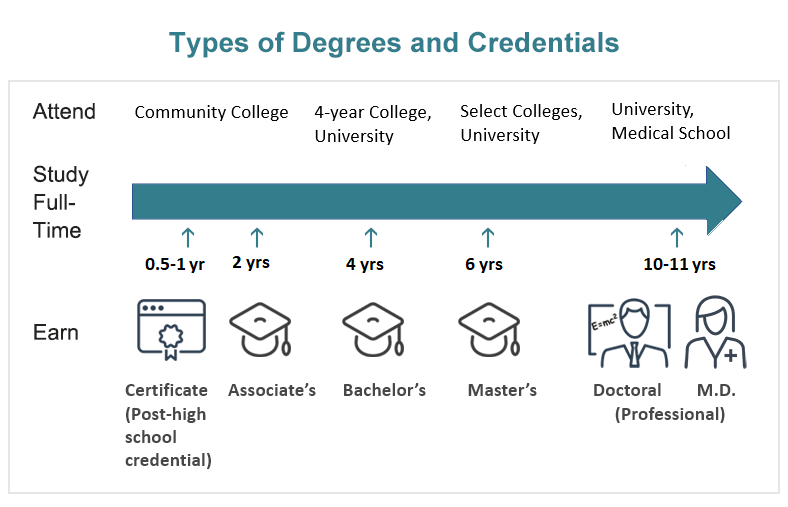
The minimum degree required for this career is a bachelor's degree in science or engineering. Many science writers find that taking college classes in writing and journalism can be helpful. Some universities also have degree programs in science writing or science journalism. While a degree in science writing is not necessary, many employers find it attractive.
Companies That Hire Science Writers
Try it Out with an Activity or Project
STEM Activities
STEM activities are fun hands-on explorations that usually take from 10 minutes to one hour and use readily available household or classroom materials while introducing you to STEM concepts common in this career.
Science Project Ideas
Project Ideas are in-depth STEM explorations that have a strong focus on controlling variables, taking accurate measurements, and analyzing data suitable for investigating the scientific method or the engineering design process.
/-/https/careerdiscovery.sciencebuddies.org/Dirs/37/0/img/thumbnail.png)
/-/https/www.sciencebuddies.org/cdn/Files/20506/5/glasses-1052010_1280.jpg)
On the Job
Role Models

Nature of the Work
Of the many kinds of specialized writers, the science writer has a unique responsibility to the reader. Unlike the sportswriter, for example, whose reader already knows, often in extraordinary detail, the rules of the game and who the players are, science writers frequently introduce readers to a new "game" with every article. (Imagine if sportswriters had to assume that readers had little knowledge of football every time they wrote about the latest NFL game.) Science writers also have a sometimes difficult job of teasing out details and anecdotes to produce an attention-grabbing article, video, or radio segment that will draw casual readers or viewers into a topic they might not at first care much about.
Science writers must first understand the science, often the toughest part of the job. Then they must write the article—frequently in only an hour—translating it accurately into a form that is both interesting and intelligible to novices. Good science writers do their best to report accurately, but they always keep in mind what they think will interest the public—which may not be what the scientist thinks should interest the public.
Good science writers read constantly—newspapers, books, reports, journals, and Internet news groups. They attend conventions of scientific societies, where important news is often announced. They interview many scientists for stories. A science writer may travel to far-flung locales to observe sensitive ecosystems, watch the Space Shuttle blast off, visit a nuclear accelerator, or just visit their local science and technology museum. However, they are also responsible for the routine of regular checking with sources at laboratories, factories, hospitals, universities, and government agencies.
The majority of science writers are not newspaper reporters. Some work on staffs of national magazines and Internet news services. Others write for special-interest medical and scientific publications. Many are freelancers, reporting and writing for a variety of media. And some work in broadcast media, ranging from network radio and television news programs to science-documentary production companies.
Work Environment
Science writers may work in comfortable, private offices or in noisy rooms filled with the sound of keyboards and computer printers as well as the voices of other writers tracking down information over the telephone. They may be required to sit for long periods of time. Because they must be precise and highly accurate, their search for information sometimes requires travel to diverse workplaces, such as factories, offices, or laboratories. Still, many science writers have to make do with telephone interviews, the library, and the Internet.
For some science writers, the typical workweek runs 35 to 40 hours. However, they occasionally may work overtime to meet deadlines. Those who prepare morning or weekend publications and broadcasts often work some nights and weekends. Freelance writers generally work more flexible hours, but their schedules must conform to the needs of the client. Deadlines and erratic work hours, often part of the daily routine for these jobs, may cause stress, fatigue, or burnout.
Changes in technology and electronic communications also affect science writers' work environments. For example, laptops allow them to work from home or while on the road. Writers and editors who use computers for extended periods may experience back pain, eyestrain, fatigue, or repetitive stress injury.
More Information
Ask Questions
Do you have a specific question about a career as a Science Writer that isn't answered on this page? Post your question on the Science Buddies Ask an Expert Forum.
Additional Resources
- Council for the Advancement of Science Writing
- National Association of Science Writers
- University of California, Santa Cruz Science Communication Program
Sources
- U.S. Bureau of Labor Statistics BLS (2024). Occupational Outlook Handbook (OOH), 2024 Edition, Bureau of Labor Statistics. Retrieved August 25, 2025.
- National Center for O*NET Development O*Net Online (2024). National Center for O*Net Development. Retrieved August 25, 2025
- National Institutes of Health, Office of Science Education. (n.d.). Meet a real science writer. LifeWorks®. Retrieved October 13, 2010.
- Choi, C. (2012, August 23). A Day In My Life As A Freelance Science Writer. Scitable by Nature Education. Retrieved May 19, 2017.
- HitLand Lydstudio. (2008, June 9). On being a science journalist. YouTube. Retrieved October 11, 2010.
- Council for the Advancement of Science Writing. (n.d.). A guide to careers in science writing. Retrieved October 13, 2010.