
/-/https/careerdiscovery.sciencebuddies.org/cdn/Files/21464/5/sb-logo.png)
Surgical Assistant or Technologist
Overview and Key Facts
/-/https/careerdiscovery.sciencebuddies.org/cdn/Files/18575/6/surgical-technician-navy.jpg)

Education

Median Pay

Job Growth

Jobs in 2034
What Do They Do?
A surgical assistant could.../-/https/careerdiscovery.sciencebuddies.org/cdn/Files/18570/6/Cesarean-birth-baby.jpg)
/-/https/careerdiscovery.sciencebuddies.org/cdn/Files/18571/6/surgical-tools.jpg)
/-/https/careerdiscovery.sciencebuddies.org/cdn/Files/18572/6/double-prosthetic-legs.jpg)
/-/https/careerdiscovery.sciencebuddies.org/cdn/Files/18573/6/Hispanic-grandfather-teenager.jpg)
/-/https/careerdiscovery.sciencebuddies.org/cdn/Files/18570/6/Cesarean-birth-baby.jpg)
/-/https/careerdiscovery.sciencebuddies.org/cdn/Files/18571/6/surgical-tools.jpg)
/-/https/careerdiscovery.sciencebuddies.org/cdn/Files/18572/6/double-prosthetic-legs.jpg)
/-/https/careerdiscovery.sciencebuddies.org/cdn/Files/18573/6/Hispanic-grandfather-teenager.jpg)
Overview Listen to this section
Every surgical procedure, whether minor or major, requires a team of detail-oriented professionals, including the surgical technologist. From cleaning and setting up surgical equipment to assisting the medical team, the surgical technologist helps each surgery run smoothly. Job opportunities for surgical technologists continue to grow with advances in surgical techniques and technology.
/-/https/i.ytimg.com/vi/X1lqYbycLOU/maxresdefault.jpg)
Do You Have the Skills and Characteristics of a Surgical Assistant or Technologist?

Core Tasks
Think about if you'd like the typical tasks a Surgical Assistant or Technologist might do:Salary & Job Openings
Median Salary (Yearly Pay)
Future Jobs
Blast-Off:
(10% or higher)
(7% - 10%)
(5% - 7%)
(3% - 5%)
(0% - 3%)

Steps to Get There: Becoming a Surgical Assistant or Technologist
High School Subjects to Study
Engineering
Career Pathway Listen to this section
After finishing their surgical technician training program, many graduates go on take a certification exam. Not all states require passing a certification exam but doing so can increase opportunities for employment as it shows field expertise and career commitment. With on-the-job experience, many surgical technicians take on increasing responsibility. A related career is the surgical first assist. A surgical first assist has similar duties, but increased responsibility for some parts of the patient surgery such as clamping, cauterizing, suturing, injecting medications, and cutting tissue as directed. If interested, a surgical technician can be promoted to surgical first assist by either continuing their classroom education, or on-the-job training.
Education- Typical Degree Needed After High School Listen to this section
high school credential
Typical degree for an entry-level position: Associates Degree with Specialty Certification ?
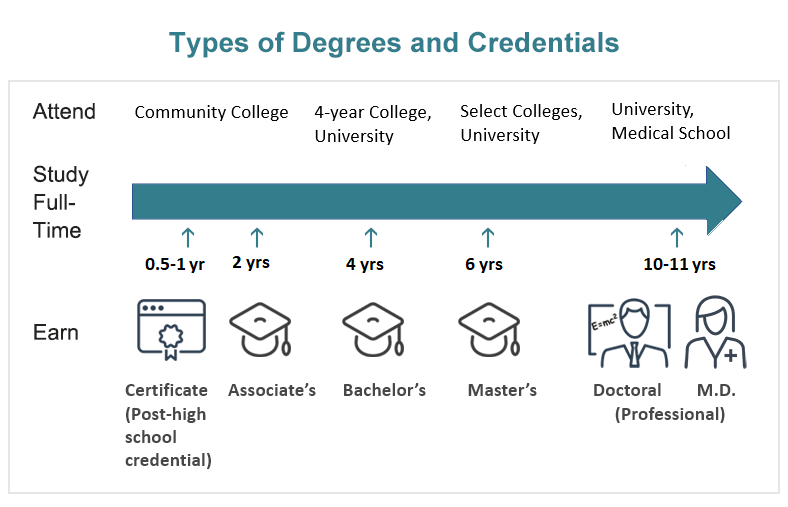
To become a surgical technologist, a diploma or associate's degree is required from an accredited surgical technology program. Most surgical technology programs can be completed in twelve to twenty-four months. Students will learn the fundamentals of biology, anatomy, and microbiology, as well as sterilization techniques, infection prevention, procedural equipment setup, and how to safely care for the surgical patient.
Companies That Hire Surgical Assistant or Technologists
- U.S. Department of Veterans Affairs
- Mayo Clinic
- Cleveland Clinic
- Aya Healthcare, Travel Healthcare Agency
Try it Out with an Activity or Project
STEM Activities
STEM activities are fun hands-on explorations that usually take from 10 minutes to one hour and use readily available household or classroom materials while introducing you to STEM concepts common in this career.
Science Project Ideas
Project Ideas are in-depth STEM explorations that have a strong focus on controlling variables, taking accurate measurements, and analyzing data suitable for investigating the scientific method or the engineering design process.
/-/https/www.sciencebuddies.org/cdn/Files/2673/5/MatlSci_img045.jpg)
On the Job
Role Models
/-/https/i.ytimg.com/vi/vnZxUHpEiU0/sddefault.jpg)
/-/https/i.ytimg.com/vi/9J6WjCl-ntA/sddefault.jpg)
Nature of the Work
Surgical technologists, also referred to as scrub techs or operating room (OR) techs, have a critical role in every surgical procedure. Their day begins by preparing their assigned operating room with supplies and equipment needed for the procedure. The surgical technologist knows the purpose of each tool and piece of equipment and how to properly handle it and sterilize it. They prepare the sterile field (the procedural area that can only be touched by sterile hands and tools) by opening supplies, counting them, and positioning them in the order of when they will be needed during the operation.
The surgical technologist communicates well and knows the value of teamwork. They must notify their team of any problems found prior to or during the procedure, and anticipate and respond to any problems that could arise. The surgical technologist hands off equipment and tools to the surgeon and assists with holding open incisions and collecting specimens. At the end of an operation, the surgical technologist takes account of all supplies and equipment used, removes them for cleaning, and prepares the room again for the next surgery. Even if the same procedure is done multiple times a day, the patient will always be different and require the surgical technologist's special attention to detail.
Work Environment
Most surgical technologists work primarily in an operating room. They are among the first to arrive in the room and the last to leave when a procedure is completed. They are typically on their feet for most of the day, and occasionally work on-call where they need to come in after business hours to assist in emergency procedures.
More Information
Ask Questions
Do you have a specific question about a career as a Surgical Assistant or Technologist that isn't answered on this page? Post your question on the Science Buddies Ask an Expert Forum.
Additional Resources
- Association of Surgical Technologists
- The National Board of Surgical Technology and Surgical Assisting
Sources
- U.S. Bureau of Labor Statistics BLS (2024). Occupational Outlook Handbook (OOH), 2024 Edition, Bureau of Labor Statistics. Retrieved August 25, 2025.
- National Center for O*NET Development O*Net Online (2024). National Center for O*Net Development. Retrieved August 25, 2025
- National Center for O*NET Development. (2022). 29-2055.00 - Surgical Technologists. O*NET OnLine. Retrieved April 5, 2022.
- U.S. Bureau of Labor Statistics. (2021). Surgical Technologists: Occupational Outlook Handbook. U.S. Bureau of Labor Statistics. Retrieved April 5, 2022.
- MTS. (2021). How to Become a Surgical Technologist. (O.R. Tech). Retrieved April 5, 2022.
- Mayo Clinic College of Medicine and Science. (2022). Surgical First Assistant - Explore Health Careers - Mayo Clinic College of Medicine & Science. Retrieved April 5, 2022.