
/-/https/careerdiscovery.sciencebuddies.org/cdn/Files/21464/5/sb-logo.png)
Agricultural Inspector
Overview and Key Facts
/-/https/careerdiscovery.sciencebuddies.org/cdn/Files/852/17/iStock-678248510.jpg)

Education

Median Pay

Job Growth

Jobs in 2034
What Do They Do?
An agricultural inspector could.../-/https/careerdiscovery.sciencebuddies.org/cdn/Files/853/17/iStock-1261572043.jpg)
/-/https/careerdiscovery.sciencebuddies.org/cdn/Files/854/17/unsplash-JMjNnQ2xFoY.jpg)
/-/https/careerdiscovery.sciencebuddies.org/cdn/Files/855/17/pexels-photo-2253534.jpg)
/-/https/careerdiscovery.sciencebuddies.org/cdn/Files/856/17/iStock-1094143614.jpg)
/-/https/careerdiscovery.sciencebuddies.org/cdn/Files/853/17/iStock-1261572043.jpg)
/-/https/careerdiscovery.sciencebuddies.org/cdn/Files/854/17/unsplash-JMjNnQ2xFoY.jpg)
/-/https/careerdiscovery.sciencebuddies.org/cdn/Files/855/17/pexels-photo-2253534.jpg)
/-/https/careerdiscovery.sciencebuddies.org/cdn/Files/856/17/iStock-1094143614.jpg)
Overview Listen to this section
Who works to protect the public health from food-borne illnesses? Agricultural inspectors. Everyone needs to eat, and agricultural inspectors work to ensure the quality and safety of the food supply to determine if they are in compliance. They also inspect farms, businesses, and food-processing plants to determine if they are in compliance with government food regulations and laws./-/https/i.ytimg.com/vi/75V_Ob7hg-k/hqdefault.jpg)
Do You Have the Skills and Characteristics of an Agricultural Inspector?

- Quality Control Analysis ?
- Active Listening ?
- Monitoring ?
- Reading Comprehension ?
- Critical Thinking ?
Core Tasks
Think about if you'd like the typical tasks an Agricultural Inspector might do:Salary & Job Openings
Median Salary (Yearly Pay)
Future Jobs
Blast-Off:
(10% or higher)
(7% - 10%)
(5% - 7%)
(3% - 5%)
(0% - 3%)

Steps to Get There: Becoming an Agricultural Inspector
High School Subjects to Study
Engineering
Education- Typical Degree Needed After High School Listen to this section
high school credential
Typical degree for an entry-level position: Post high school credential ?
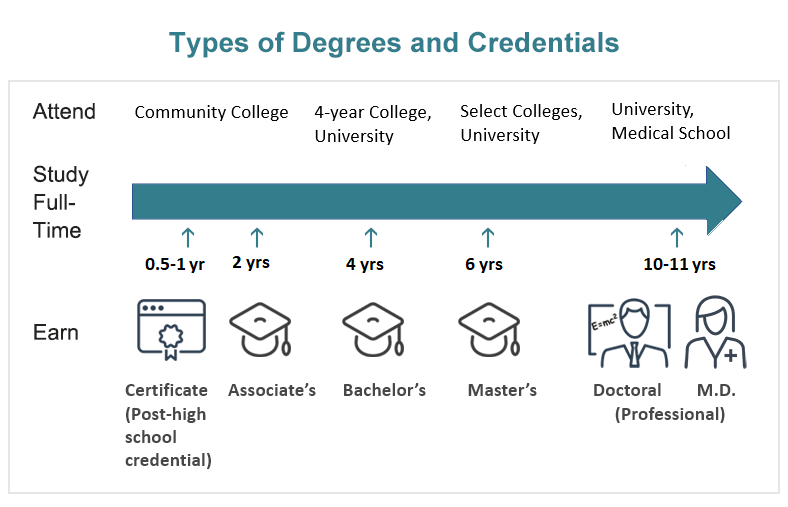
Aspiring inspectors should take college courses in the areas of biology or agricultural science. Most positions require a four-year bachelor's degree, but some do not. Candidates should also search out relevant work experience, such as working on a farm or in a meat-processing plant. Moreover, knowledge of laws and regulations in the field is imperative; on-the-job training will help to familiarize inspectors with inspection procedures.
Companies That Hire Agricultural Inspectors
Try it Out with an Activity or Project
STEM Activities
STEM activities are fun hands-on explorations that usually take from 10 minutes to one hour and use readily available household or classroom materials while introducing you to STEM concepts common in this career.
/-/https/www.sciencebuddies.org/cdn/Files/13299/5/enzymatic-browning-thumbnail.jpg)
Science Project Ideas
Project Ideas are in-depth STEM explorations that have a strong focus on controlling variables, taking accurate measurements, and analyzing data suitable for investigating the scientific method or the engineering design process.
/-/https/www.sciencebuddies.org/cdn/Files/8677/10/ripe-produce-circuit-thumbnail.jpg)
/-/https/www.sciencebuddies.org/cdn/Files/12803/5/Science-Buddies-Bacteria-Discovery-Kit.jpg)
/-/https/www.sciencebuddies.org/Files/21080/6/blobid1739464428078.jpg)
/-/https/www.sciencebuddies.org/cdn/Files/3956/5/FoodSci_img060.jpg)
/-/https/www.sciencebuddies.org/cdn/Files/3824/5/FoodSci_img041.jpg)
/-/https/www.sciencebuddies.org/cdn/Files/6176/7/fuit-cut-seeds.jpg)
/-/https/careerdiscovery.sciencebuddies.org/Dirs/37/0/img/thumbnail.png)
/-/https/www.sciencebuddies.org/cdn/Files/2638/5/MicroBio_img019.gif)
/-/https/www.sciencebuddies.org/cdn/Files/2981/5/MatlSci_img055.jpg)
/-/https/www.sciencebuddies.org/cdn/Files/7022/5/whey-cream-casein-thumbnail.jpg)
On the Job
Nature of the Work
Agricultural inspectors make sure that businesses comply with federal and state laws and regulations that govern the health, quality, and safety of meat, poultry, egg products, fruits, and vegetables. They also inspect food- and meat-processing plants to ensure that the facilities meet quality standards. They strive to protect public health and well-being by protecting the public from foodborne illness. Most agricultural inspectors work for federal and state governments, and are very knowledgeable about regulations and standards in the area in which they work.
In order to determine whether a business is meeting quality and safety standards, an inspector must make numerous visits and make thorough inspections of the product and its surroundings. For example, an inspector might take samples of animals at a meat-processing plant to test for diseases. They might also inspect livestock on the farm to review feeding practices and medical treatments. They might also analyze shipments of grain or vegetables for quality or levels of chemicals.
One of the main responsibilities of an agricultural inspector is the health and quality of livestock. With recent concerns about mad-cow disease, it is imperative that qualified inspectors—along with veterinarians—inspect the livestock population in order to protect people from any kind of bacteria or disease that can be passed from contaminated meat to humans.
Work Environment
Agricultural inspectors work long and irregular hours, spending much of their time in food- or meat-processing plants. Others might travel frequently to farms or ports, inspecting cargo on boats or sitting on docks.
Because the job involves finding problems or violations, inspectors might have to deal with antagonistic individuals and uncomfortable situations. The job can be demanding and very stressful; in essence, an inspector's work can have important financial and public health consequences.
More Information
Ask Questions
Do you have a specific question about a career as an Agricultural Inspector that isn't answered on this page? Post your question on the Science Buddies Ask an Expert Forum.
Additional Resources
- Association of Fruit and Vegetable Inspection and Standardization Agencies
- Independent Organic Inspectors Association
Sources
- U.S. Bureau of Labor Statistics BLS (2024). Occupational Outlook Handbook (OOH), 2024 Edition, Bureau of Labor Statistics. Retrieved August 25, 2025.
- National Center for O*NET Development O*Net Online (2024). National Center for O*Net Development. Retrieved August 25, 2025
- Net Industries. (2009). Agricultural Inspector Job Description, Career as an Agricultural Inspector, Salary, Employment - Definition and Nature of the Work, Education and Training Requirements, Getting the Job. Retrieved October 15, 2009.
- Minnesota Department of Agriculture, YouTube. (2009, February 19). Food Safety: The MDA and Milk. Retrieved April 24, 2019.
- Minnesota Department of Agriculture, YouTube. (2014, April 9). Minnesota Department of Agriculture's Food Inspection Program. Retrieved April 24, 2019.
- Utah Department of Agriculture and Food. (2009, June 7). Commissioner Blackham was an inspector for-a-day during Employee Appreciation Week. Retrieved April 29, 2014.