
/-/https/careerdiscovery.sciencebuddies.org/cdn/Files/21464/5/sb-logo.png)
Animal Trainer
Overview and Key Facts
/-/https/careerdiscovery.sciencebuddies.org/cdn/Files/872/17/iStock-883216142.jpg)

Education

Median Pay

Job Growth

Jobs in 2034
What Do They Do?
An animal trainer could.../-/https/careerdiscovery.sciencebuddies.org/cdn/Files/873/17/pexels-photo-321552.jpg)
/-/https/careerdiscovery.sciencebuddies.org/cdn/Files/874/17/iStock-92279253.jpg)
/-/https/careerdiscovery.sciencebuddies.org/cdn/Files/875/17/pexels-photo-2422406.jpg)
/-/https/careerdiscovery.sciencebuddies.org/cdn/Files/876/17/iStock-1179580682.jpg)
/-/https/careerdiscovery.sciencebuddies.org/cdn/Files/873/17/pexels-photo-321552.jpg)
/-/https/careerdiscovery.sciencebuddies.org/cdn/Files/874/17/iStock-92279253.jpg)
/-/https/careerdiscovery.sciencebuddies.org/cdn/Files/875/17/pexels-photo-2422406.jpg)
/-/https/careerdiscovery.sciencebuddies.org/cdn/Files/876/17/iStock-1179580682.jpg)
Overview Listen to this section
Do you have a favorite pet food commercial or animal movie in which the animals do something really cool or cute? Animal trainers are responsible for these amazing animal performances. Animal trainers get involved in much more than the fun world of entertainment, though; they are also involved in the serious business of training animals for search and rescue missions, bomb and drug detection, criminal capture, and service to help people with disabilities./-/https/i.ytimg.com/vi/BklFsQMMt08/hqdefault.jpg)
Do You Have the Skills and Characteristics of an Animal Trainer?

Core Tasks
Think about if you'd like the typical tasks an Animal Trainer might do:Salary & Job Openings
Median Salary (Yearly Pay)
Future Jobs
Blast-Off:
(10% or higher)
(7% - 10%)
(5% - 7%)
(3% - 5%)
(0% - 3%)

Steps to Get There: Becoming an Animal Trainer
High School Subjects to Study
Engineering
Career Pathway Listen to this section
On-the-job training is the most common way animal trainers learn their work; however, employers generally prefer to hire people who have experience with animals.
Education- Typical Degree Needed After High School Listen to this section
high school credential
Typical degree for an entry-level position: High school diploma or equivalent ?
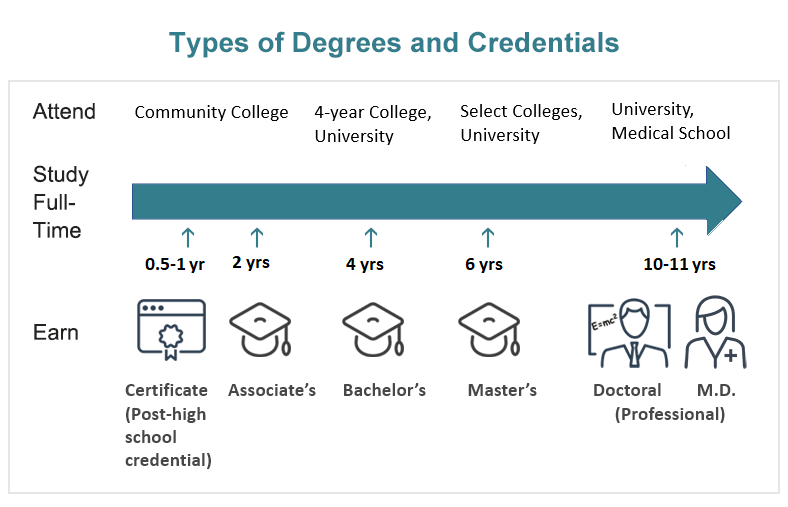
Animal trainers often need a high school diploma or GED equivalent. Some animal training jobs may require a bachelor's degree and additional skills. For example, marine mammal trainers usually need a bachelor's degree in biology, marine biology, animal science, psychology, or a related field. An animal health technician degree also may qualify trainers for some jobs.
Most equine trainers learn their trade by working as a groom at a stable. Some study at an accredited private training schools. Because large animals are involved, most horse-training jobs have minimum weight requirements for candidates.
Many dog trainers attend workshops and courses at community colleges and vocational schools. Topics include basic study of canines, learning theory of animals, teaching obedience cues, problem solving methods, and safety. Many also offer business training.
Companies That Hire Animal Trainers
Try it Out with an Activity or Project
STEM Activities
STEM activities are fun hands-on explorations that usually take from 10 minutes to one hour and use readily available household or classroom materials while introducing you to STEM concepts common in this career.
/-/https/www.sciencebuddies.org/cdn/Files/13555/5/bird-feeder-on-grass-thumbnail.jpg)
Science Project Ideas
Project Ideas are in-depth STEM explorations that have a strong focus on controlling variables, taking accurate measurements, and analyzing data suitable for investigating the scientific method or the engineering design process.
/-/https/www.sciencebuddies.org/cdn/Files/21806/4/blobid1769629198539.jpg)
/-/https/www.sciencebuddies.org/cdn/Files/2621/8/MamBio_img018.jpg)
/-/https/www.sciencebuddies.org/cdn/Files/20670/7/blobid1722369006326.jpg)
/-/https/careerdiscovery.sciencebuddies.org/Dirs/37/0/img/thumbnail.png)
/-/https/www.sciencebuddies.org/cdn/Files/3601/5/Zoo_img039.jpg)
/-/https/www.sciencebuddies.org/cdn/Files/2965/5/MamBio_img029.jpg)
/-/https/www.sciencebuddies.org/cdn/Files/3629/5/MamBio_img044.jpg)
/-/https/www.sciencebuddies.org/cdn/Files/15116/5/squirrel-obstacle-course.jpg)
On the Job
Role Models

Nature of the Work
Animal trainers train animals for riding, security, performance, obedience, or assisting people with disabilities. Animal trainers do this by accustoming the animal to human voice and contact, and conditioning the animal to respond to commands. The three most commonly trained animals are dogs, horses, and marine mammals, including dolphins. Trainers use several techniques to help them train animals. One technique, known as a bridge, is a stimulus that a trainer uses to communicate the precise moment an animal does something correctly. When the animal responds correctly, the trainer gives positive reinforcement in a variety of ways: food, toys, play, rubdowns, or speaking the word "good." Animal training takes place in small steps and often takes months and even years of repetition. During the conditioning process, trainers provide animals with mental stimulation, physical exercise, and husbandry care. A relatively new form of training teaches animals to cooperate with workers giving medical care. Animals learn "veterinary" behaviors, such as allowing and even cooperating with the collection of blood samples; physical, x-ray, ultrasonic, and dental exams; physical therapy; and the administration of medicines and replacement fluids.
Training also can be a good tool for facilitating the relocation of animals from one habitat to another, easing, for example, the process of loading horses on trailers. Trainers often work in competitions or shows, such as circuses or marine parks, aquariums, animal shelters, dog kennels and salons, or horse farms. Trainers in shows work to display the talent and ability of an animal, such as a dolphin, through interactive programs to educate and entertain the public.
In addition to their hands-on work with the animals, trainers often oversee other aspects of animals' care, such as preparing their diet and providing a safe and clean environment and habitat.
Work Environment
People who love animals get satisfaction from working with and helping them. However, some of the work may be unpleasant, physically and emotionally demanding, and sometimes dangerous. Most trainers have to work irregular hours, clean animal cages and lift, hold, or restrain animals, risking exposure to bites or scratches. Their work often involves kneeling, crawling, repeated bending, and lifting heavy supplies like bales of hay or bags of feed. Animal trainers must take precautions when treating animals with germicides or insecticides. They may work outdoors in all kinds of weather, and the work setting can be noisy. Trainers of show and sports animals travel to competitions.
Animal trainers who witness abused animals or who assist in euthanizing unwanted, aged, or hopelessly injured animals may experience emotional distress. Those working for agencies which deal with the public may experience hostility. Trainers must maintain a calm and professional demeanor.
More Information
Ask Questions
Do you have a specific question about a career as an Animal Trainer that isn't answered on this page? Post your question on the Science Buddies Ask an Expert Forum.
Additional Resources
Sources
- U.S. Bureau of Labor Statistics BLS (2024). Occupational Outlook Handbook (OOH), 2024 Edition, Bureau of Labor Statistics. Retrieved August 25, 2025.
- National Center for O*NET Development O*Net Online (2024). National Center for O*Net Development. Retrieved August 25, 2025
- National Pet Press. (n.d.). Exclusive NPP interview with top animal trainer Joan Ronalder. Retrieved March 25, 2019.
- Kidzworld. (2009). Katie Brock. Retrieved November 9, 2009.
- YouTube, swbganimals. (2008, December 1). How Do I Become An Animal Trainer?. Retrieved December 29, 2009.