
/-/https/careerdiscovery.sciencebuddies.org/Files/21464/5/sb-logo.png)
Patent Lawyer
Overview and Key Facts
/-/https/careerdiscovery.sciencebuddies.org/Files/1582/17/pexels-photo-4427557.jpg)

Education

Median Pay

Job Growth

Jobs in 2034
What Do They Do?
A patent lawyer could…/-/https/careerdiscovery.sciencebuddies.org/Files/1583/17/pexels-photo-3825540.jpg)
/-/https/careerdiscovery.sciencebuddies.org/Files/1584/17/unsplash-qOx9KsvpqcM.jpg)
/-/https/careerdiscovery.sciencebuddies.org/Files/1585/24/800px-Seal_of_the_United_States_Patent_and_Trademark_Office.svg.png)
/-/https/careerdiscovery.sciencebuddies.org/Files/1586/17/pexels-photo-326461.jpg)
/-/https/careerdiscovery.sciencebuddies.org/Files/1583/17/pexels-photo-3825540.jpg)
/-/https/careerdiscovery.sciencebuddies.org/Files/1584/17/unsplash-qOx9KsvpqcM.jpg)
/-/https/careerdiscovery.sciencebuddies.org/Files/1585/24/800px-Seal_of_the_United_States_Patent_and_Trademark_Office.svg.png)
/-/https/careerdiscovery.sciencebuddies.org/Files/1586/17/pexels-photo-326461.jpg)
Overview Listen to this section
Microwave ovens, cell phones, video game consoles…all the electronics around you are possible due to technology invented by someone. Inventions can take months, even years of hard work and expense. So how does an inventor make sure that no one else steals their inventions? In this case, patent lawyers are the answer. They work within the legal system to help protect an inventor's original works and stop others from illegally profiting from them. Patent lawyers need to be both technically and legally savvy, knowing not only the law and intellectual property rights, but also understanding the science behind the invention./-/https/i.ytimg.com/vi/DjXoNAC-f_Y/maxresdefault.jpg)
Do You Have the Skills and Characteristics of a Patent Lawyer?

- Active Listening ?
- Speaking ?
- Reading Comprehension ?
- Critical Thinking ?
- Judgment and Decision Making ?
Core Tasks
Think about if you'd like the typical tasks a Patent Lawyer might do:Salary & Job Openings
Median Salary (Yearly Pay)
Future Jobs
Blast-Off:
(10% or higher)
(7% - 10%)
(5% - 7%)
(3% - 5%)
(0% - 3%)

Steps to Get There: Becoming a Patent Lawyer
High School Subjects to Study
Engineering
Education- Typical Degree Needed After High School Listen to this section
high school credential
Typical degree for an entry-level position: Doctoral or professional degree ?
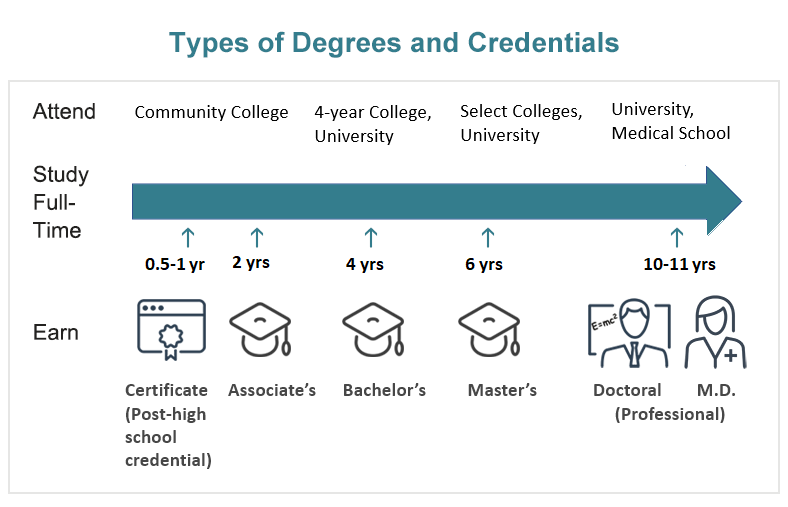
Becoming a patent lawyer usually takes seven years of full-time study after high school—four years of undergraduate study, followed by three years of law school. Law school applicants specializing in patents usually have a bachelor's degree in science or engineering to qualify for admission, or have passed the Fundamentals of Engineering examination.
Prospective lawyers should develop proficiency in writing and speaking, reading, researching, analyzing, and thinking logically—skills needed to succeed both in law school and in the law. Courses in English, foreign languages, public speaking, government, philosophy, history, economics, mathematics, and computer science, among others, are useful.
Acceptance by most law schools depends on the applicant's ability to demonstrate an aptitude for the study of law, usually through undergraduate grades, the Law School Admission Test (LSAT), the quality of the applicant's undergraduate school, any prior work experience, and sometimes, a personal interview. However, law schools vary in the weight they place on each of these and other factors.
Upon completion of law school, graduates receive the degree of juris doctor (J.D.), a first professional degree. Advanced law degrees may be desirable for those planning to specialize, perform research, or teach.
To become a patent lawyer, individuals must pass both their state bar exam and the patent bar exam, also known as the Examination for Registration to Practice in Patent Cases Before the U.S. Patent and Trademark Office. Requirements to pass the state bar exam depend upon the state in which the individual wishes to practice. The patent bar exam is a 100-question, multiple-choice exam. You must answer 70% of the questions to pass the patent bar exam. Candidates must also show that they have either received a bachelor's degree in science or engineering (category A), have earned college course credits in science or engineering (category B), or have passed the Fundamentals of Engineering examination. Law school graduates may also be asked to take one or all of the following: an ethics exam, an essay exam, or a performance exam.
Companies That Hire Patent Lawyers
Try it Out with an Activity or Project
STEM Activities
STEM activities are fun hands-on explorations that usually take from 10 minutes to one hour and use readily available household or classroom materials while introducing you to STEM concepts common in this career.
Science Project Ideas
Project Ideas are in-depth STEM explorations that have a strong focus on controlling variables, taking accurate measurements, and analyzing data suitable for investigating the scientific method or the engineering design process.
/-/https/www.sciencebuddies.org/Files/18817/10/artificial-pancreas-experiment-setup-thumbnail.jpg)
/-/https/www.sciencebuddies.org/cdn/Files/4701/11/F4_thermocouple-leads_img.jpg)
On the Job
Role Models

Nature of the Work
The role of patent lawyers is to represent a client before the U.S. Patent and Trademark Office. They prepare, file, and prosecute patent applications and help their clients protect their original work and intellectual property. Patent lawyers can advise their clients on how to license their inventions and whether to appeal decisions from the Patent Office, help them sue for possible patent infringements, determine whether someone is infringing upon their patent, and ascertain whether their client is infringing upon another party's patent.
Patent lawyers can perform patent prosecution, where they specialize in obtaining patents for their clients. Patent lawyers can also work in patent litigation, where they go to court to protect their clients' patents. They can also work in a combination of these two roles. Patent lawyers must have adequate scientific and technical expertise in order to understand their clients' inventions. A career in patent law can be a rewarding way to combine technical, scientific, and legal interests.
Work Environment
Patent lawyers do most of their work in offices, law libraries, and courtrooms. They sometimes will meet clients at their place of business. They may travel to attend meetings, gather infringement evidence, and appear before courts, legislative bodies, and other authorities. They also may face particularly heavy pressure when a case is being tried.
Patent lawyers usually have structured work schedules. Patent lawyers who are in private practice or those who work for large firms may work irregular hours, including weekends, while conducting research, conferring with clients, or preparing briefs during non-office hours. All lawyers often work long hours; of those who work full time, about 33 percent work 50 or more hours per week.
More Information
Ask Questions
Do you have a specific question about a career as a Patent Lawyer that isn't answered on this page? Post your question on the Science Buddies Ask an Expert Forum.
Sources
- U.S. Bureau of Labor Statistics BLS (2024). Occupational Outlook Handbook (OOH), 2024 Edition, Bureau of Labor Statistics. Retrieved August 25, 2025.
- National Center for O*NET Development O*Net Online (2024). National Center for O*Net Development. Retrieved August 25, 2025
- Cottingham, K. (2001, October 5). The job market: careers in patent law. Science. Retrieved August 2, 2019.
- Royal Society of Chemistry. (2020, January 21). Patent Attorney. YouTube.com. Retrieved June 18, 2021.
- Study.com. (2010). Becoming a patent attorney: education and career info. Retrieved November 30, 2010.
- Wikipedia Contributors. (2010, November 1). Patent attorney. Wikipedia: The Free Encyclopedia. Retrieved December 1, 2010.
- Intellectual Properties Enterprises, Inc. (2010). What is a career as a patent agent/attorney like? Retrieved December 1, 2010.