
/-/https/careerdiscovery.sciencebuddies.org/cdn/Files/21464/5/sb-logo.png)
Technical Writer
Overview and Key Facts
/-/https/careerdiscovery.sciencebuddies.org/cdn/Files/1838/17/pexels-photo-4559602.jpg)

Education

Median Pay

Job Growth

Jobs in 2034
What Do They Do?
A technical writer could.../-/https/careerdiscovery.sciencebuddies.org/cdn/Files/1839/17/iStock-941204464.jpg)
/-/https/careerdiscovery.sciencebuddies.org/cdn/Files/1840/17/iStock-1062035022.jpg)
/-/https/careerdiscovery.sciencebuddies.org/cdn/Files/1841/17/iStock-1141687200.jpg)
/-/https/careerdiscovery.sciencebuddies.org/cdn/Files/1842/24/Activemarker2.PNG)
/-/https/careerdiscovery.sciencebuddies.org/cdn/Files/1839/17/iStock-941204464.jpg)
/-/https/careerdiscovery.sciencebuddies.org/cdn/Files/1840/17/iStock-1062035022.jpg)
/-/https/careerdiscovery.sciencebuddies.org/cdn/Files/1841/17/iStock-1141687200.jpg)
/-/https/careerdiscovery.sciencebuddies.org/cdn/Files/1842/24/Activemarker2.PNG)
Overview Listen to this section
Have you tried to install new video-game software or connect a new printer to your computer? Doing something like this can be a little scary because of concerns about what may happen to your computer if you don't do it properly. So you read the instructions pamphlet that came with the software or printer and follow it step by step. Thankfully, the instructions are clear and you are successful with the installation! You can credit a technical writer for creating those helpful directions that guided you to success. The technical writer's task is to prepare documents, like user manuals and instructions, that communicate technical information about a computer or other complex product to a target audience in a clear and concise manner. Another way to think of a technical writer is as a person whose job it is to make our use of complicated devices a little easier and less frustrating./-/https/i.ytimg.com/vi/VD2UJjJ2p1s/hqdefault.jpg)
Do You Have the Skills and Characteristics of a Technical Writer?

Core Tasks
Think about if you'd like the typical tasks a Technical Writer might do:Salary & Job Openings
Median Salary (Yearly Pay)
Future Jobs
Blast-Off:
(10% or higher)
(7% - 10%)
(5% - 7%)
(3% - 5%)
(0% - 3%)

Steps to Get There: Becoming a Technical Writer
High School Subjects to Study
Engineering
Career Pathway Listen to this section
Some technical writers begin their careers not as writers, but as specialists in a technical field or as research assistants or trainees in a technical information department. By transferring or developing technical communication skills, they eventually assume primary responsibilities for technical writing. In small firms, beginning technical writers may work on projects right away; in larger companies with more standard procedures, beginners may observe experienced technical writers and interact with specialists before being assigned projects. Prospects for advancement generally include working on more complex projects, leading or training junior staff, and getting enough work to make a living as a freelancer.
Education- Typical Degree Needed After High School Listen to this section
high school credential
Typical degree for an entry-level position: Bachelor's degree ?
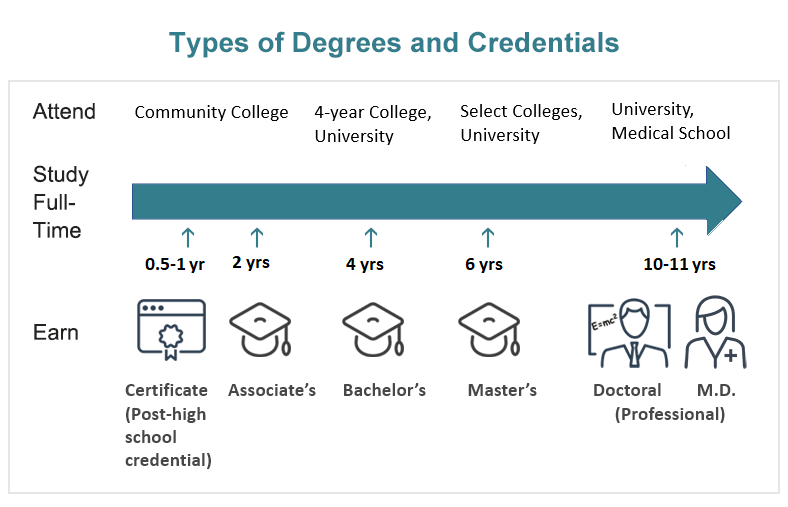
Employers look for candidates with a bachelor's degree, often preferring those with a major in communications, journalism, or English. Some technical writing jobs may require both experience and either a degree or knowledge in a specialized field—for example, engineering, medicine, or one of the sciences; others have broader requirements, such as a background in liberal arts. Knowledge of a second language is helpful for some positions. Experience in Web design and computer graphics also is helpful, because of the growing use of online technical documentation.
Companies That Hire Technical Writers
Try it Out with an Activity or Project
STEM Activities
STEM activities are fun hands-on explorations that usually take from 10 minutes to one hour and use readily available household or classroom materials while introducing you to STEM concepts common in this career.
/-/https/www.sciencebuddies.org/cdn/Files/14448/7/peanut-butter-sandwich-robot-2.jpg)
/-/https/www.sciencebuddies.org/cdn/Files/14263/10/curiosity-rover.jpg)
Science Project Ideas
Project Ideas are in-depth STEM explorations that have a strong focus on controlling variables, taking accurate measurements, and analyzing data suitable for investigating the scientific method or the engineering design process.
/-/https/careerdiscovery.sciencebuddies.org/Dirs/37/0/img/thumbnail.png)
/-/https/www.sciencebuddies.org/cdn/Files/6247/12/medicine-reminder-box.jpg)
/-/https/www.sciencebuddies.org/cdn/Files/20061/4/scratch-happy-birthday-thumbnail.jpg)
/-/https/www.sciencebuddies.org/cdn/Files/9039/6/personal-data-thumbnail.jpg)
/-/https/www.sciencebuddies.org/cdn/Files/4161/8/Games_img030.jpg)
On the Job
Role Models

Nature of the Work
Technical writers, also called technical communicators, put technical information into easily understandable language. They work primarily in information-technology-related industries, coordinating the development and dissemination of technical content for a variety of users. A growing number of technical writers, however, are using technical content to resolve business communications problems in numerous diversified industries. Included in their products are operating instructions, how-to manuals, assembly instructions, and other documentation needed for online help and by technical support staff, consumers, and other users within the company or industry. Technical writers also develop documentation for computer programs and set up communications systems with consumers to assess customer satisfaction and quality-control matters. In addition, they commonly work in engineering, science, health care, and other areas in which highly specialized material needs to be explained to a diverse audience, often of laypersons.
Technical writers frequently work with engineers, scientists, computer specialists, and software developers to manage the flow of information among project workgroups during development and testing. They also may work with product-liability specialists and customer service or call-center managers to improve the quality of product support and end-user assistance. Technical writers also oversee the preparation of illustrations, photographs, diagrams, and charts. Technical writers increasingly are using a variety of multimedia formats to convey information in such a way that complex concepts can be understood easily by users of that information.
Applying their knowledge of the user of the product, technical writers may serve as part of a team conducting usability studies to help improve the design of a product that is in the prototype stage. Technical writers may conduct research on their topics through personal observation, library and Internet research, and discussions with technical specialists. They also are expected to demonstrate their understanding of the subject matter and establish their credibility with their colleagues.
Technical writers use computers and other electronic communications equipment extensively in performing their jobs. They also work regularly with desktop and other electronic publishing software and prepare material directly for the Internet. Technical writers may work with graphic design, page layout, and multimedia software; increasingly, they are preparing documents by using the interactive technologies of the Web to blend text, graphics, multidimensional images, and sound.
Some technical writers work on a freelance or contract basis. They either are self-employed or work for a technical consulting firm and may be hired to complete specific short-term or recurring assignments, such as writing about a new product or coordinating the work and communications of different units along the production line to keep a project on track. Whether a project is to be coordinated among an organization's departments or among autonomous companies, technical writers ensure that the different entities share information and mediate differences in favor of the end user in order to bring a product to market sooner.
Work Environment
Advances in computer and communications technologies make it possible for technical writers to work from almost anywhere. Laptop computers and wireless communications enable technical writers to work from home, an office, or on the road. The ability to use the Internet to email, transmit, and download information and assignments, conduct research, or review materials gives them greater flexibility in where and how they complete assignments.
Many technical writers work with people located around the world and with specialists in highly technical fields, such as science and engineering. As a result, they must be able to assimilate complex information quickly and be comfortable working with people from diverse professional and cultural backgrounds. Although most technical writers are employed directly by the companies that use their services, many freelance writers are paid on a project basis and routinely face the pressures of juggling multiple projects and the continual need to find new work. Technical writers may be expected to work evenings, nights, or weekends to coordinate with those in other time zones, meet deadlines, or produce information that complies with project requirements and is acceptable to the client.
More Information
Ask Questions
Do you have a specific question about a career as a Technical Writer that isn't answered on this page? Post your question on the Science Buddies Ask an Expert Forum.
Additional Resources
Sources
- U.S. Bureau of Labor Statistics BLS (2024). Occupational Outlook Handbook (OOH), 2024 Edition, Bureau of Labor Statistics. Retrieved August 25, 2025.
- National Center for O*NET Development O*Net Online (2024). National Center for O*Net Development. Retrieved August 25, 2025
- Evins, J. (2008, March). Making the outdoors user-friendly. Intercom. Retrieved October 4, 2010.
- Day, B. (2006, December). Robots can't tell stories. Intercom. Retrieved October 4, 2010.
- ScienceBuddiesTV. (2011, June 27). Career: technical writer. Retrieved June 27, 2011, from https://www.youtube.com/watch?v=VD2UJjJ2p1s