
/-/https/careerdiscovery.sciencebuddies.org/Files/21464/5/sb-logo.png)
Actuary
Overview and Key Facts
/-/https/careerdiscovery.sciencebuddies.org/Files/827/18/pexels-photo-3874622.jpg)

Education

Median Pay

Job Growth

Jobs in 2034
What Do They Do?
An actuary could.../-/https/careerdiscovery.sciencebuddies.org/Files/828/18/pexels-photo-1246437.jpg)
/-/https/careerdiscovery.sciencebuddies.org/Files/829/17/pexels-photo-2091166.jpg)
/-/https/careerdiscovery.sciencebuddies.org/Files/830/17/iStock-1181407201.jpg)
/-/https/careerdiscovery.sciencebuddies.org/Files/831/17/pexels-photo-716906.jpg)
/-/https/careerdiscovery.sciencebuddies.org/Files/828/18/pexels-photo-1246437.jpg)
/-/https/careerdiscovery.sciencebuddies.org/Files/829/17/pexels-photo-2091166.jpg)
/-/https/careerdiscovery.sciencebuddies.org/Files/830/17/iStock-1181407201.jpg)
/-/https/careerdiscovery.sciencebuddies.org/Files/831/17/pexels-photo-716906.jpg)
Overview Listen to this section
Life is full of risks to both people and property. Actuaries predict the chances that future negative events will occur in a person's life, and then think of ways to reduce those chances, or reduce the impact of those negative events. Actuaries help bring peace of mind to both families and to businesses./-/https/i.ytimg.com/vi/MdgQCBTT_RY/maxresdefault.jpg)
Do You Have the Skills and Characteristics of an Actuary?

- Judgment and Decision Making ?
- Reading Comprehension ?
- Critical Thinking ?
- Mathematics ?
- Active Listening ?
Core Tasks
Think about if you'd like the typical tasks an Actuary might do:Salary & Job Openings
Median Salary (Yearly Pay)
Future Jobs
Blast-Off:
(10% or higher)
(7% - 10%)
(5% - 7%)
(3% - 5%)
(0% - 3%)

Steps to Get There: Becoming an Actuary
High School Subjects to Study
Engineering
Career Pathway Listen to this section
Actuaries need a strong foundation in mathematics, statistics, and general business. They generally have a bachelor's degree and are required to pass a series of exams in order to become certified.
Education- Typical Degree Needed After High School Listen to this section
high school credential
Typical degree for an entry-level position: Bachelor's degree ?
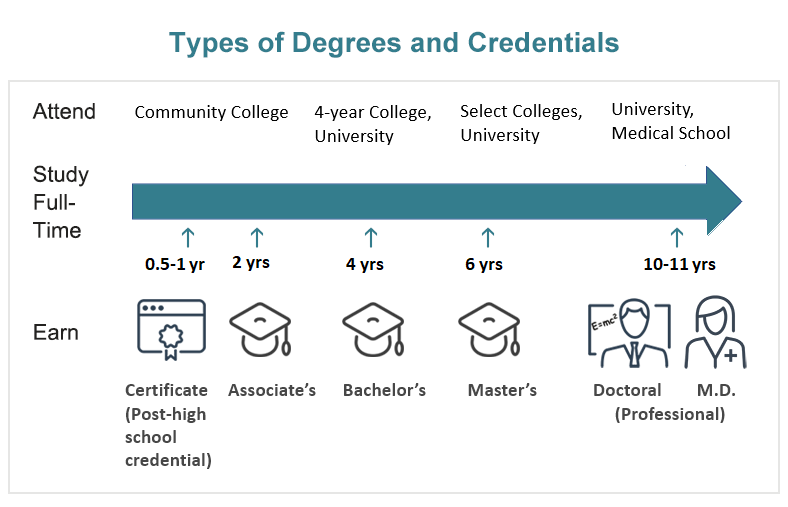
Actuaries need a strong background in mathematics and general business. Usually, actuaries earn an undergraduate degree in mathematics, statistics or actuarial science, or a business-related field such as finance, economics or business. While in college, students should complete coursework in economics, applied statistics and corporate finance, which is a requirement for professional certification. Furthermore, many students obtain internships to gain experience in the profession prior to graduation. About 100 colleges and universities offer an actuarial science program, and most offer a degree in mathematics, statistics, economics, or finance.
Some companies hire applicants without specifying a major, provided that the applicant has a working knowledge of mathematics—including calculus, probability, and statistics—and has demonstrated this knowledge by passing one or two actuarial exams required for professional designation. Companies increasingly prefer well-rounded individuals who, in addition to having acquired a strong technical background, have some training in business and liberal arts and possess strong communication skills.
Beginning actuaries often rotate among different jobs in an organization, such as marketing, underwriting, financial reporting and product development, to learn various actuarial operations and phases of insurance work. At first, they prepare data for actuarial projects or perform other simple tasks. As they gain experience, actuaries may supervise clerks, prepare correspondence, draft reports, and conduct research. They may move from one company to another early in their careers as they advance to higher positions.
Companies That Hire Actuaries
Try it Out with an Activity or Project
STEM Activities
STEM activities are fun hands-on explorations that usually take from 10 minutes to one hour and use readily available household or classroom materials while introducing you to STEM concepts common in this career.
/-/https/www.sciencebuddies.org/cdn/Files/14031/5/probability-thumbnail.jpg)
Science Project Ideas
Project Ideas are in-depth STEM explorations that have a strong focus on controlling variables, taking accurate measurements, and analyzing data suitable for investigating the scientific method or the engineering design process.
/-/https/www.sciencebuddies.org/cdn/Files/4554/7/mms_statistcs_m_and_m_candies_colors_stats_img.jpg)
/-/https/careerdiscovery.sciencebuddies.org/Dirs/37/0/img/thumbnail.png)
/-/https/www.sciencebuddies.org/cdn/Files/6178/6/playing-cards.jpg)
/-/https/www.sciencebuddies.org/cdn/Files/4762/6/Baseball_field_overview.png)
/-/https/www.sciencebuddies.org/cdn/Files/5288/5/baseball_game.jpg)
/-/https/www.sciencebuddies.org/cdn/Files/2215/6/Math_img029.gif)
On the Job
Nature of the Work
Through their knowledge of statistics, finance, and business, actuaries assess the risk of events occurring and help create policies that minimize risk and its financial impact on companies and clients. One of the main functions of actuaries is to help businesses assess the risk of certain events occurring, and to formulate policies that minimize the cost of that risk. For this reason, actuaries are essential to the insurance industry.
Actuaries assemble and analyze data to estimate the probability and likely cost of an event such as death, sickness, injury, disability, or loss of property. Actuaries also address financial questions, including those involving the level of pension contributions required to produce a certain retirement income level and the way in which a company should invest resources to maximize return on investments in light of potential risk. Using their broad knowledge of statistics, finance, and business, actuaries help design insurance policies, pension plans, and other financial strategies in a manner that will help ensure that the plans are maintained on a sound financial basis.
Most actuaries are employed in the insurance industry, specializing in either life and health insurance or property and casualty insurance. They produce probability tables or use more-sophisticated dynamic modeling techniques that determine the likelihood that a potential event will generate a claim. From these tables, they estimate the amount a company can expect to pay in claims. For example, property and casualty actuaries calculate the expected number of claims resulting from automobile accidents, which varies depending on the insured person's age, sex, driving history, type of car, and other factors. Actuaries ensure that the price, or premium, charged for such insurance will enable the company to cover claims and other expenses. This premium must be profitable, yet competitive with other insurance companies. Within the life and health insurance fields, actuaries help to develop long-term-care insurance and annuity policies, the latter a growing investment tool for many individuals.
Actuaries in other financial service industries manage credit and help price corporate security offerings. They also devise new investment tools to help their firms compete with other financial service companies. Pension actuaries work under the provisions of the Employee Retirement Income Security Act (ERISA) of 1974 to evaluate pension plans covered by that Act and report on the plans' financial soundness to participants, sponsors, and Federal regulators. Actuaries working for the government help manage social programs such as Social Security and Medicare.
Actuaries may help determine company policy and may need to explain complex technical matters to company executives, government officials, shareholders, policyholders, or the public in general. They may testify before public agencies on proposed legislation that affects their businesses or explain changes in contract provisions to customers. They also may help companies develop plans to enter new lines of business or new geographic markets by forecasting demand in competitive settings.
Consulting actuaries provide advice to clients on a contract basis. The duties of most consulting actuaries are similar to those of other actuaries. For example, some may evaluate company pension plans by calculating the future value of employee and employer contributions and determining whether the amounts are sufficient to meet the future needs of retirees. Others help companies reduce their insurance costs by lowering the level of risk the companies take on. For example, they may provide advice on how to lessen the risk of injury on the job. Consulting actuaries sometimes testify in court regarding the value of potential lifetime earnings of a person who is disabled or killed in an accident, the current value of future pension benefits (in divorce cases), or other values arrived at by complex calculations. Some actuaries work in reinsurance, a field in which one insurance company arranges to share a large prospective liability policy with another insurance company in exchange for a percentage of the premium.
Work Environment
Actuaries have desk jobs, and their offices are usually comfortable and pleasant. They often work at least 40 hours a week. Some actuaries—particularly consulting actuaries—may travel to meet with clients. Consulting actuaries also may experience more erratic employment and be expected to work more than 40 hours per week.
More Information
Ask Questions
Do you have a specific question about a career as an Actuary that isn't answered on this page? Post your question on the Science Buddies Ask an Expert Forum.
Additional Resources
- American Society of Pension Professionals and Actuaries
- Society of Actuaries (SOA)
- Casualty Actuarial Society (CAS)
- Be an Actuary
- American Academy of Actuaries
Sources
- U.S. Bureau of Labor Statistics BLS (2024). Occupational Outlook Handbook (OOH), 2024 Edition, Bureau of Labor Statistics. Retrieved August 25, 2025.
- National Center for O*NET Development O*Net Online (2024). National Center for O*Net Development. Retrieved August 25, 2025
- CAS, YouTube. (2015, August 6). The Actuary's Perspective: What We Do and How to Get Started. Retrieved April 12, 2019.