

Computer Software Engineer
Overview and Key Facts


Education

Median Pay

Job Growth

Jobs in 2034
What Do They Do?
A computer software engineer could...


Overview Listen to this section
Are you interested in developing cool video game software for computers? Would you like to learn how to make software run faster and more reliably on different kinds of computers and operating systems? Do you like to apply your computer science skills to solve problems? If so, then you might be interested in the career of a computer software engineer.
Do You Have the Skills and Characteristics of a Computer Software Engineer?

Core Tasks
Think about if you'd like the typical tasks a Computer Software Engineer might do:Salary & Job Openings
Median Salary (Yearly Pay)
Future Jobs
Blast-Off:
(10% or higher)
(7% - 10%)
(5% - 7%)
(3% - 5%)
(0% - 3%)

Steps to Get There: Becoming a Computer Software Engineer
High School Subjects to Study
Engineering
Career Pathway Listen to this section
Most employers prefer applicants who have at least a bachelor's degree and experience with a variety of computer systems and technologies. In order to remain competitive, computer software engineers must continually strive to acquire the latest technical skills. Advancement opportunities are good for those with relevant experience.
As technology advances, employers will need workers with the latest skills. Computer software engineers must continually strive to acquire new skills if they wish to remain in this dynamic field. To help keep up with changing technology, workers might take continuing education and professional development seminars offered by employers, software vendors, colleges and universities, private training institutions, and professional computing societies. Computer software engineers also need skills related to the industry in which they work. Engineers working for a bank, for example, should have some expertise in finance so that they understand banks' computer needs.
Education- Typical Degree Needed After High School Listen to this section
high school credential
Typical degree for an entry-level position: Bachelor's degree ?
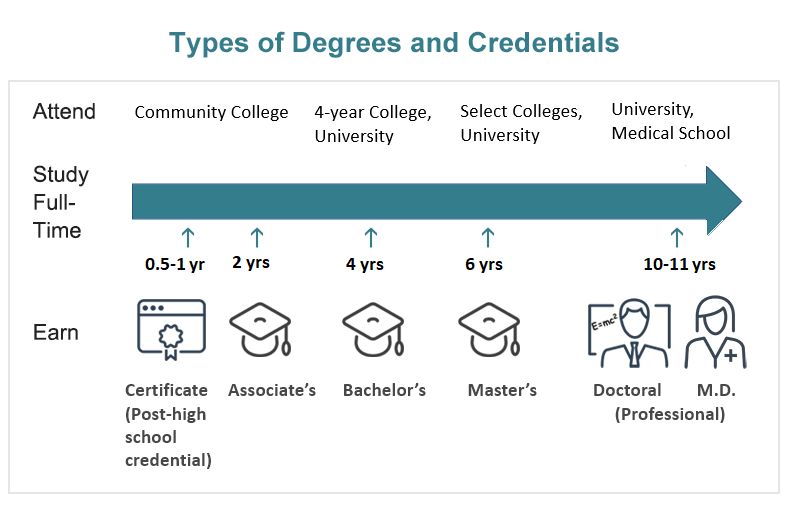
A bachelor of science in computer software engineering is a requirement for entry-level positions. Most employers prefer applicants who have at least a bachelor's degree and broad knowledge of, and experience with, a variety of computer systems and technologies. The usual college major for computer software engineers is computer science or software engineering. Systems software engineers often study computer science or computer information systems. Graduate degrees are preferred for some of the more complex jobs and are required for faculty positions. In 2006, about 80 percent of computer software engineers had a bachelor's degree or higher.
Academic programs in computer software engineering may offer the program as a degree option or in conjunction with computer science degrees. Because of increasing emphasis on computer security, software engineers with advanced degrees in areas such as mathematics and systems design will be sought after by software developers, government agencies, and consulting firms.
Students seeking software engineering jobs enhance their employment opportunities by participating in internships or co-ops. These experiences provide students with broad knowledge and experience, making them more attractive to employers. Inexperienced college graduates might be hired by large computer and consulting firms that train new employees in intensive, company-based programs.
Companies That Hire Computer Software Engineers
Try it Out with an Activity or Project
STEM Activities
STEM activities are fun hands-on explorations that usually take from 10 minutes to one hour and use readily available household or classroom materials while introducing you to STEM concepts common in this career.


Science Project Ideas
Project Ideas are in-depth STEM explorations that have a strong focus on controlling variables, taking accurate measurements, and analyzing data suitable for investigating the scientific method or the engineering design process.


On the Job
Role Models

Nature of the Work
Computer software engineers apply the principles of computer science and mathematical analysis to the design, development, testing, and evaluation of the software and systems that make computers work. The tasks performed by these workers evolve quickly, reflecting new areas of specialization or changes in technology, as well as the preferences and practices of employers.
Software engineers can be involved in the design and development of many types of software, including computer games, word processing and business applications, operating systems and network distribution, and compilers, which convert programs to machine language for execution on a computer.
Computer software engineers begin by analyzing users' needs, and then design, test, and develop software to meet those needs. During this process, they create the detailed sets of instructions, called algorithms, that tell the computer what to do. They also may be responsible for converting these instructions into a computer language, a process called programming or coding, but this is usually the responsibility of computer programmers. Computer software engineers must be experts in operating systems and middleware to ensure that the underlying systems will work properly.
Computer applications software engineers analyze users' needs and design, construct, and maintain general computer applications software or specialized utility programs. These workers use different programming languages, depending on the purpose of the program. The programming languages most often used are C, C++, and Java, with Fortran and COBOL used less commonly. Some software engineers develop both packaged systems and systems software or create customized applications.
Computer systems software engineers coordinate the construction, maintenance, and expansion of an organization's computer systems. Working with the organization, they coordinate each department's computer needs—ordering, inventory, billing, and payroll record keeping, for example—and make suggestions about its technical direction. They also might set up the organization's intranets—networks that link computers within the organization and ease communication among various departments.
Systems software engineers also work for companies that configure, implement, and install the computer systems of other organizations. These workers may be members of the marketing or sales staff, serving as the primary technical resource for sales workers. They also may help with sales and provide customers with technical support. Since the selling of complex computer systems often requires substantial customization to meet the needs of the purchaser, software engineers help identify and explain needed changes. In addition, systems software engineers are responsible for ensuring security across the systems they are configuring.
Computer software engineers often work as part of a team that designs new hardware, software, and systems. A core team may comprise engineering, marketing, manufacturing, and design people, who work together to release a product.
Work Environment
Computer software engineers normally work in clean, comfortable offices, or in laboratories in which computer equipment is located. Software engineers who work for software vendors and consulting firms frequently travel overnight to meet with customers. Telecommuting is also becoming more common, allowing workers to do their jobs from remote locations.
Most computer software engineers work at least 40 hours a week, but about 17 percent work more than 50 hours a week. Software engineers also may have to work evenings or weekends to meet deadlines or to solve unexpected technical problems.
Like other workers who spend long hours typing at a computer, computer software engineers are susceptible to eyestrain, back discomfort, and hand and wrist problems, such as carpal tunnel syndrome.
More Information
Ask Questions
Do you have a specific question about a career as a Computer Software Engineer that isn't answered on this page? Post your question on the Science Buddies Ask an Expert Forum.
Sources
- U.S. Bureau of Labor Statistics BLS (2024). Occupational Outlook Handbook (OOH), 2024 Edition, Bureau of Labor Statistics. Retrieved August 25, 2025.
- National Center for O*NET Development O*Net Online (2024). National Center for O*Net Development. Retrieved August 25, 2025
- KQED Quest, YouTube. (2015, December 3). Career Spotlight: Software Engineer. Retrieved February 24, 2021.