
/-/https/careerdiscovery.sciencebuddies.org/Files/21464/5/sb-logo.png)
Cryptographer
Overview and Key Facts
/-/https/careerdiscovery.sciencebuddies.org/Files/9059/10/unsplash-64YrPKiguAE.jpg)

Education

Median Pay

Job Growth

Jobs in 2034
What Do They Do?
A cryptographer could.../-/https/careerdiscovery.sciencebuddies.org/Files/9064/10/pexels-photo-34577.jpg)
/-/https/careerdiscovery.sciencebuddies.org/Files/9060/10/pexels-photo-1089438.jpg)
/-/https/careerdiscovery.sciencebuddies.org/Files/9061/11/iStock-1165342588.jpg)
/-/https/careerdiscovery.sciencebuddies.org/Files/9062/11/iStock-909416990.jpg)
/-/https/careerdiscovery.sciencebuddies.org/Files/9064/10/pexels-photo-34577.jpg)
/-/https/careerdiscovery.sciencebuddies.org/Files/9060/10/pexels-photo-1089438.jpg)
/-/https/careerdiscovery.sciencebuddies.org/Files/9061/11/iStock-1165342588.jpg)
/-/https/careerdiscovery.sciencebuddies.org/Files/9062/11/iStock-909416990.jpg)
Overview Listen to this section
Cryptographers, also called cryptologists and cryptanalysts, develop the encryption algorithms that keep our modern online transactions, like emails and credit card purchases, safe from prying eyes. Even if information or a message is stolen, as long as it is encrypted, the person who stole it cannot read it! Cryptographers also work to test and break these algorithms, to check them for weaknesses and vulnerabilities. They even analyze and decipher codes used by terrorists and foreign governments, to provide valuable information to the U.S. military and intelligence agencies./-/https/i.ytimg.com/vi/-yFZGF8FHSg/maxresdefault.jpg)
Do You Have the Skills and Characteristics of a Cryptographer?

- Mathematics ?
- Critical Thinking ?
- Complex Problem Solving ?
- Active Learning ?
- Reading Comprehension ?
Core Tasks
Think about if you'd like the typical tasks a Cryptographer might do:Salary & Job Openings
Median Salary (Yearly Pay)
Future Jobs
Blast-Off:
(10% or higher)
(7% - 10%)
(5% - 7%)
(3% - 5%)
(0% - 3%)

Steps to Get There: Becoming a Cryptographer
High School Subjects to Study
Engineering
Education- Typical Degree Needed After High School Listen to this section
high school credential
Typical degree for an entry-level position: Master's degree ?
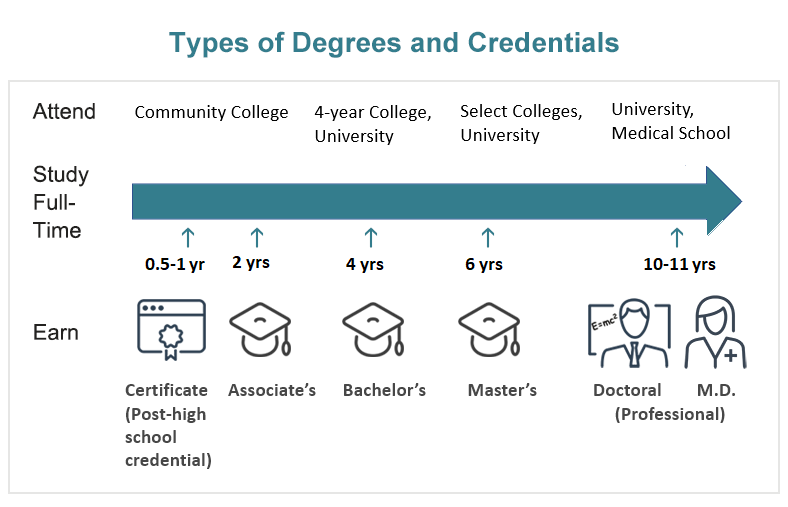
While you may be able to enter the field of cryptography with extensive work experience and no technical degree, nearly all positions will require at least a bachelor's degree in math, computer science, or a closely related field. Many positions may require a master's degree, and research or academic jobs will require a Ph.D. Advanced degrees may be obtained in more specific fields, like statistics or cryptography.
Many cybersecurity fields have various professional certifications that employers look for, like like Certified Ethical Hacker, Certified Intrusion Analyst, or Certified Forensic Examiner. Since cryptography is a more narrow field within cybersecurity, it does not currently have as many certifications. Some do exist, like the EC-Council Certified Encryption Specialist. These certifications may be helpful when searching for a job in industry. For many government jobs (or private contractors working for the government), a security clearance will be required.
Cryptographers need to be good at math. As a high school student, you should take as many advanced mathematics courses as possible, like AP calculus and AP statistics. You should also take computer science or programming courses if they are available. These courses will help prepare you for an undergraduate program in math or computer science.
Companies That Hire Cryptographers
Try it Out with an Activity or Project
STEM Activities
STEM activities are fun hands-on explorations that usually take from 10 minutes to one hour and use readily available household or classroom materials while introducing you to STEM concepts common in this career.
/-/https/careerdiscovery.sciencebuddies.org/Dirs/37/0/img/thumbnail.png)
Science Project Ideas
Project Ideas are in-depth STEM explorations that have a strong focus on controlling variables, taking accurate measurements, and analyzing data suitable for investigating the scientific method or the engineering design process.
/-/https/www.sciencebuddies.org/cdn/Files/9037/11/caesar-cipher-shift-left-thumbnail.png)
/-/https/www.sciencebuddies.org/cdn/Files/20505/6/ROT13.png)
On the Job
Role Models

/-/https/i.ytimg.com/vi/1Gti2emO-uk/maxresdefault.jpg)
Nature of the Work
Have you ever bought something online using a credit card, or visited a website that started with "https"? Then even if you did not realize it, you have made use of encryption. Encryption takes a regular, or "plaintext," message, and converts it into an encoded, or "ciphertext," message, using a mathematical algorithm. Encryption keeps many of our online transactions safe from cyber criminals. Even if someone manages to intercept a message, if it is encrypted, then they cannot make any sense of the ciphertext. As cyberattacks continue to rise, more and more companies and websites encrypt even "regular" web traffic, to help protect their users from attacks.
Who do we have to thank for the encryption algorithms that keep all of our data safe? Cryptographers! The practice of cryptography has been around for thousands of years, long before it was considered a profession. Military leaders like Julius Caesar used simple codes to send secret messages to their generals. Cryptography played an important role in the Allied victory of World War II, with the cracking of the German Enigma machine. Electronic communications, and the need to encrypt them, became part of our everyday lives with the development and widespread civilian use of the internet in the late 20th and early 21st centuries. This led to the growth of cryptography as a specific profession.
The job of a modern cryptographer or cryptanalyst might vary quite a bit depending on where they work. Cryptographers in the private sector might help large corporations make sure all of their confidential data and communications with customers are properly encrypted and secure. Academic faculty and researchers working in cryptography may attempt to develop new encryption algorithms and find weaknesses in old ones. Cryptographers working for the government may develop secret codes used for military and intelligence agency communications, and attempt to decipher messages intercepted from terrorists or foreign governments. All of these positions will probably require working with abstract mathematical theories and proofs, and a strong understanding of computer science. Modern computers are so fast that they can crack simple "by hand" ciphers in less than a second, so in order to remain secure, modern encryption algorithms are very complicated and involve a lot of math.
Work Environment
Cryptographers typically spend the majority of their time working in an office environment, usually in front of a computer. They may work mostly 9–5 office jobs but there could be exceptions depending on the situation. For example, cryptographers working for the military or intelligence agencies may work longer hours to decode an intercepted message. Cryptographers working in research and academia may travel to conferences around the world to present their work to professional colleagues.
Like other workers who spend long periods typing on a computer, cryptographers are susceptible to eyestrain, back discomfort, and hand and wrist problems such as carpal tunnel syndrome or cumulative trauma disorder, but preventative measures can be taken.
More Information
Ask Questions
Do you have a specific question about a career as a Cryptographer that isn't answered on this page? Post your question on the Science Buddies Ask an Expert Forum.
Sources
- U.S. Bureau of Labor Statistics BLS (2024). Occupational Outlook Handbook (OOH), 2024 Edition, Bureau of Labor Statistics. Retrieved August 25, 2025.
- National Center for O*NET Development O*Net Online (2024). National Center for O*Net Development. Retrieved August 25, 2025
- Cyber Degrees (n.d.). Become a cryptographer or cryptanalyst. Retrieved September 5, 2017.
- Study.com (n.d.). Cryptographer: Job Description, Duties, and Salary Information. Retrieved September 5, 2017.
- Academic Invest (n.d.). How to Become a Cryptographer. Retrieved September 5, 2017.
- College Foundation of North Carolina (n.d.). Cryptographer. Retrieved September 5, 2017.
- Chegg Career Match (n.d.). Cryptographer. Retrieved August 6, 2019.