
/-/https/careerdiscovery.sciencebuddies.org/Files/21464/5/sb-logo.png)
Security Incident Responder
Overview and Key Facts
/-/https/careerdiscovery.sciencebuddies.org/Files/9041/9/pexels-photo-1181341.jpg)

Education

Median Pay

Job Growth

Jobs in 2034
What Do They Do?
A security incident responder could.../-/https/careerdiscovery.sciencebuddies.org/Files/9042/10/iStock-1006344318.jpg)
/-/https/careerdiscovery.sciencebuddies.org/Files/9043/12/pexels-photo-1181676.jpg)
/-/https/careerdiscovery.sciencebuddies.org/Files/9044/12/pexels-photo-5380655.jpg)
/-/https/careerdiscovery.sciencebuddies.org/Files/9045/9/iStock-1214717311.jpg)
/-/https/careerdiscovery.sciencebuddies.org/Files/9042/10/iStock-1006344318.jpg)
/-/https/careerdiscovery.sciencebuddies.org/Files/9043/12/pexels-photo-1181676.jpg)
/-/https/careerdiscovery.sciencebuddies.org/Files/9044/12/pexels-photo-5380655.jpg)
/-/https/careerdiscovery.sciencebuddies.org/Files/9045/9/iStock-1214717311.jpg)
Overview Listen to this section
Security incident responders, also called intrusion analysts or incident response engineers, are like the "firefighters" of the cyber world. Companies can take steps to safeguard their computer networks and systems, but sometimes prevention is not enough and cyber attacks still happen. Sensitive data like customer credit card information can be stolen, entire websites could be brought down or altered, or personal contact information can be leaked. When this happens, incident responders must act quickly to find the source of the attack and shut it down. They will also analyze how the attack happened, determine the scope of the damage, and how to prevent it from happening again./-/https/i.ytimg.com/vi/yo7l3hn1H6I/hqdefault.jpg)
Do You Have the Skills and Characteristics of a Security Incident Responder?

Core Tasks
Think about if you'd like the typical tasks a Security Incident Responder might do:Salary & Job Openings
Median Salary (Yearly Pay)
Future Jobs
Blast-Off:
(10% or higher)
(7% - 10%)
(5% - 7%)
(3% - 5%)
(0% - 3%)

Steps to Get There: Becoming a Security Incident Responder
High School Subjects to Study
Engineering
Education- Typical Degree Needed After High School Listen to this section
high school credential
Typical degree for an entry-level position: Bachelor's degree ?
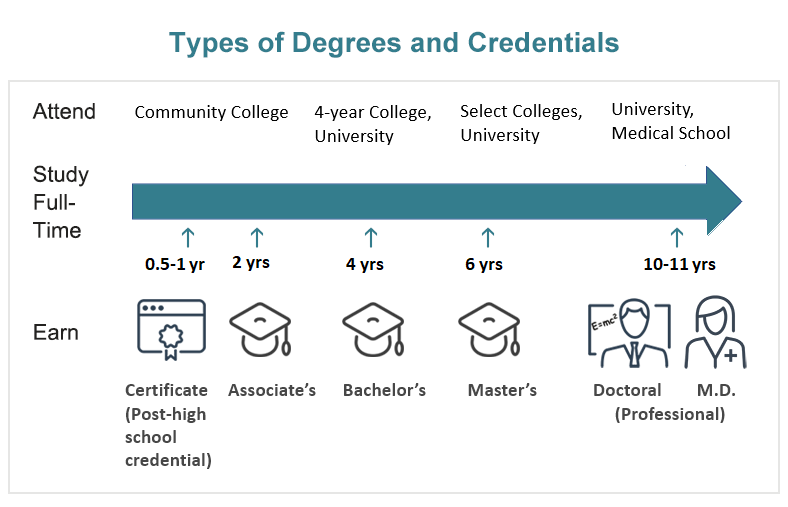
While it may make you more competitive for a job, a bachelor's degree is not always required for an entry-level incident responder position. An associate's degree in computer science or information technology, and some work experience in a related IT field like network administration, may be sufficient. Incident response is closely related to the field of computer forensics (like a "detective" for cyber crime), so people may transition between the two fields. A bachelor's degree in computer science or a related field may be required for management-level positions, like the manager of a Computer Security Incident Response Team (CSIRT). Since the field of information security changes rapidly and new threats emerge constantly, incident responders must stay up-to-date on all the latest developments in their field.
As the cybersecurity profession continues to expand, some schools are starting to offer cybersecurity-specific degrees. Many professional organizations offer cybersecurity-related certifications, like Certified Ethical Hacker, Certified Intrusion Analyst, or Certified Forensic Examiner, and employers may require these certifications for certain positions. A security clearance may be required for government employees or contractors who work for the government, which means it is important to have a "clean record" with no history of criminal behavior or illegal hacking.
Try it Out with an Activity or Project
STEM Activities
STEM activities are fun hands-on explorations that usually take from 10 minutes to one hour and use readily available household or classroom materials while introducing you to STEM concepts common in this career.
/-/https/careerdiscovery.sciencebuddies.org/Dirs/37/0/img/thumbnail.png)
Science Project Ideas
Project Ideas are in-depth STEM explorations that have a strong focus on controlling variables, taking accurate measurements, and analyzing data suitable for investigating the scientific method or the engineering design process.
/-/https/www.sciencebuddies.org/Files/8352/10/thumbnail-you-have-been-hacked.png)
/-/https/www.sciencebuddies.org/Files/9036/14/air-gap-attack-search-thumbnail.jpg)
/-/https/www.sciencebuddies.org/Files/9037/11/caesar-cipher-shift-left-thumbnail.png)
/-/https/www.sciencebuddies.org/Files/9039/6/personal-data-thumbnail.jpg)
/-/https/www.sciencebuddies.org/Files/9164/6/SQL-injection.jpg)
/-/https/www.sciencebuddies.org/Files/8357/15/deleted-book-report.png)
On the Job
Role Models
/-/https/i.ytimg.com/vi/1Gti2emO-uk/maxresdefault.jpg)
Nature of the Work
Security incident responders are the first responders in the cyber world. Just like police, firefighters, and emergency medical technicians (EMTs) in the physical world, incident responders are the first ones on the scene in the event of a cyber emergency like a data breach at a major company. Just like a firefighter responding to a burning building, a police officer responding to a bank robbery, or an EMT at the scene of a car crash, their first responsibility is to assess the situation and eliminate any immediate dangers. This may include tracking down the source of an attack (like an outside individual who has hacked into a company's systems) and shutting down their access. After the attack has been stopped, they may switch to more of a "detective" role, to figure out exactly what happened, how it happened, and how future attacks can be prevented.
On a day to day basis, security incident responders may monitor network traffic to search for suspicious activity, to try and preemptively detect cyber attacks before they can do much damage. They may work with other cybersecurity professionals like ethical hackers to identify and fix existing vulnerabilities in a system. They will also develop an emergency plan that can be followed in the event of a cyber attack, and train other employees on how to follow this plan. For example, this could include explaining to non-technical employees what immediate steps they should take if they believe they have clicked on a link or downloaded an email attachment that contained a virus, to help stop this virus from spreading to the rest of the company. Due to the speed of modern computers and the internet, computer viruses can spread in a matter of minutes or even seconds, so it is important to react quickly in order to minimize the impact of an attack.
In the aftermath of a cyber attack, a security incident responder may need to report to a company's management or even law enforcement about what happened. For example, the CEO of a company will want to know if personal customer data was stolen (so they can develop a plan to deal with angry customers!). Law enforcement agencies might want information about the source of the attack, so they can try to track down and prosecute cyber criminals, or respond if the attack came from a foreign government.
Work Environment
Security incident responders typically spend the majority of their time working in an office environment, usually in front of a computer. They may have meetings with other IT employees like network administrators, or with non-technical employees like managers when they need to report on the consequences of a cyber attack. Due to the unpredictable nature of cyber attacks, they might not work regular schedules. For example, they might work two very long days or through the night when actively responding to an attack, then have the rest of the week off.
Like other workers who spend long periods typing on a computer, security incident responders are susceptible to eyestrain, back discomfort, and hand and wrist problems such as carpal tunnel syndrome or cumulative trauma disorder, but preventative measures can be taken.
More Information
Ask Questions
Do you have a specific question about a career as a Security Incident Responder that isn't answered on this page? Post your question on the Science Buddies Ask an Expert Forum.
Additional Resources
The following organizations offer professional certifications in cybersecurity:
- Global Information Assurance Certification (GIAC)
- EC-Council
- Information Assurance Certification Review Board
- The International Society of Forensic Computer Examiners
Sources
- U.S. Bureau of Labor Statistics BLS (2024). Occupational Outlook Handbook (OOH), 2024 Edition, Bureau of Labor Statistics. Retrieved August 25, 2025.
- National Center for O*NET Development O*Net Online (2024). National Center for O*Net Development. Retrieved August 25, 2025
- Bally (March 15, 2017). How to become an Incident Responder Cybertraining 365 Blog. Retrieved August 30, 2017.
- Cyber Security Education (n.d.). Learn how to become an incident responder. Retrieved August 3, 2019.
- Infosec Institute (n.d.). Incident Responders. Retrieved August 30, 2017.
- Cyber Degrees (n.d.). Become an incident responder. Retrieved August 30, 2017.